


Phosphoric acid density changes with concentration, and that matters more than many bulk buyers realize. A 75% solution does not have the same density, freezing point, viscosity, or storage requirements as 85% phosphoric acid. These differences affect tank capacity, weight-to-volume calculations, pumping, dosing, transportation, and cold-weather storage.
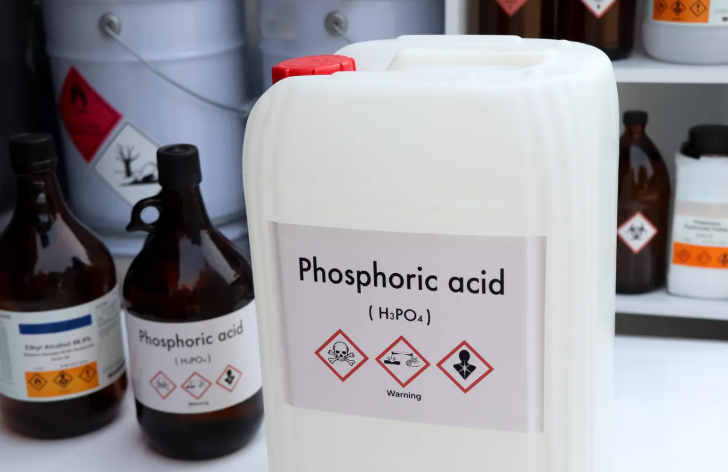
HDPE plastic jerrycan and amber glass bottles featuring standard GHS hazard labeling for liquid phosphoric acid storage and laboratory handling
For procurement and plant teams, the two numbers that deserve special attention are density and freezing point. Density tells you how much mass is contained in a given volume. Freezing point tells you when the product can begin to crystallize or solidify. This guide provides a practical phosphoric acid density chart for common concentrations, explains the relationship between concentration and freezing point, and shows what these numbers mean when buying and storing bulk phosphoric acid.
Phosphoric Acid Density Chart at 25°C
For common commercial concentrations, density increases as the H₃PO₄ concentration increases. Published physical-property data gives approximately 1.574 g/cm³ for 75% phosphoric acid, 1.628 to 1.629 g/cm³ for 80%, and 1.685 to 1.686 g/cm³ for 85% at 25°C.
Density Chart for 75%, 80%, and 85% Phosphoric Acid
| Phosphoric acid concentration | Density at 25°C | Approx. density kg/L | Freezing/melting point |
|---|---|---|---|
| 75% H₃PO₄ | 1.574 g/cm³ | 1.574 kg/L | -17.5°C |
| 80% H₃PO₄ | 1.628–1.629 g/cm³ | 1.628–1.629 kg/L | 4.6°C |
| 85% H₃PO₄ | 1.685–1.686 g/cm³ | 1.685–1.686 kg/L | 21.0–21.1°C |
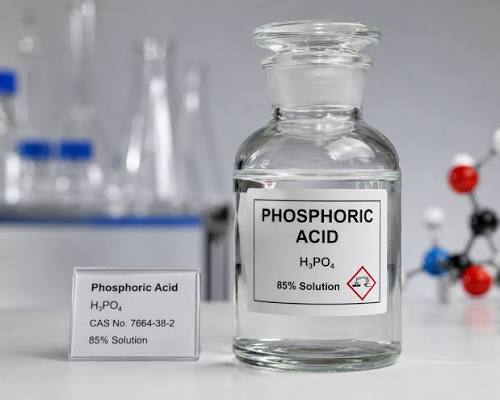
Clear glass reagent bottle containing 85% phosphoric acid solution displayed with CAS registry details and standard GHS hazard markings
The values above should be treated as reference values at the stated temperature, not as a substitute for the density specification on a particular batch’s technical data sheet.
CAMACHEM’s published 85% phosphoric acid documentation identifies the product as a colorless, transparent, viscous liquid under normal conditions and gives a melting point of 21.1°C.
For comparison, PubChem’s compiled data gives density at 25°C of 1.574 for 75%, 1.628 for 80%, and 1.685 for 85% phosphoric acid.
Technical Note: Density is temperature-dependent. Always specify the reference temperature when comparing supplier data. “Density = 1.68” without a temperature reference is incomplete for engineering or procurement calculations.
If your destination experiences winter temperatures, ask specifically about storage and transportation.
WhatsApp Us for Free a Consultation
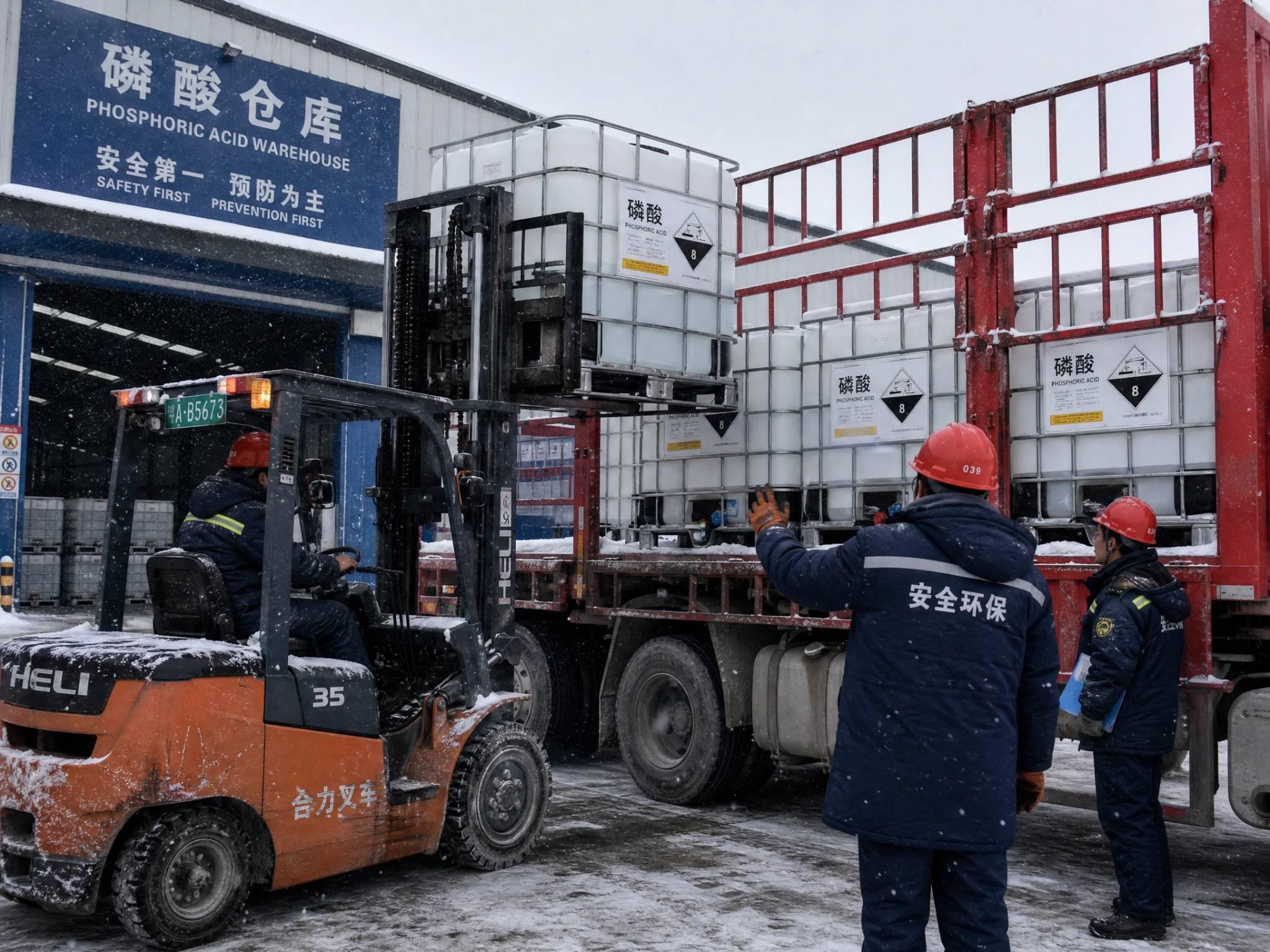
Lower concentration can affect the quantity of material that must be transported and stored to meet the same chemical requirement.
Why Does Phosphoric Acid Density Increase With Concentration?
Density is the relationship between mass and volume.
As more phosphoric acid is present relative to water, the mass contained in a given volume increases.
75% vs. 80% vs. 85% Phosphoric Acid
Consider one cubic meter of solution.
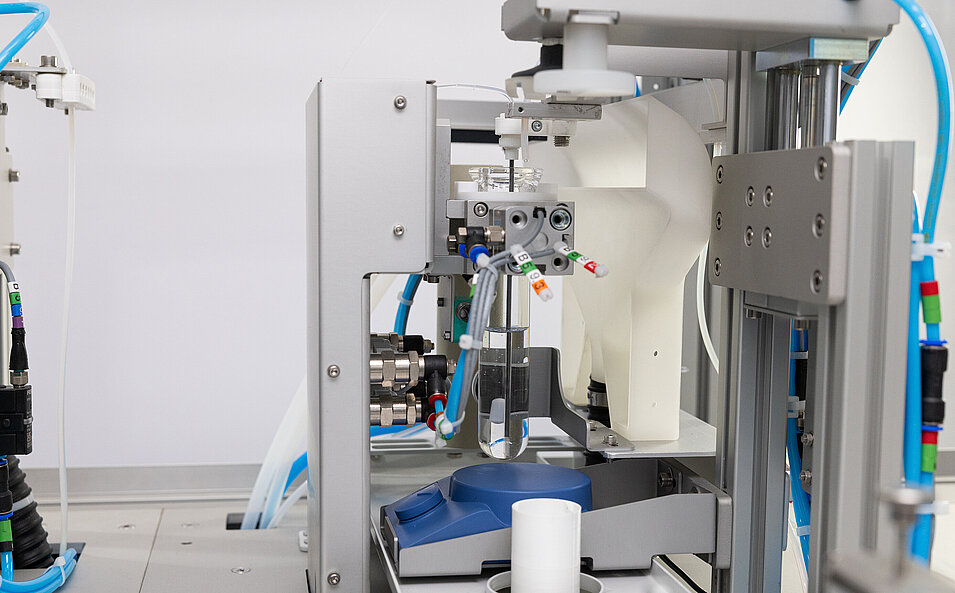
Automated laboratory titration system used for precise assay testing and quality control of liquid chemical solutions
Using the reference densities:
- 75%: 1 m³ × 1.574 tonnes/m³ ≈ 1.574 tonnes
- 80%: 1 m³ × 1.628 tonnes/m³ ≈ 1.628 tonnes
- 85%: 1 m³ × 1.685 tonnes/m³ ≈ 1.685 tonnes
Therefore, a tank with a fixed volume does not contain the same mass of phosphoric acid at every concentration.
This is important when a quotation is given in metric tons but your plant operates using liters, cubic meters, tank volume, or pump flow.
CAMACHEM’s 85% phosphoric acid product is offered in several bulk packaging formats, including 330 kg drums and IBC formats listed on its product page.
Review CAMACHEM’s Phosphoric Acid 85% product specifications
A Simple Bulk Calculation
Suppose a storage tank holds 10 m³.
At approximately 25°C:
75% acid:
10 × 1.574 = 15.74 tonnes
80% acid:
10 × 1.628 = 16.28 tonnes
85% acid:
10 × 1.685 = 16.85 tonnes
That is a difference of more than one tonne between 75% and 85% in the same nominal 10 m³ volume.
For a plant handling hundreds or thousands of tonnes, small density differences become important for inventory management and logistics.
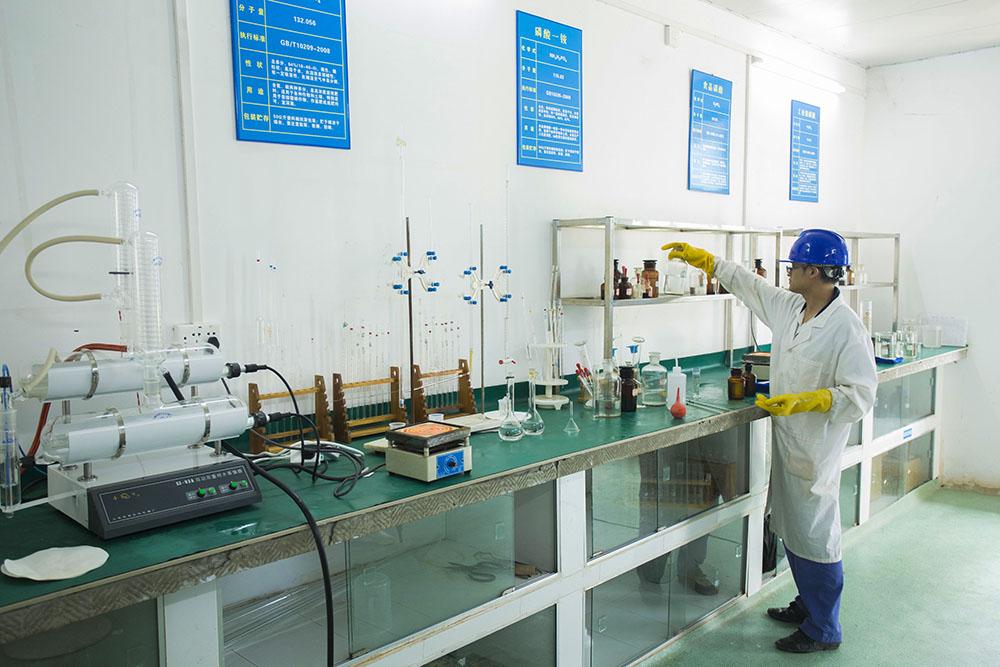
Quality testing and chemical analysis of 85% phosphoric acid in a manufacturer testing lab
Phosphoric Acid Freezing Point by Concentration
The freezing-point behavior of phosphoric acid is particularly important because it is not a simple “more water means higher freezing point” relationship.
Common commercial concentrations behave differently.
75% Phosphoric Acid
75% phosphoric acid has a freezing point around -17.5°C according to compiled physical-property data.
That relatively low freezing point is one reason 75% acid can be attractive for cold-weather logistics.
If the material is being transported or stored in a cold region, a lower freezing point can reduce the risk of crystallization under normal winter conditions.
However, actual storage conditions still need to be evaluated.
80% Phosphoric Acid
80% phosphoric acid has a much higher freezing point, around 4.6°C.
This creates a very different storage requirement from 75%.
A warehouse that is perfectly suitable for 75% acid during winter may need additional temperature control when handling 80%.

Concentration can affect handling and process requirements, so procurement savings should be evaluated alongside operational needs.
85% Phosphoric Acid
85% phosphoric acid has a freezing or melting point around 21°C.
CAMACHEM’s technical documentation gives 21.1°C, while compiled reference data gives approximately 21°C.
This is one of the most important facts a bulk buyer should know before ordering 85% phosphoric acid.
At temperatures below this point, crystallization can become a concern.
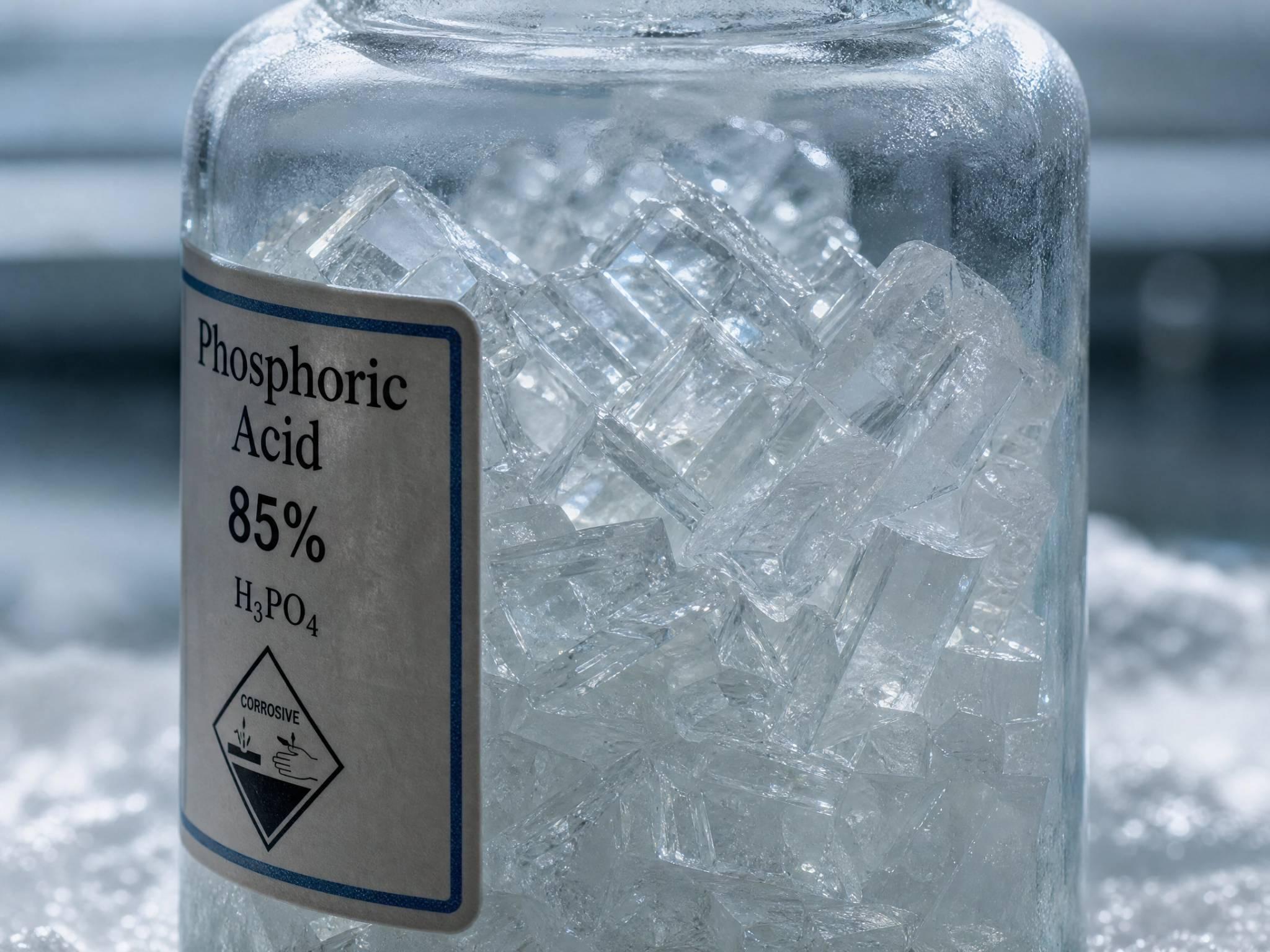
85% phosphoric acid has a much higher freezing point than 75% acid, making temperature control important during cold-weather storage and transport.
Decision-Maker Insight: An 85% phosphoric acid quotation can look attractive on a cost-per-ton basis, but the purchasing decision should also consider the destination climate, storage temperature, heating requirements, and unloading conditions.
Why Does 85% Phosphoric Acid Freeze So Easily?
This is where phosphoric acid behaves differently from what many buyers expect.
A higher concentration does not always mean a lower freezing point.
For phosphoric acid, the freezing point rises sharply as the concentration moves from the lower-concentration region toward 85%.
Published data shows:
- 75%: approximately -17.5°C
- 80%: approximately 4.6°C
- 85%: approximately 21°C
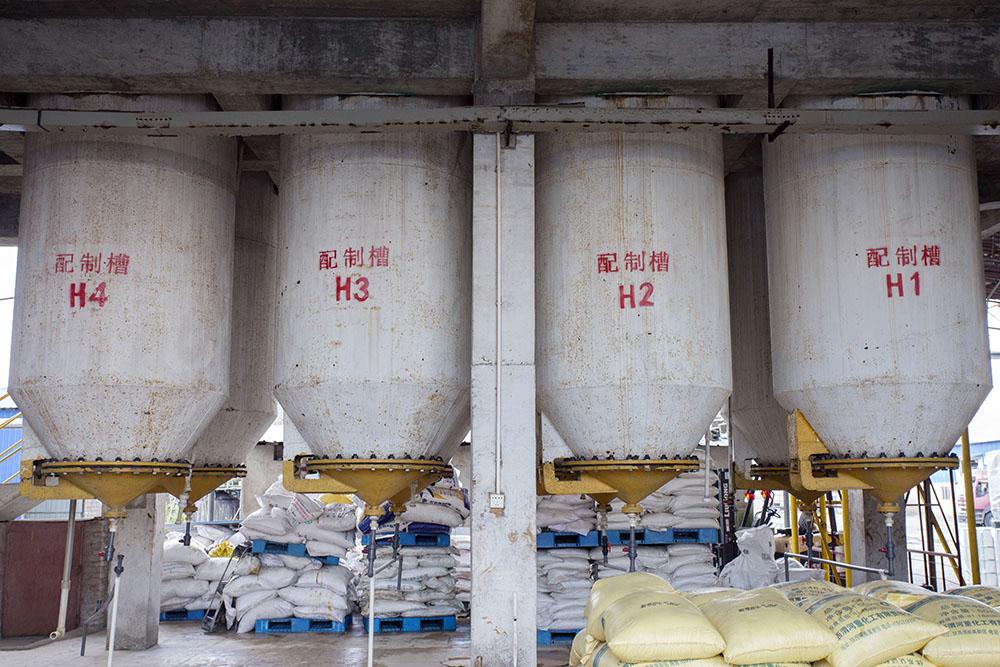
Industrial formulation and mixing hoppers used for controlled concentration batching and pilot sample production of phosphoric acid derivatives
The 85% Concentration Has a Special Handling Challenge
At approximately 85%, phosphoric acid can form a crystalline phase as temperatures fall toward its freezing point.
The concentration-temperature relationship becomes more complicated at still higher concentrations. For bulk industrial handling, this is one reason commercially supplied phosphoric acid commonly centers around concentrations such as 75%, 80%, and 85%.
Concentrated phosphoric acid can also supercool, meaning it may remain liquid below its nominal freezing point before crystallization begins. Therefore, the absence of visible crystals at a particular temperature does not mean that temperature control can be ignored.
Read CAMACHEM’s phosphoric acid FAQ
Density, Freezing Point, and Bulk Storage
Density and freezing point affect different parts of a buyer’s operation.
Density Affects Inventory and Transport Calculations
If your tank is sized by volume but your purchase contract is based on tonnes, density is essential.
For example:
| Item | 75% H₃PO₄ | 85% H₃PO₄ |
|---|---|---|
| Reference density at 25°C | 1.574 kg/L | 1.685 kg/L |
| Approx. mass in 1,000 L | 1,574 kg | 1,685 kg |
| Approx. mass difference | – | 111 kg |
| Freezing point | -17.5°C | 21°C |
| Cold-weather concern | Lower | Much higher |
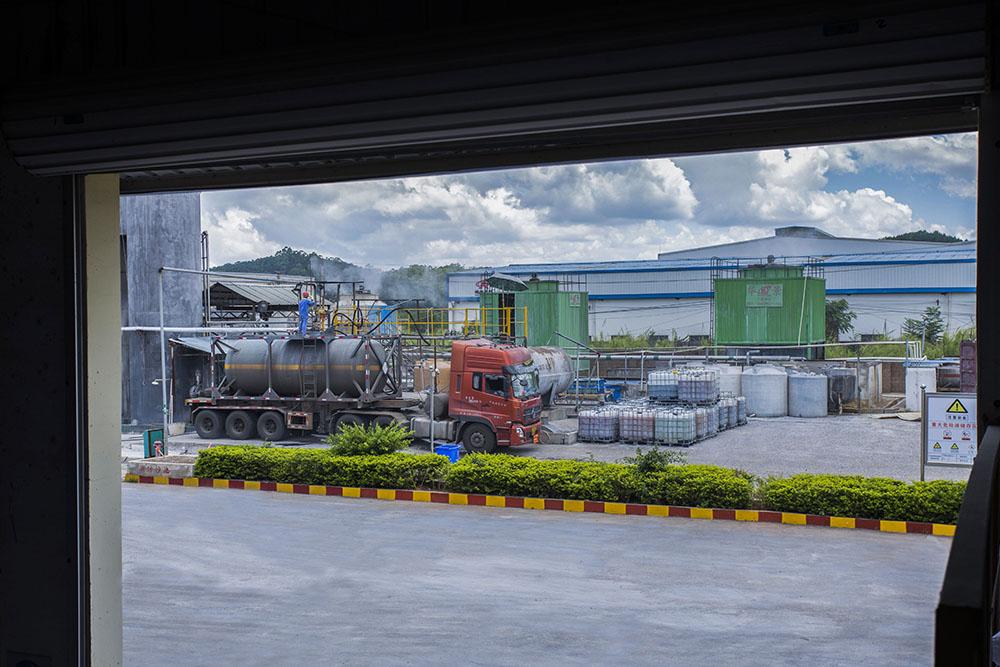
Bulk liquid phosphoric acid tanker loading and transport setup, highlighting scalable industrial procurement and export logistics
Before ordering, send your target concentration and ask the supplier to confirm:
- Density
- Reference temperature
- Freezing point
- Viscosity
- Product grade
- Current TDS
WhatsApp Us for Free a Consultation
The same 1,000-liter tank therefore holds about 111 kg more of 85% phosphoric acid than 75% acid at the reference temperature.
But the 85% product also has a much higher freezing point.
That is the trade-off procurement teams need to understand.
Freezing Point Affects Storage Design
For 75% acid, the low freezing point provides more tolerance in cold environments.
For 85% acid, the storage temperature becomes much more important.
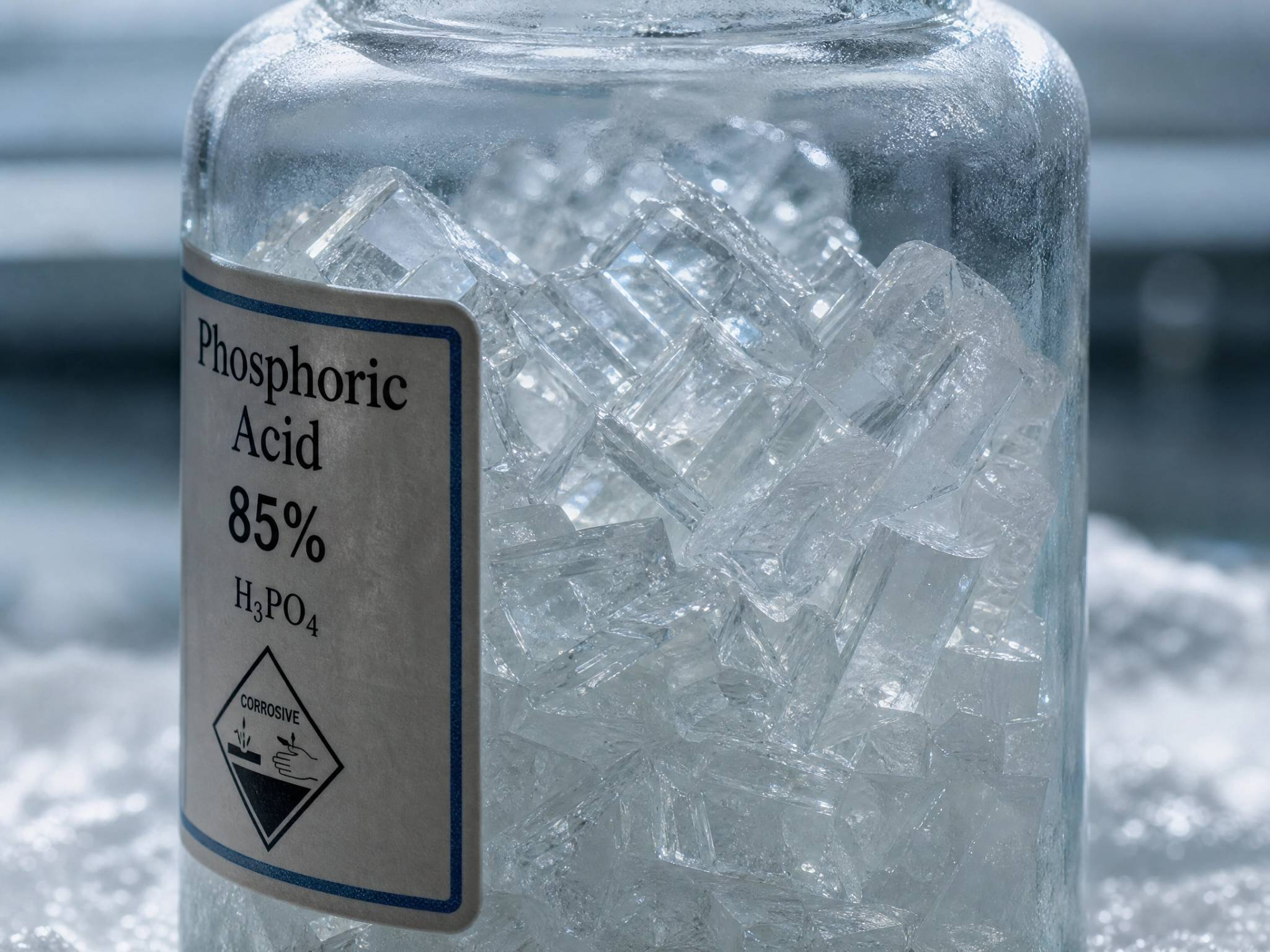
Clear glass reagent bottle labeled Phosphoric Acid for laboratory testing
A plant purchasing 85% phosphoric acid should review:
- Minimum ambient temperature
- Tank insulation
- Heating requirements
- Tank location
- Pipeline exposure
- Pump temperature
- Unloading temperature
- Winter shipping conditions
- Emergency procedures
CAMACHEM’s product documentation recommends storing phosphoric acid in a cool, dry, well-ventilated area and lists multiple packaging options for its 85% product.
How Temperature Changes the Density You Measure
The density values in a specification table are normally tied to a reference temperature.
This matters because liquids expand and contract with temperature.
If a phosphoric acid solution becomes warmer, its volume changes. The mass does not change simply because the temperature changed, but the volume occupied by that mass can change.
That means density measured at 20°C and density measured at 25°C may not be identical.
Why Buyers Should Specify the Reference Temperature
When comparing two supplier quotations, ask:
“At what temperature was the density measured?”
This simple question can prevent confusion between supplier data sheets.
It is particularly important when:
- Calibrating storage tanks
- Checking truck quantities
- Converting liters to tonnes
- Designing dosing systems
- Comparing supplier specifications
- Reconciling loading documents
- Checking inventory

International logistics costs should be included when comparing the delivered cost of different phosphoric acid concentrations.
A batch-specific COA can also provide useful confirmation of the delivered material.
CAMACHEM’s phosphoric acid documentation includes COA/TDS material for 85% product.
View the CAMACHEM 85% Phosphoric Acid COA/TDS
How Much Phosphoric Acid Fits in an IBC?
The answer depends on the IBC’s nominal capacity, product density, filling rules, and the supplier’s packaging specification.
CAMACHEM lists 1,600 kg and 1,650 kg IBC drum options for its 85% phosphoric acid product, alongside 35 kg and 330 kg drums.
This is a useful reminder:
IBC size and chemical weight are not the same thing.
A container described by volume must still be evaluated against the density and permitted filling mass of the specific chemical.
Why Packaging Matters in Cold Weather
For 85% phosphoric acid, packaging selection should be considered together with temperature.
A shipment may travel through several climate zones:
- Manufacturing site
- Inland transport
- Port storage
- Ocean transport
- Destination port
- Final warehouse
- Production plant
If any stage exposes the product to temperatures near its freezing point, the buyer should discuss temperature management with the supplier.
See CAMACHEM’s countries and global chemical supply information
For a quotation, provide:
- Concentration
- Grade
- Quantity
- Packaging
- Destination port
- Delivery term
- Required documents
WhatsApp Us for Free a Consultation
75% vs. 85% Phosphoric Acid: Which Is Better for Cold Weather?
There is no universal answer.
75% Can Be Easier to Handle in Cold Conditions
With a reference freezing point around -17.5°C, 75% phosphoric acid has significantly more cold-weather tolerance than 85%.
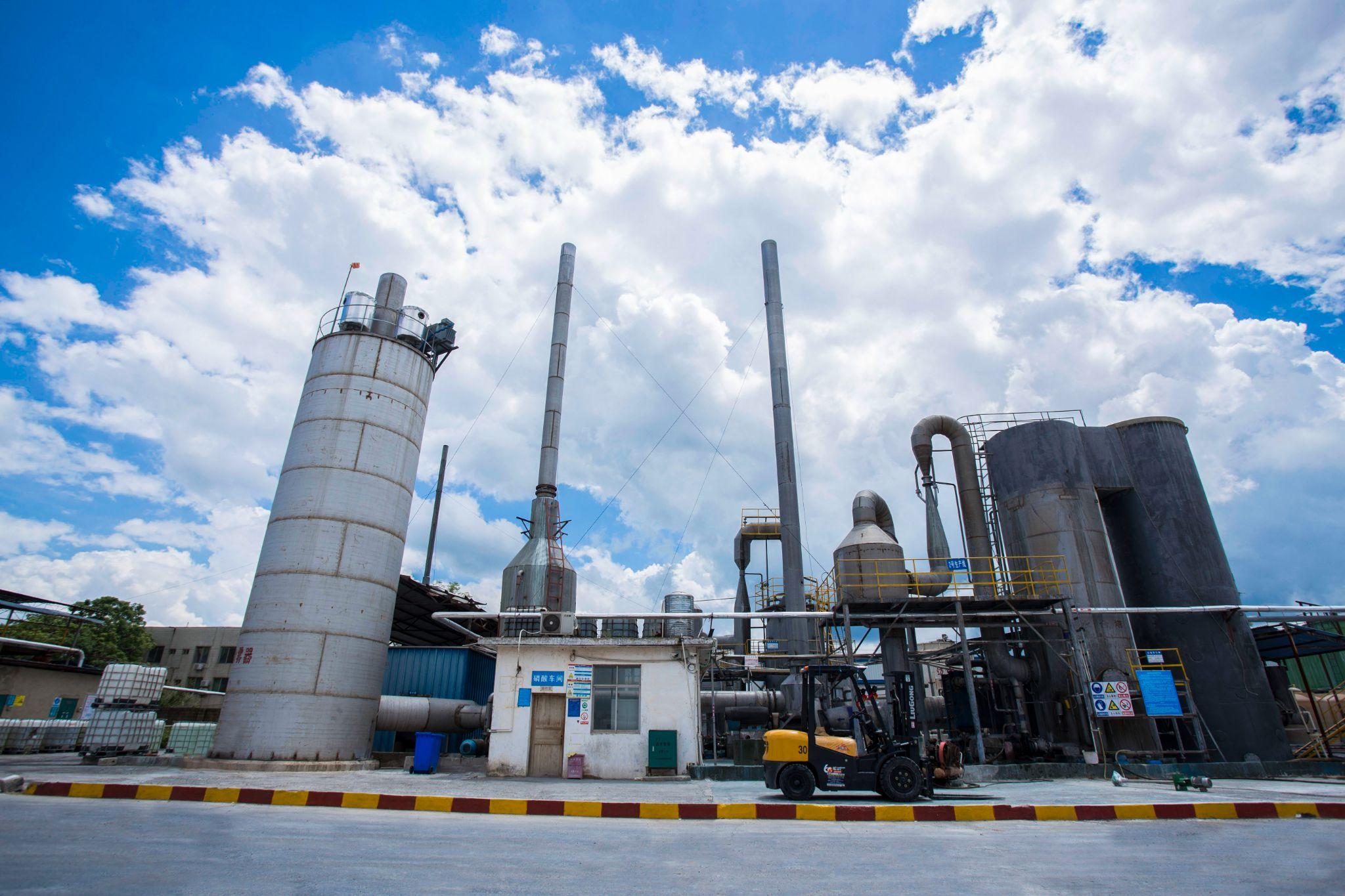
Industrial phosphoric acid manufacturing plant and chemical processing facility in China
This can matter for:
- Winter transport
- Unheated warehouses
- Outdoor tanks
- Cold destination ports
- Long transit periods
However, 75% also contains more water per tonne of product.
85% Contains More H₃PO₄ per Tonne
85% phosphoric acid contains more H₃PO₄ by mass than 75%.
That can reduce the total solution mass required when a process needs a defined quantity of phosphoric acid.
For example, to obtain 850 kg of H₃PO₄:
Using 85% acid:
850 ÷ 0.85 = 1,000 kg solution
Using 75% acid:
850 ÷ 0.75 = 1,133.3 kg solution
So the 75% option requires about 133 kg more solution to deliver the same 850 kg of H₃PO₄.
That additional mass can affect freight, storage, pumping, and handling.
The correct purchasing decision therefore depends on the total process cost, not simply the concentration.

Quality assurance testing of high-purity electronic-grade phosphoric acid in a cleanroom environment
Phosphoric Acid Density and P₂O₅ Equivalent
Fertilizer buyers may also encounter phosphoric acid specifications expressed in terms of P₂O₅ equivalent.
This creates another potential source of confusion.
For standard commercial concentrations, published data gives approximately:
| H₃PO₄ concentration | Approx. P₂O₅ equivalent |
|---|---|
| 75% | 54.6% |
| 80% | 58.1% |
| 85% | 61.7% |
These values are included in technical data for standard phosphoric acid concentrations.
Therefore, a fertilizer buyer should not compare:
price per tonne of 75% acid
with
price per tonne of 85% acid
without considering the actual phosphorus content being purchased.
This is particularly important for large-volume fertilizer procurement.
Read CAMACHEM’s guide to phosphoric acid and how to buy it
What Should Be on Your Phosphoric Acid Specification Sheet?
A useful technical specification should provide more than simply “85% phosphoric acid.”
Minimum Physical Information
Ask for:
- H₃PO₄ concentration
- Density
- Reference temperature
- Freezing or melting point
- Appearance
- Viscosity where relevant
- Packaging
- Storage requirements
Quality Information
Also check:
- Sulfate
- Chloride
- Iron
- Arsenic
- Heavy metals
- Other application-specific impurities
CAMACHEM’s 85% product documentation lists standards and provides technical documentation for food-grade and industrial-grade products.
CAMACHEM’s food-grade COA, for example, includes limits for lead, arsenic, fluoride, and other specification parameters.
Review the CAMACHEM 85% Food Grade COA
Watch: Phosphoric Acid Export and Chemical Supply
CAMACHEM’s phosphoric-acid content includes a video showing 85% phosphoric acid being loaded for export from China. This is particularly useful for buyers reviewing packaging and export logistics.
More Video Resources
CAMACHEM also maintains a YouTube channel containing chemical sourcing, factory, warehouse, loading, and export content:
For the two additional video placements, use the relevant CAMACHEM videos from the channel when publishing this article:
Video 2: Customer Visiting Chemical Plant
Video 3: Chemical Container Loading / Export
These video topics are currently presented on the CAMACHEM Phosphoric Acid site alongside its manufacturing, packaging, and delivery content.
How CAMAL Group Supports Chemical Procurement
CAMACHEM is part of CAMAL Group and focuses on chemical procurement and supply. CAMACHEM’s company information describes services including supplier selection, product sourcing, due diligence, quality control, sample facilitation, order facilitation, logistics, and after-sales support.
For buyers dealing with international chemical procurement, this matters because density and freezing point are only part of the purchasing decision.
The buyer also needs confidence that the quoted concentration will match the shipped product and that the packaging and logistics plan fit the destination.
See CAMACHEM’s company and sourcing process
CAMAL Group also publishes chemical sourcing case studies showing how chemical procurement, inspection, documentation, and logistics can be managed for international buyers.
Read CAMAL’s chemical sourcing case study
Frequently Asked Questions
What is the density of 85% phosphoric acid?
A commonly referenced value is approximately 1.685 g/cm³ at 25°C, or about 1.685 kg/L. CAMACHEM’s published technical material identifies 85% phosphoric acid and gives its physical properties, while compiled reference data gives 1.685 at 25°C.
What is the density of 75% phosphoric acid?
The reference density at 25°C is approximately 1.574 g/cm³, or 1.574 kg/L.
What is the density of 80% phosphoric acid?
The reference density at 25°C is approximately 1.628 to 1.629 g/cm³, or about 1.628 to 1.629 kg/L.
What is the freezing point of 85% phosphoric acid?
Approximately 21°C, with CAMACHEM’s technical documentation giving 21.1°C.
What is the freezing point of 75% phosphoric acid?
Approximately -17.5°C according to compiled reference data.
Does higher phosphoric acid concentration mean a lower freezing point?
No. For the common 75%, 80%, and 85% commercial concentrations, the freezing point increases substantially as concentration rises. The reference values are approximately -17.5°C, 4.6°C, and 21°C respectively.
Why is 85% phosphoric acid difficult to store in cold weather?
Because its freezing or melting point is around 21°C. If the product temperature falls sufficiently, crystallization can occur. Storage and transportation conditions should therefore be planned around the actual concentration and destination climate.
Does phosphoric acid density change with temperature?
Yes. Like other liquids, phosphoric acid solution density changes with temperature. Always compare density values using the same reference temperature.
How do I convert phosphoric acid volume into tonnes?
Multiply volume by density:
Mass = Volume × Density
For example, 1,000 L of 85% phosphoric acid at a reference density of 1.685 kg/L corresponds to approximately 1,685 kg, or 1.685 tonnes.
Which is better for cold-weather transport, 75% or 85% phosphoric acid?
75% has a much lower reference freezing point, approximately -17.5°C, compared with about 21°C for 85%. However, the correct concentration should still be determined by the process specification, not temperature alone.
Does CAMACHEM supply 85% phosphoric acid in IBCs?
Yes. CAMACHEM’s product information lists 1,600 kg and 1,650 kg IBC drum options, along with smaller drum formats.
Conclusion: Density and Freezing Point Matter in Bulk Procurement
Phosphoric acid concentration changes much more than the percentage printed on a drum.
At 25°C, reference density increases from approximately 1.574 kg/L at 75% to 1.628 kg/L at 80% and 1.685 kg/L at 85%. At the same time, the reference freezing point rises from approximately -17.5°C to 4.6°C and then to about 21°C.
That combination creates an important procurement trade-off.
75% phosphoric acid offers greater tolerance to cold temperatures but contains more water per tonne.
85% phosphoric acid delivers more H₃PO₄ per tonne and can reduce the mass of solution required for a given acid requirement, but its higher freezing point creates greater temperature-management requirements.
For bulk buyers, the right choice should therefore consider:
- Concentration
- Density
- Freezing point
- Temperature during transport
- Storage temperature
- Tank capacity
- Pumping requirements
- Packaging
- P₂O₅ equivalent where relevant
- Grade
- Impurity limits
- COA and TDS
- Destination requirements
A supplier quotation should be evaluated against the complete technical specification, not just the price per tonne.
Industrial Buyers: Next Steps for Sourcing Bulk Phosphoric Acid
What makes our Phosphoric Acid Better:
✅ Compliant with EU, UN, ISO Standards – No Legal Headaches
✅ Guaranteed 85% Purity – Stability for your Processing Plant
✅ Extremely Low Impurities – Low Heavy Metals
✅ Batch-Specific COA Provided – Full Transparency per Shipment.
Download Our EU-approved Specifications.[ Food Grade or Industrial Grade]