


In the food and beverage industry, every ingredient matters. When it comes to additives like phosphoric acid, the stakes are even higher. Food-grade phosphoric acid (often identified as E338 in Europe or meeting Food Chemical Codex (FCC) standards globally) is a versatile ingredient used as an acidulant, preservative, and buffering agent in countless products, from soft drinks to processed foods. Its ability to enhance flavor, extend shelf life, and stabilize pH makes it indispensable.
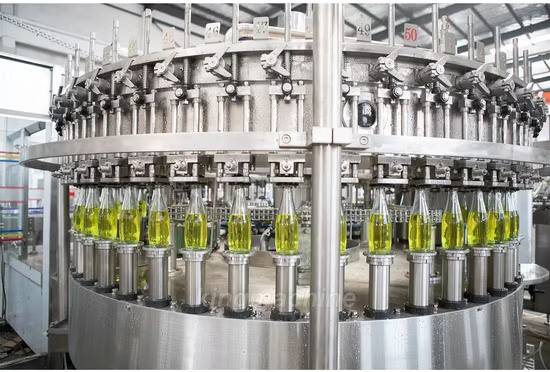
Food-grade phosphoric acid in high-volume soft drink production and bottling
However, sourcing this crucial chemical isn’t as simple as placing an order. Compromising on purity or compliance can lead to severe consequences, including product recalls, regulatory fines, and irreparable damage to your brand’s reputation. This guide will walk you through the essential steps to confidently order food-grade phosphoric acid, ensuring both safety and compliance.
Understanding Food-Grade Standards: E338 and FCC
Before you even begin the procurement process, it’s vital to understand the specific standards that define food-grade phosphoric acid. These standards are your benchmark for quality and safety.
Key Food-Grade Designations:
- E338 (European Union): This is the European food additive code for phosphoric acid. Products labeled E338 must comply with strict purity criteria set by the European Food Safety Authority (EFSA), ensuring it is safe for consumption within specified limits.
- Food Chemical Codex (FCC): The FCC is a compendium of internationally recognized standards for the purity and identity of food ingredients. Compliance with FCC standards indicates that the phosphoric acid meets global benchmarks for quality and safety in food applications.
Always verify that your supplier explicitly states compliance with these relevant standards on their product documentation, such as the Certificate of Analysis (CoA).
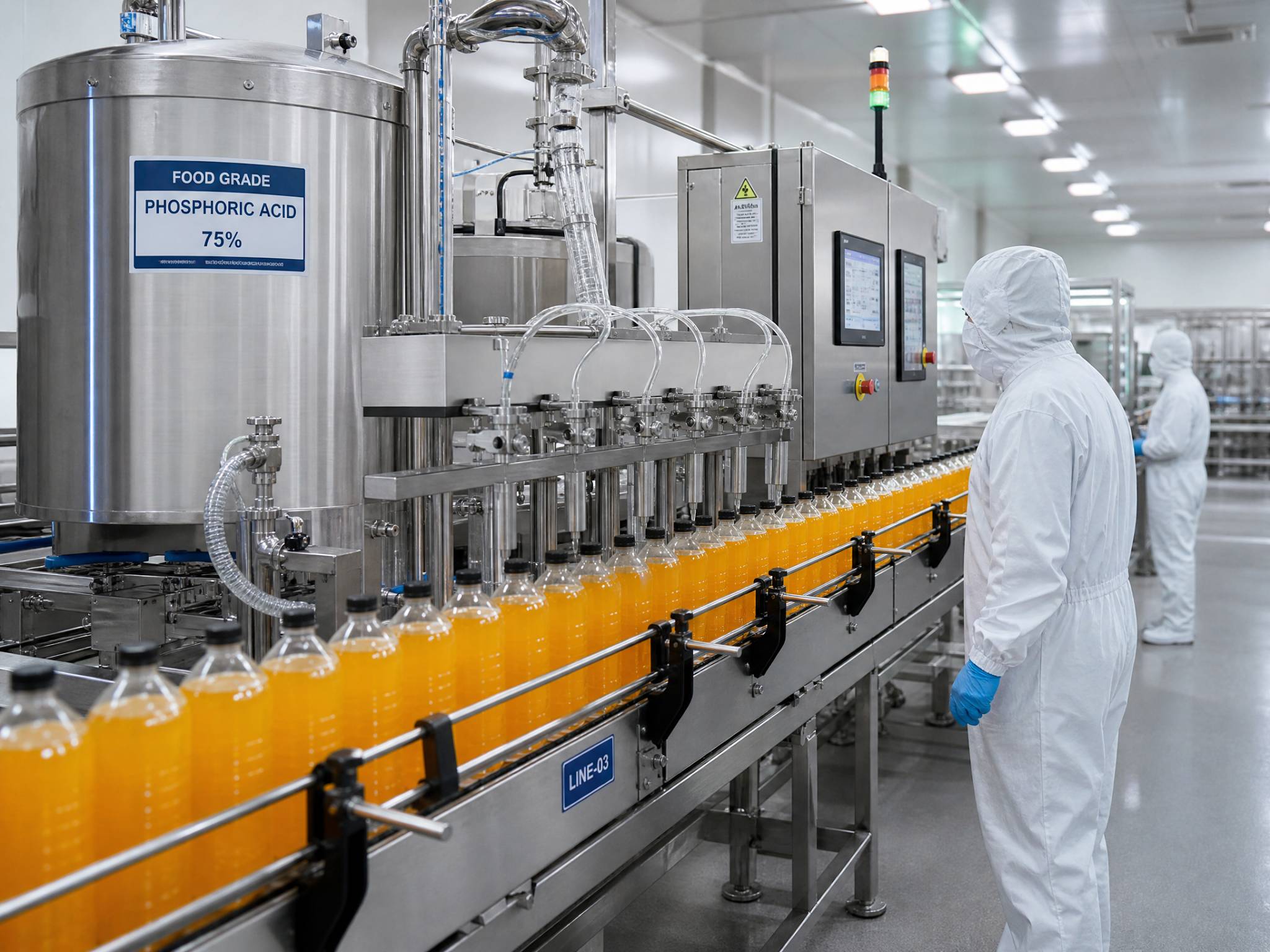
Food-grade phosphoric acid is precisely dosed into beverages on an automated production line.
Purity and Quality: Beyond the Label
While E338 and FCC designations are crucial, true food-grade quality goes deeper. It involves stringent control over impurities, heavy metals, and other contaminants that could pose health risks or affect your final product. This is where your due diligence becomes paramount.
What to Look for in a Supplier:
- Detailed Specifications:
Demand comprehensive product specifications that clearly outline purity levels, maximum impurity limits (e.g., arsenic, lead, fluoride), and any other relevant parameters for your application. Don’t settle for vague descriptions.
- Certificate of Analysis (CoA):
Insist on a batch-specific CoA for every single shipment. This document is your proof of purity and should detail the chemical composition and confirm compliance with E338/FCC standards. Cross-reference it meticulously with your agreed-upon specifications.
- Third-Party Audits and Certifications:
A reputable supplier will welcome third-party audits of their manufacturing facilities. Look for certifications like ISO 22000 (Food Safety Management System) or HACCP (Hazard Analysis and Critical Control Points) implementation. Our guide on REACH & ISO Certification: What to Verify Before Buying Phosphoric Acid from China offers insights into verifying supplier credentials.
- Traceability:
Ensure the supplier has robust traceability systems in place, allowing you to track the product from raw material to your facility. This is vital for food safety and recall procedures.
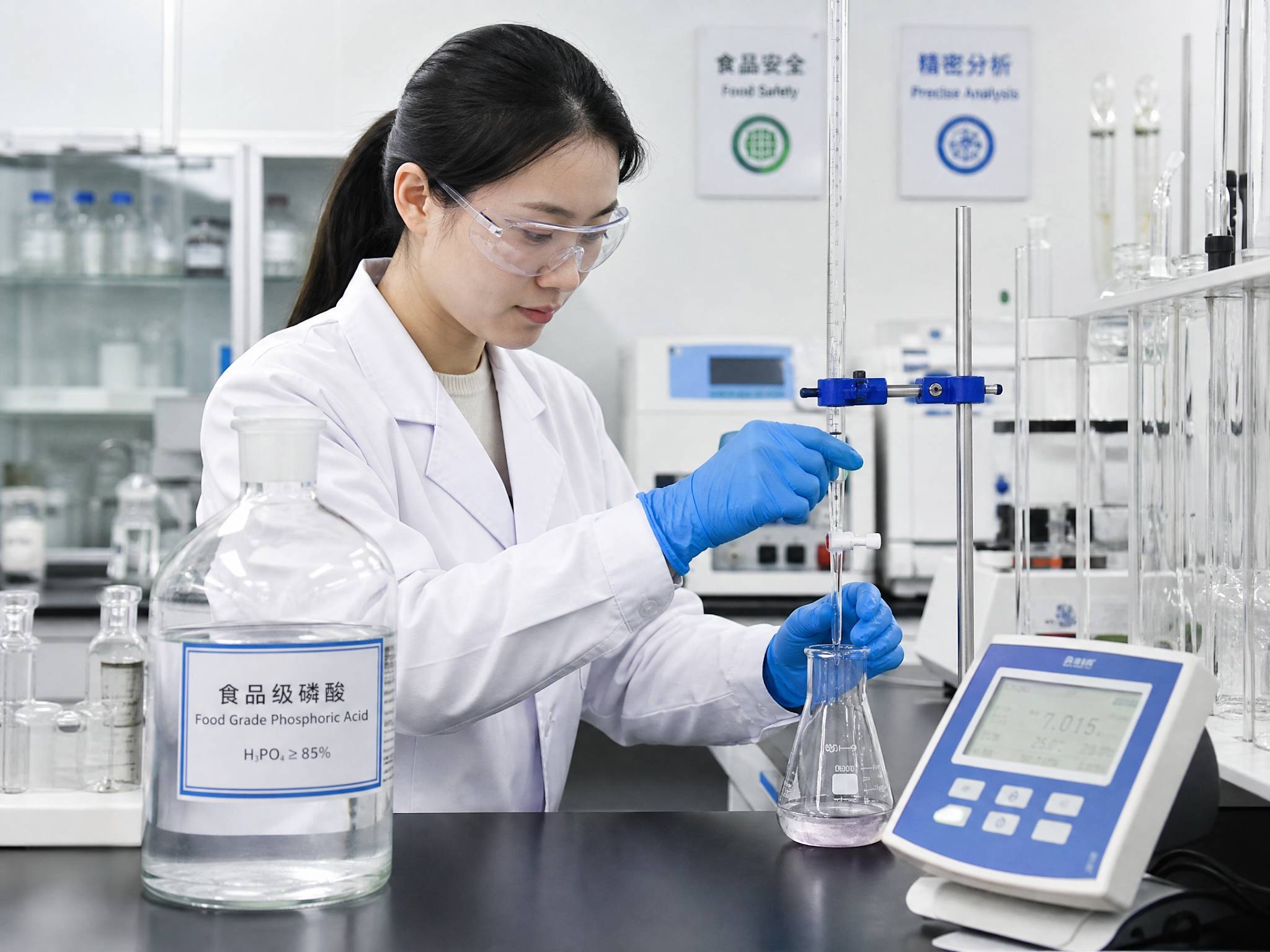
Rigorous laboratory testing ensures the purity and safety of food-grade phosphoric acid.
Need Help Sourcing Bulk Phosphoric Acid In 2026?
Get a Free Phosphoric Acid Specification Sheet (Food & Industrial Grade).
WhatsApp Us for Free a Consultation
Packaging, Storage, and Handling: Maintaining Integrity
The journey of food-grade phosphoric acid from manufacturer to your facility is critical. Improper packaging, storage, or handling can compromise its purity and safety. Remember, even the purest product can be contaminated if not managed correctly.
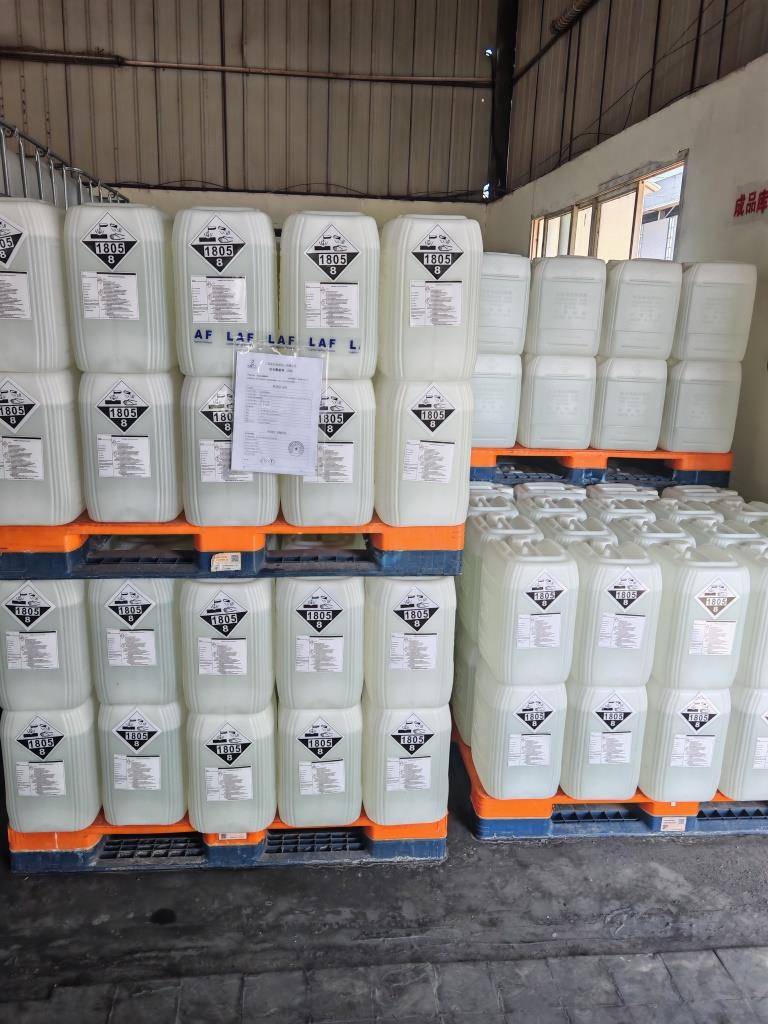
Secure and compliant packaging of food-grade phosphoric acid ready for safe distribution
Key Considerations for Logistics:
- Appropriate Packaging: Food-grade phosphoric acid should be supplied in packaging materials that are inert and won’t leach contaminants into the product. Common options include drums, IBC totes, or ISO tanks made from suitable plastics or lined steel. Our blog on Phosphoric Acid Packaging for Bulk Orders provides a detailed comparison.
- Storage Conditions: Store food-grade phosphoric acid in a cool, dry, well-ventilated area, away from incompatible materials. Ensure containers are tightly sealed to prevent contamination. Always refer to the product’s Material Safety Data Sheet (MSDS) for specific storage guidelines.
- Safe Handling Practices: Implement strict safety protocols for handling. While food-grade, concentrated phosphoric acid is still corrosive. Ensure personnel are trained and equipped with appropriate Personal Protective Equipment (PPE). Our Phosphoric Acid Safety and Handling Guide offers comprehensive advice.
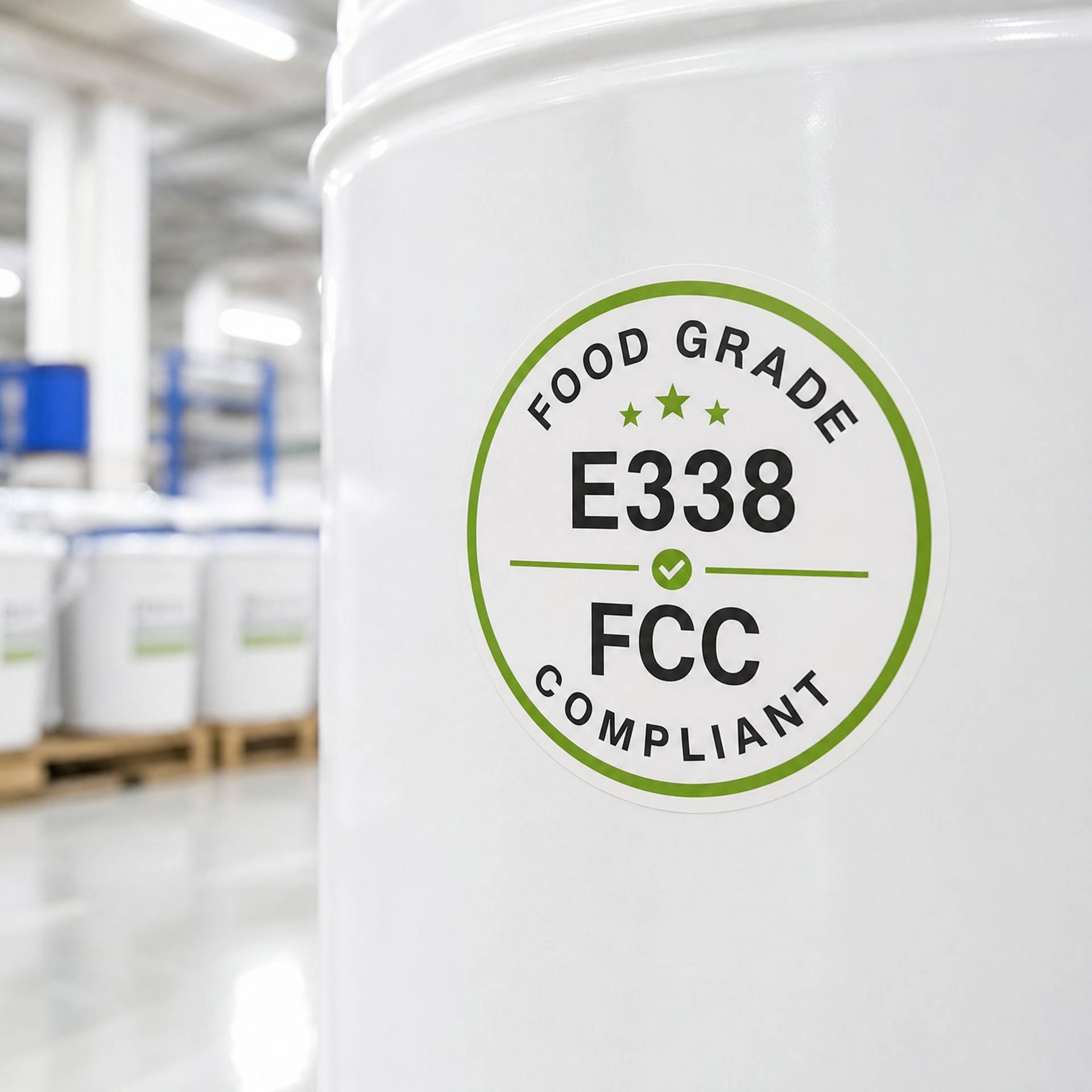
The E338/FCC seal is a visual assurance of compliance with international food-grade standards.
Supplier Relationship and Continuous Compliance
Building a strong, transparent relationship with your supplier is key to long-term safety and compliance. It’s not a one-time check but an ongoing commitment to quality assurance.
Building a Robust Supply Chain:
- Regular Communication: Maintain open lines of communication with your supplier regarding any changes in specifications, regulations, or supply chain issues.
- Audits and Re-verification: Periodically re-evaluate your supplier’s compliance and quality systems. This could involve re-audits or requesting updated certifications.
- Contractual Agreements: Ensure your purchasing contracts clearly define quality standards, testing requirements, liability, and dispute resolution mechanisms. This protects both parties.
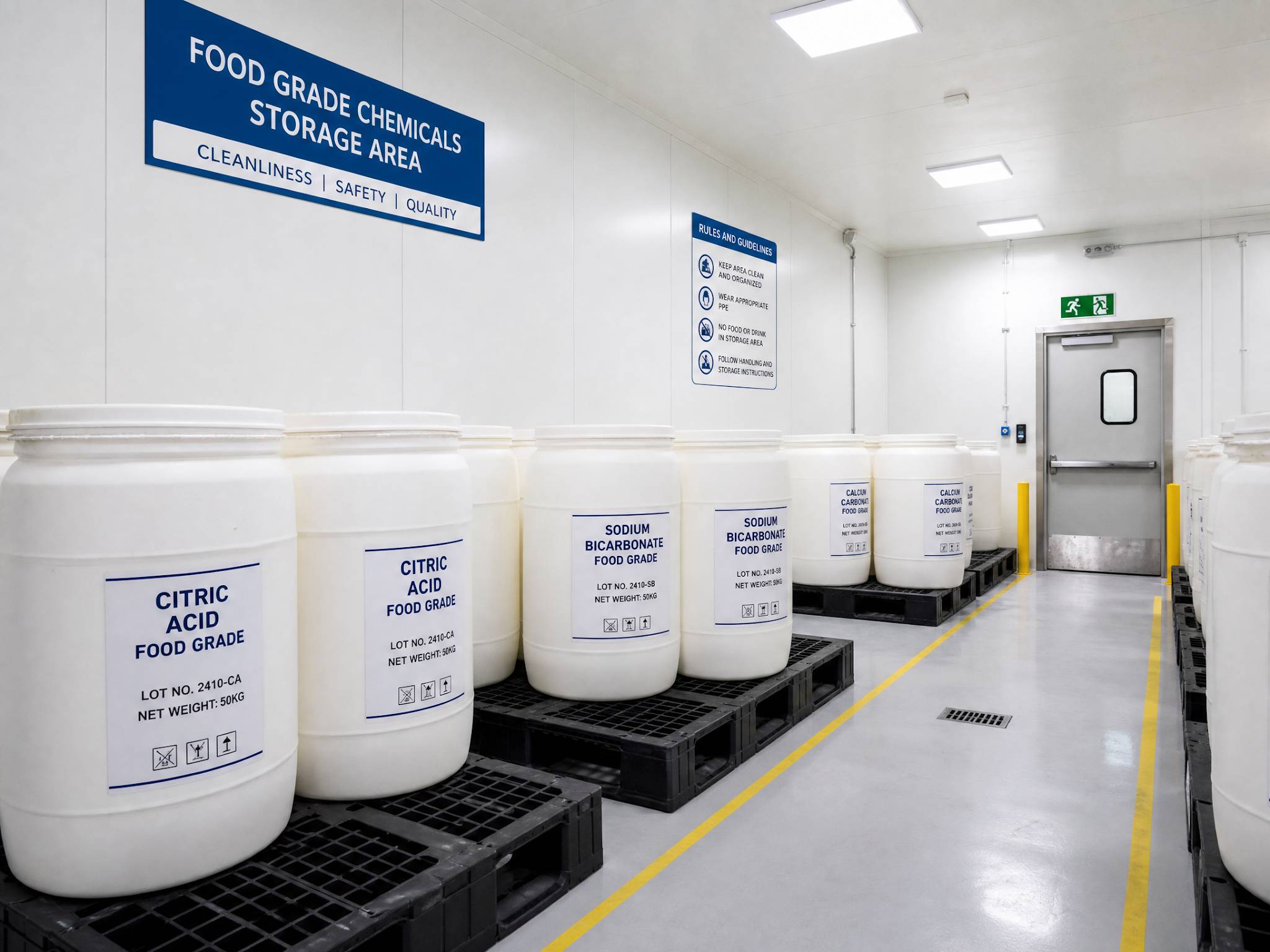
Proper storage in a dedicated area is essential to maintain the integrity of food-grade chemicals.
The Importance of Documentation
In the world of food safety, documentation is king. Every step of the procurement process, from initial inquiry to final delivery, should be meticulously documented. This creates an audit trail that is invaluable for regulatory compliance and quality assurance.
Key Documents to Maintain:
- Supplier Qualification Records: All verification documents, audit reports, and certifications.
- Purchase Orders: Clearly stating product specifications, quantity, and agreed-upon terms.
- Certificates of Analysis (CoAs): For every batch received.
- Material Safety Data Sheets (MSDS): Up-to-date safety information.
- Shipping and Customs Documents: Bills of lading, import permits, etc.
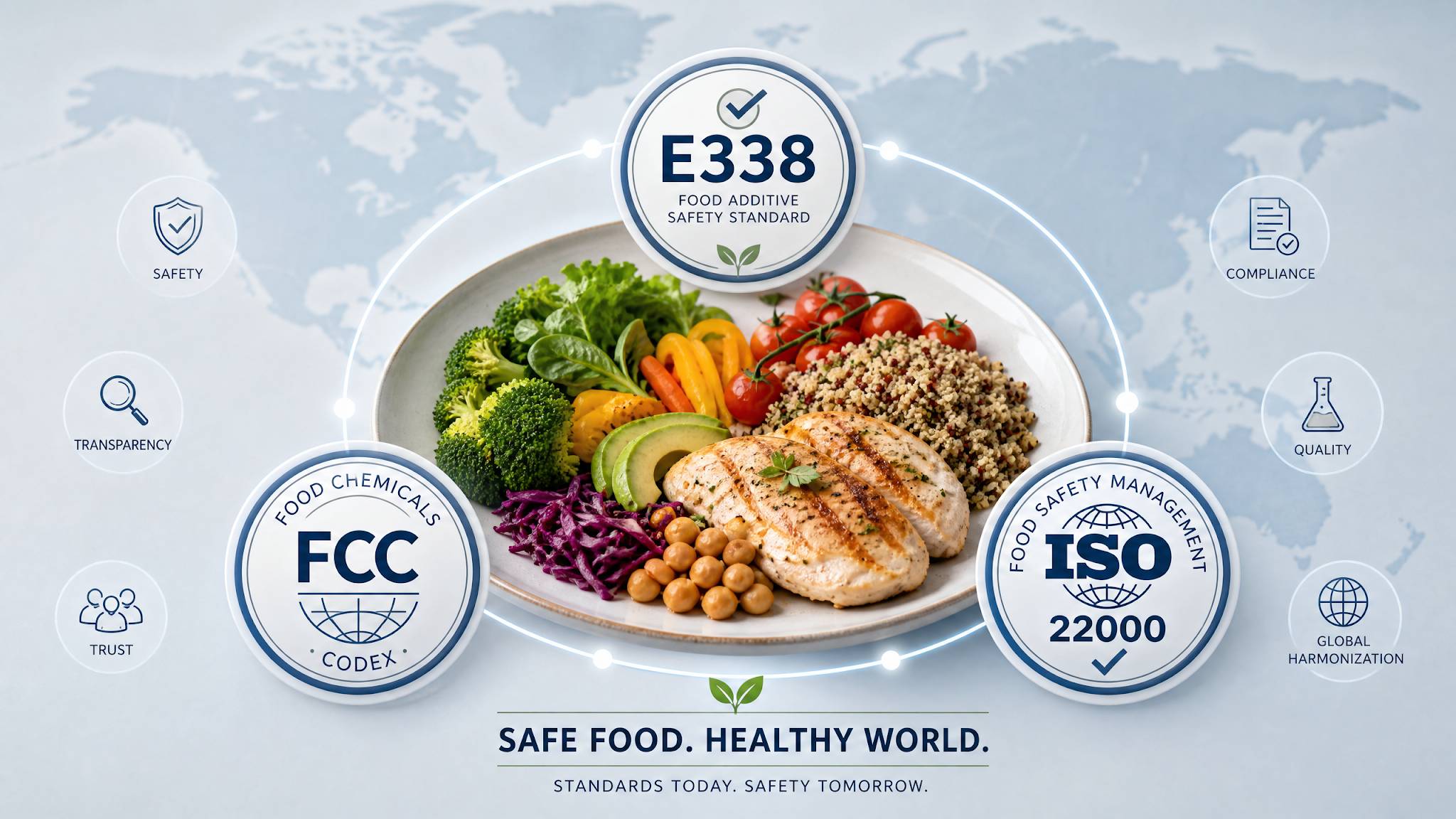
Adherence to global standards like E338, FCC, and ISO 22000 is paramount for food-grade chemical safety.
Frequently Asked Questions (FAQs)
Q1: What is the difference between food-grade and industrial-grade phosphoric acid?
Food-grade phosphoric acid (like E338 or FCC compliant) undergoes extensive purification to remove impurities and heavy metals, making it safe for human consumption. Industrial-grade phosphoric acid has lower purity standards and may contain contaminants unsuitable for food applications, making it suitable only for industrial uses like metal treatment or detergents.
Q2: Why is E338 important for food-grade phosphoric acid?
E338 is the European food additive code for phosphoric acid, indicating that the product meets the strict purity and safety criteria set by the European Food Safety Authority (EFSA). This designation assures that the phosphoric acid is approved for use in food and beverages within the EU.
Q3: How can I verify a supplier’s claim of food-grade quality?
Verify food-grade quality by demanding batch-specific Certificates of Analysis (CoAs) that confirm compliance with E338/FCC standards and detail impurity levels. Look for supplier certifications like ISO 22000 or HACCP, and consider conducting third-party audits of their facilities.
Q4: What are the primary uses of food-grade phosphoric acid in the food industry?
Food-grade phosphoric acid is primarily used as an acidulant to provide tartness (e.g., in soft drinks), a preservative to inhibit microbial growth, and a buffering agent to stabilize pH levels in various processed foods and beverages.
Q5: What packaging is suitable for food-grade phosphoric acid?
Food-grade phosphoric acid should be packaged in inert materials that prevent contamination, such as specialized plastic drums, IBC totes, or lined steel ISO tanks. The packaging must be clean, securely sealed, and clearly labeled to maintain product integrity and safety during transport and storage.
Conclusion: Your Recipe for Safe Food-Grade Sourcing
Ordering food-grade phosphoric acid requires a diligent approach, but it’s a process that safeguards your products, your consumers, and your brand. By understanding and verifying compliance with standards like E338 and FCC, meticulously vetting suppliers, ensuring proper handling, and maintaining thorough documentation, you can confidently procure this essential ingredient. Prioritize safety and quality at every step, and you’ll build a resilient supply chain that stands up to scrutiny.
Industrial Buyers: Next Steps for Sourcing Bulk Phosphoric Acid
What makes our Phosphoric Acid Better:
✅ Compliant with EU, UN, ISO Standards – No Legal Headaches
✅ Guaranteed 85% Concentration – Stability for your Processing Plant
✅ Extremely Low Impurities – Low Heavy Metals
✅ Batch-Specific COA Provided – Full Transparency per Shipment.
Download Our EU-approved Specifications.[ Food Grade or Industrial Grade]