


Phosphoric acid and ammonium polyphosphate (APP) are both important phosphorus-based products used in fertilizer manufacturing, but they serve different roles and are not interchangeable.
Phosphoric acid is primarily an acid and industrial raw material that can be used to manufacture phosphate fertilizers and other phosphorus-based chemicals. APP is an ammonium phosphate fertilizer containing both nitrogen and phosphorus and can be used directly in fertilizer applications or blends.
For bulk buyers, the right choice depends on whether you need a feedstock for further manufacturing or a finished nitrogen-phosphorus fertilizer product. This guide compares phosphoric acid vs. ammonium polyphosphate by composition, production, applications, specifications, pricing, and supplier considerations.

Plant operator conducting system checks on stainless steel reaction tanks and piping systems during liquid chemical processing
So, should you buy phosphoric acid or ammonium polyphosphate?
The answer depends on whether you need a raw material for fertilizer production or a finished nitrogen-phosphorus fertilizer product.
For bulk buyers, the right choice depends on whether you need a feedstock for further manufacturing or a finished nitrogen-phosphorus fertilizer product. When sourcing bulk phosphorus solutions for industrial or agricultural processing, procurement teams must carefully verify product concentration and contaminant caps. Whether your plant requires food-grade acidulation via our Phosphoric Acid Food Grade portal or high-purity industrial stock, batch-level transparency is critical
You can also see how chemical sourcing and quality evaluation work in practice in this CAMACHEM video
hat Is Phosphoric Acid?
Phosphoric acid, also called orthophosphoric acid, is an inorganic acid with the chemical formula H₃PO₄.
It is widely used in fertilizer production and chemical manufacturing. Industrial phosphoric acid can be produced through wet-process or thermal-process routes, with wet-process acid closely associated with phosphate rock processing and fertilizer production.
In fertilizer manufacturing, phosphoric acid can be reacted with ammonia to produce ammonium phosphate products. It can also be further concentrated or purified depending on the intended application.
For a comprehensive overview of global export specifications and compliance standards, download the official CAMACHEM Phosphoric Acid SDS MSDS or visit our Phosphoric Acid 85% Core Portal.
What Is Phosphoric Acid Used For?
Phosphoric acid has applications across several industries, including:
- Fertilizer production
- Phosphate fertilizer manufacturing
- Industrial chemical processing
- Food-related applications for suitable grades
- Water treatment
- Metal treatment
- Specialty chemical manufacturing
For fertilizer manufacturers, the required grade can vary according to the downstream process.
Not sure which phosphoric acid or ammonium polyphosphate grade fits your exact application? Reach out directly to CAMAL Group’s chemical sourcing specialists for tailored supplier matching and procurement support.
WhatsApp Us for Free a Consultation
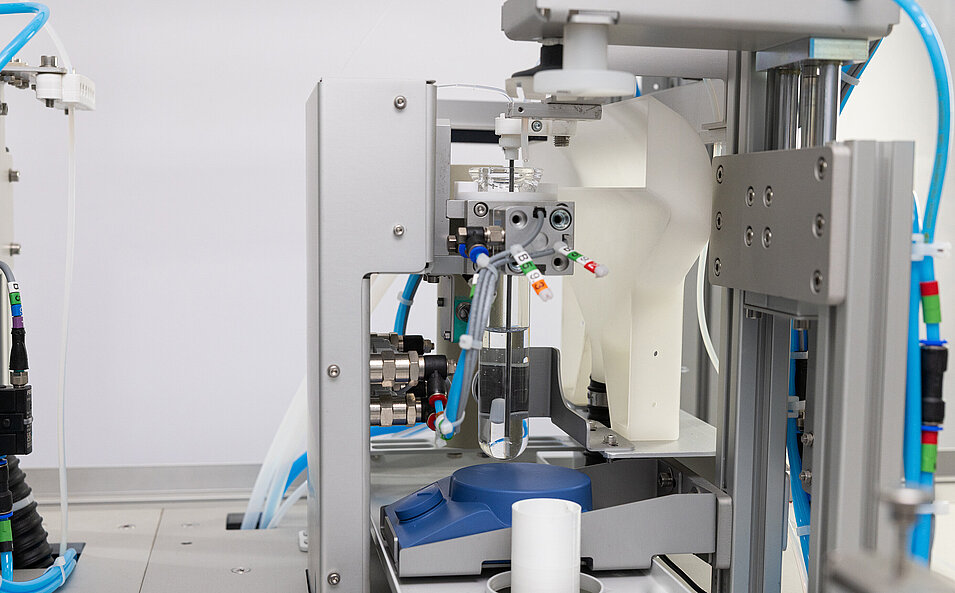
Automated laboratory titration system used for precise assay testing and quality control of liquid chemical solutions
What Is Merchant Grade Phosphoric Acid?
Merchant grade phosphoric acid is commonly associated with concentrated wet-process phosphoric acid used in fertilizer and phosphate production.
Modern industry references describe merchant-grade acid as being concentrated from wet-process phosphoric acid, commonly reaching around 52–54% P₂O₅, although actual specifications vary by producer and application.
Because wet-process acid originates from phosphate rock, it can contain impurities such as iron, aluminum, fluoride, sulfate, calcium, and magnesium.
For fertilizer production, these impurities may be acceptable when they remain within the buyer’s required specification.
Learn how CAMACHEM helps global manufacturing business owners reliably source high-purity industrial chemicals directly from China with transparent logistics and strict quality controls.
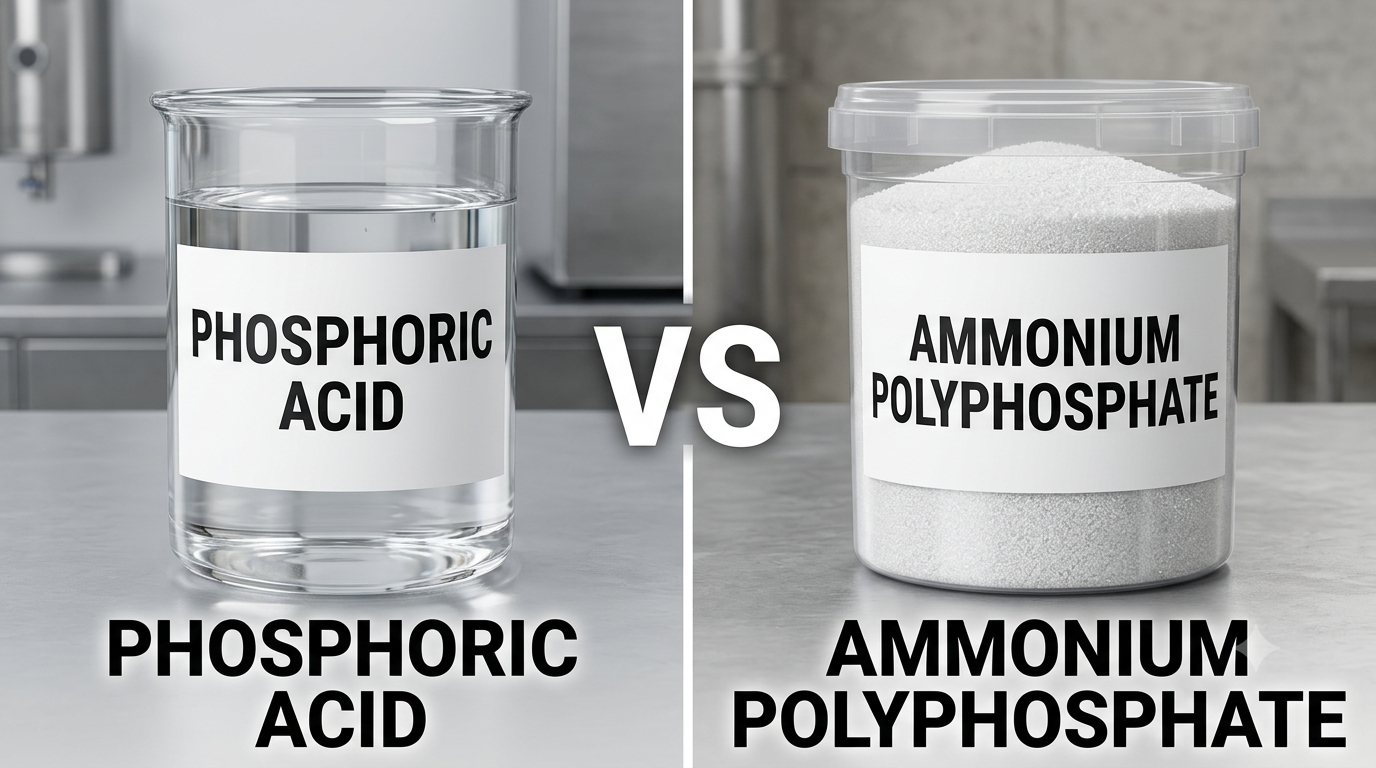
Direct visual comparison displaying liquid Phosphoric Acid alongside powdered Ammonium Polyphosphate for quick product identification
What Is Ammonium Polyphosphate?
Ammonium polyphosphate (APP) is a phosphorus- and nitrogen-containing fertilizer made by reacting phosphoric acid or related phosphate feedstocks with ammonia under controlled conditions.
Unlike phosphoric acid, APP is not simply an acid raw material. It is an ammonium phosphate product in which part of the phosphorus is present as polyphosphate.
APP can be produced by reacting concentrated phosphoric acid with ammonia under elevated temperatures. Technical literature also describes production of APP fertilizer from merchant-grade wet-process phosphoric acid and anhydrous ammonia.
What Is Ammonium Polyphosphate Used For?
Ammonium polyphosphate is mainly associated with fertilizer applications.
APP fertilizer can be supplied as a liquid or suspension product and can be applied directly to soil or used in the preparation of blended fertilizer products.
Its nitrogen and phosphorus content makes it useful when growers or fertilizer manufacturers need both nutrients in one product.
For fertilizer manufacturers, the required grade can vary according to the downstream process. In large-scale agricultural manufacturing, merchant-grade acid serves as the primary precursor for granulated and liquid ammonium phosphates. To explore process flow schematics and feedstock parameters, read our technical guide on Phosphoric Acid Use in Fertilizer Production.
Phosphoric Acid vs Ammonium Polyphosphate: Key Differences
The easiest way to understand the difference is to look at the products from a buyer’s perspective.
| Factor | Phosphoric Acid | Ammonium Polyphosphate |
|---|---|---|
| Product type | Acid/raw material | Ammonium phosphate fertilizer |
| Main nutrients | Phosphorus | Nitrogen + phosphorus |
| Chemical form | Orthophosphoric acid | Polyphosphate-based ammonium salt |
| Main role | Raw material and industrial chemical | Fertilizer product |
| Common fertilizer use | Feedstock for phosphate fertilizers | Direct fertilizer or fertilizer blend component |
| Production | Wet or thermal process | Produced by reacting phosphate feedstock with ammonia |
| Buyer focus | Concentration, purity and impurities | Nutrient analysis, polyphosphate content, stability and application |
| Typical purchasing decision | Select feedstock for the manufacturing process | Select finished fertilizer for application or blending |
The key point is simple:

Industrial infographic summarizing key production steps, physical properties, pH differences, and application pathways for Phosphoric Acid and Ammonium Polyphosphate
Phosphoric acid can be a starting material for producing ammonium polyphosphate.
APP is therefore not simply an alternative name for phosphoric acid.
Need to verify impurity profiles, P₂O₅ concentration, or batch COAs before placing a bulk order? Message our technical team on WhatsApp to review specifications against your production requirements.
WhatsApp Us for Free a Consultation
How Is Ammonium Polyphosphate Made From Phosphoric Acid?
One important relationship between the two products is their manufacturing process.
Phosphoric acid can be reacted with ammonia under controlled temperature and process conditions to produce ammonium polyphosphate.
During production, the phosphorus compounds can undergo condensation or polymerization, producing polyphosphate species. The final product characteristics depend on factors such as raw-material composition, P:N ratio, temperature, reaction time, pressure, and water content. Research on APP production has shown that these variables can affect polymerization, solubility, and nutrient recovery. Because wet-process acid originates from phosphate rock, it can contain impurities such as iron, aluminum, fluoride, sulfate, calcium, and magnesium. For large-scale chemical acidulation, rust conversion, and mineral processing, purchasing unrefined or inconsistent raw materials increases production risks. Industrial buyers routinely rely on Phosphoric Acid Industrial Grade to maintain consistent concentration across recurring FCL shipments.

Comparative process diagram illustrating the wet-process manufacturing of Phosphoric Acid alongside the neutralization and polymerization steps for Ammonium Polyphosphate
Why Does the Phosphoric Acid Feedstock Matter?
The quality of the phosphoric acid used as a feedstock can influence the manufacturing process.
Wet-process phosphoric acid can contain impurities such as iron and aluminum. These impurities may create processing or storage challenges depending on the APP formulation and conditions. Technical literature on APP production specifically discusses the use of merchant-grade wet-process phosphoric acid as a feedstock.
For this reason, APP manufacturers should not evaluate phosphoric acid based only on its concentration.
The impurity specification also matters.
Phosphoric Acid vs Ammonium Polyphosphate for Fertilizer Production
The right choice depends on where you are in the fertilizer value chain.
When Should You Buy Phosphoric Acid?
Phosphoric acid may be the better choice when you are:
- Manufacturing phosphate fertilizers
- Producing ammonium phosphate products
- Using phosphoric acid as a chemical feedstock
- Further processing or purifying the acid
- Producing phosphorus-based chemicals
For these applications, buyers should focus on the acid’s concentration, impurity profile, production route, and consistency.

Specialized application comparison mapping Phosphoric Acid for water treatment and bulk fertilizer synthesis against Ammonium Polyphosphate for flame-retardant polymers and intumescent coatings
When Should You Buy Ammonium Polyphosphate?
APP may be more appropriate when you need a fertilizer product that already contains nitrogen and phosphorus.
It can be used as:
- A liquid fertilizer
- A suspension fertilizer
- A fertilizer blend component
- A phosphorus and nitrogen source for crops
- A feedstock for certain fertilizer formulations
The exact product specification should be matched to the intended agricultural application.
Phosphoric Acid vs Ammonium Polyphosphate: Which Is More Concentrated?
This comparison needs some care because the two products are normally described using different specifications.
Phosphoric acid is commonly specified by H₃PO₄ concentration or P₂O₅ equivalent.
APP fertilizers are generally described using their nitrogen and P₂O₅ analysis, along with the proportion of phosphorus present as polyphosphate.
For example, commercial APP fertilizer formulations can be expressed using nutrient grades such as N-P₂O₅-K₂O. One technical example describes APP suspension fertilizer at 12-36-0, with part of the P₂O₅ present as polyphosphate.
Therefore, comparing “percentage purity” between phosphoric acid and APP is not meaningful without first defining what property is being compared.
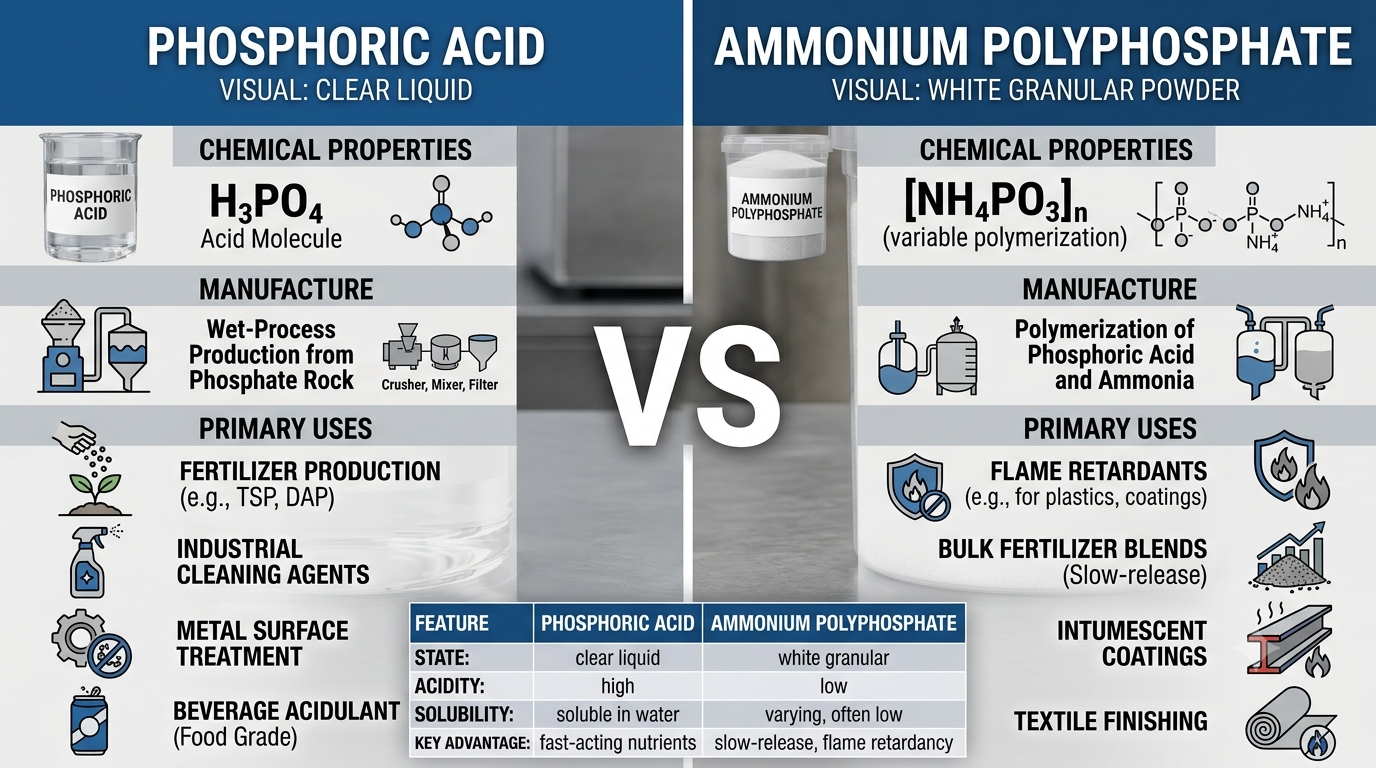
Infographic breakdown detailing the chemical structure, manufacturing routes, and end-use applications for liquid Phosphoric Acid versus solid Ammonium Polyphosphate
Is 85% Phosphoric Acid the Same as Ammonium Polyphosphate?
No.
85% phosphoric acid refers to the concentration of phosphoric acid in a product. It does not mean that the product is ammonium polyphosphate.
APP is produced by reacting phosphate feedstocks with ammonia and converting part of the phosphorus into polyphosphate forms.
This distinction is important for buyers searching for 85% phosphoric acid, bulk phosphoric acid, or fertilizer raw materials.
The product concentration, nutrient analysis, chemical form, and intended application should always be checked separately.
Phosphoric Acid vs Ammonium Polyphosphate: Price Considerations
Price comparisons between the two products can be misleading because they are different materials serving different roles.
When checking phosphoric acid price, buyers should consider:
- Concentration
- Grade
- P₂O₅ content
- Impurity limits
- Production route
- Order quantity
- Packaging
- Freight
- Destination
- Import costs
For APP, buyers should also consider:
- Nitrogen content
- P₂O₅ content
- Polyphosphate percentage
- Product form
- Stability
- Packaging
- Shipping costs
- Application requirements
Why Price Per Ton Is Not Enough
A lower price per ton does not automatically mean a lower overall procurement cost.
For example, a fertilizer manufacturer purchasing phosphoric acid as a raw material may need additional processing before producing a finished fertilizer. An agricultural buyer purchasing APP may instead be purchasing a more finished fertilizer product. To see how chemical cargo inspections and drum lashing are conducted before export dispatch, watch our
For this reason, buyers should compare the cost against the actual purpose of the material. Depending on the application, this may mean evaluating cost per unit of useful nutrient, cost per required process output, or total landed cost rather than comparing the quoted price per metric ton alone.

Industrial plant layout diagram mapping the flow from liquid Phosphoric Acid bulk storage and tanker transport to downstream Ammonium Polyphosphate granule processing, warehousing, and export shipping
What Should Bulk Buyers Check Before Buying Phosphoric Acid?
If you are sourcing phosphoric acid for fertilizer production, ask the supplier for complete technical information.

Specialized chemical filtration and reaction equipment used for multi-stage purification of phosphoric acid
Check the Phosphoric Acid Specification
Confirm:
- H₃PO₄ concentration
- P₂O₅ content
- Appearance
- Density
- Iron
- Aluminum
- Fluoride
- Sulfate
- Calcium
- Magnesium
- Other relevant impurities
The exact parameters should be based on your production requirements.
Request a Phosphoric Acid COA
A phosphoric acid COA should show the test results for the supplied batch.
Compare the batch COA with the agreed specification before accepting the material.
A product brochure alone is not enough for a serious bulk purchase.
Request the MSDS/SDS
The MSDS phosphoric acid or current SDS provides information about hazards, handling, storage, transportation, and emergency procedures.
Make sure the document corresponds to the actual product being supplied.
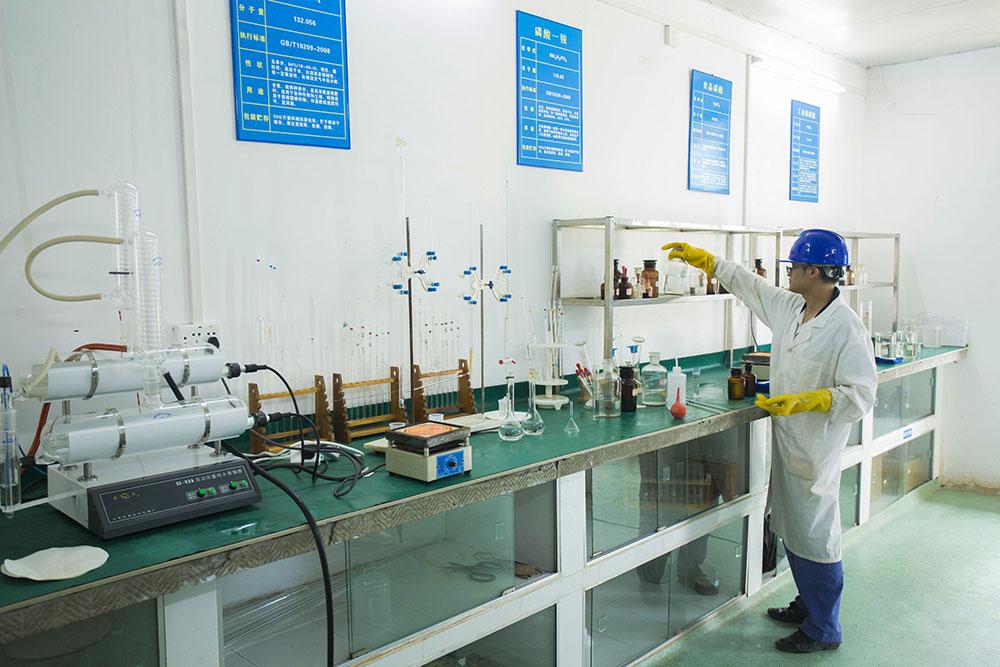
Quality testing and chemical analysis of 85% phosphoric acid in a manufacturer testing lab
What Should Buyers Check When Buying Ammonium Polyphosphate?
APP buyers should focus on the fertilizer specification rather than treating it like a standard phosphoric acid purchase.
Check:
- Nitrogen content
- Total P₂O₅
- Polyphosphate content
- Product form
- Solubility or suspension characteristics
- Density, where relevant
- Stability during storage
- Impurity limits
- Packaging
- COA
- SDS
- Application requirements
For fertilizer manufacturers, it is also important to understand how the product behaves during storage, blending, transportation, and application.
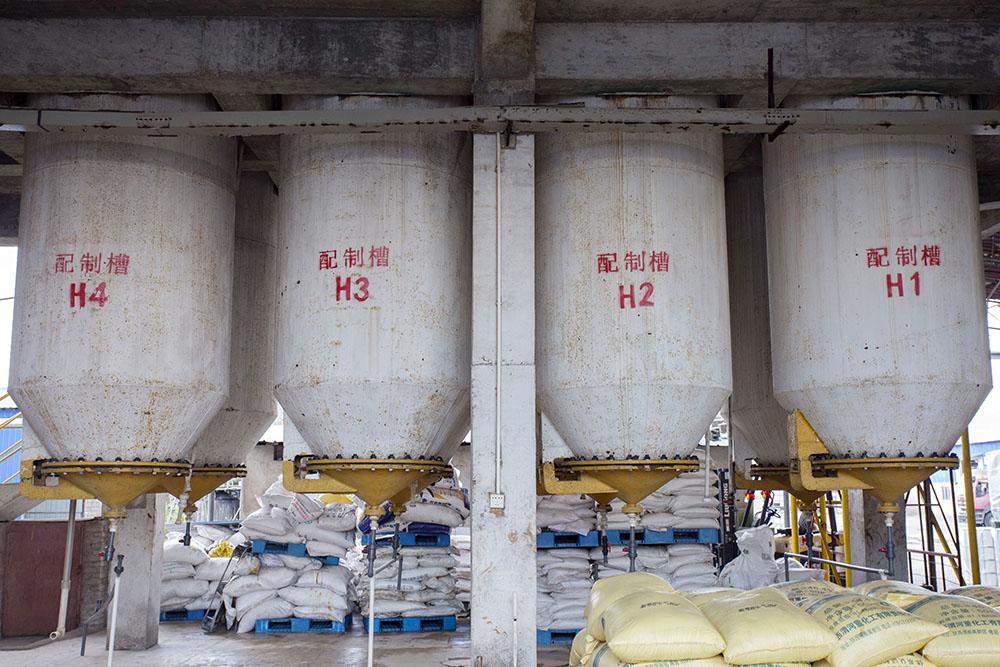
Industrial formulation and mixing hoppers used for controlled concentration batching and pilot sample production of phosphoric acid derivatives
Want a realistic total landed cost estimate including drum/IBC packaging, freight, and port handling for your target destination? Contact CAMAL Group today to get custom export pricing options.
WhatsApp Us for Free a Consultation
How to Choose a Phosphoric Acid or APP Supplier
Choosing a supplier should begin with your technical requirements.
1. Define Your Product Requirement
Before requesting quotations, specify whether you need:
- Merchant grade phosphoric acid
- 85% phosphoric acid
- Industrial phosphoric acid
- Purified phosphoric acid
- Ammonium polyphosphate fertilizer
- Another application-specific grade
2. Compare Technical Specifications
Do not compare suppliers only by price.
Compare the complete specification, impurity limits, nutrient content, documentation, packaging, and supply capability. To prevent processing issues, learn how to identify off-spec acid shipments via our guide on Signs of Diluted or Low-Purity Phosphoric Acid.
3. Check COA and SDS Documentation
Request current technical documents and, where possible, a batch-specific COA.
4. Evaluate Production Capability
For recurring bulk requirements, confirm that the supplier can maintain consistent quality and production volume.
5. Calculate Total Landed Cost
Include:
- Product price
- Freight
- Insurance where applicable
- Packaging
- Port and handling costs
- Import duties
- Testing
- Storage
- Other destination costs
This gives you a more realistic view of the procurement cost.
How Can CAMAL Group Help You Source Phosphoric Acid From China?
Finding a phosphoric acid supplier in China is only the first step. The bigger challenge is identifying a supplier that can meet your required concentration, grade, impurity limits, documentation, packaging, quantity, and delivery requirements consistently.
CAMAL Group can help businesses identify and evaluate suitable chemical suppliers in China based on their specific sourcing requirements. Through CAMACHEM, buyers can access chemical sourcing and procurement support for industrial chemicals.

Camal Group representatives conducting an on-site quality inspection and facility audit at a chemical manufacturing factory
For buyers looking for bulk phosphoric acid, the supplier evaluation process can include reviewing the required grade, concentration, purity, COA and SDS/MSDS documentation, packaging, MOQ, export experience, logistics, and total landed cost. This follows the buyer-focused sourcing approach used across CAMAL’s phosphoric acid content.
Why Supplier Selection Matters
The cheapest quotation is not always the best option.
Product quality, production capability, documentation, consistency, packaging, logistics, and long-term supply reliability can all affect the real cost of procurement. The product concentration, nutrient analysis, chemical form, and intended application should always be checked separately. First-time chemical importers should review our guide on the Top Mistakes Importing Phosphoric Acid to ensure zero compliance delays at destination ports.
For fertilizer manufacturers, a consistent phosphoric acid feedstock can be particularly important because changes in concentration or impurity levels can affect downstream processing.
Frequently Asked Questions About Phosphoric Acid vs Ammonium Polyphosphate
Is ammonium polyphosphate made from phosphoric acid?
Yes. Ammonium polyphosphate can be produced by reacting phosphoric acid with ammonia under controlled process conditions. Different production processes can produce different APP characteristics.
Is phosphoric acid the same as ammonium polyphosphate?
No. Phosphoric acid is H₃PO₄, while ammonium polyphosphate is an ammonium phosphate product containing nitrogen and phosphorus in polyphosphate form.
Which is better for fertilizer production?
It depends on the role of the product. Phosphoric acid is commonly used as a raw material for producing phosphate fertilizers, while ammonium polyphosphate can be used directly as a nitrogen-phosphorus fertilizer or as part of a fertilizer blend.
Is 85% phosphoric acid used to make ammonium polyphosphate?
Concentrated phosphoric acid can be used as a feedstock for APP production, but the exact concentration and process requirements depend on the manufacturing process. APP production has been demonstrated using concentrated phosphoric acid and ammonia.
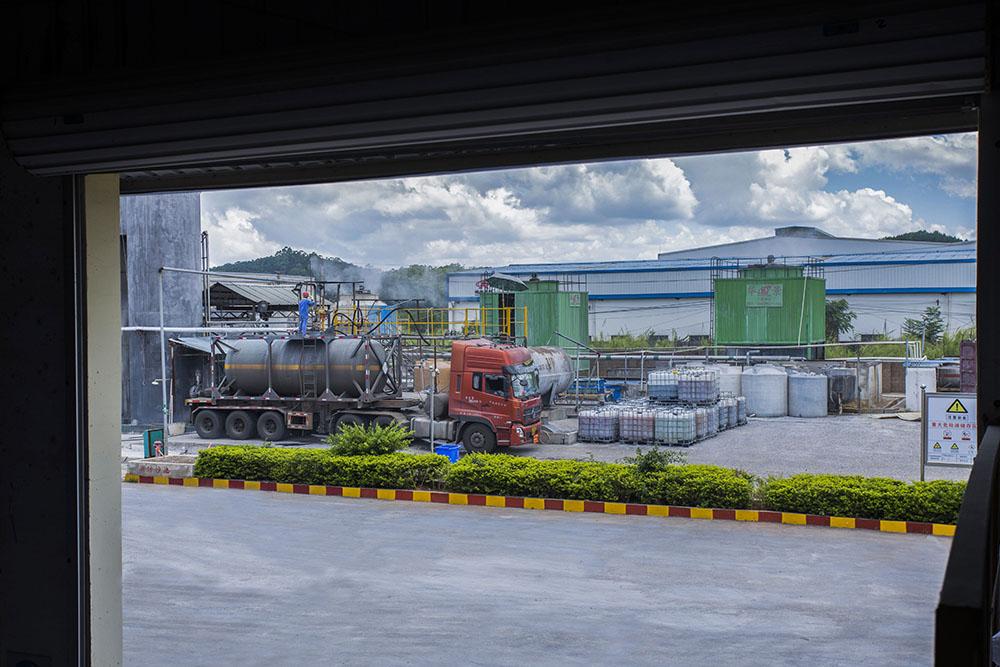
Bulk liquid phosphoric acid tanker loading and transport setup, highlighting scalable industrial procurement and export logistics
What is merchant grade phosphoric acid used for?
Merchant grade phosphoric acid is commonly used in fertilizer and phosphate production. It can also serve as a feedstock for further processing or purification. To evaluate container filling efficiency, stability, and freight cost per metric ton, check our technical guide on Phosphoric Acid Packaging: Drums vs IBC Totes vs ISO Tanks.
What should I ask a phosphoric acid supplier for?
For bulk purchasing, request the product specification, TDS, SDS/MSDS, sample COA, batch-specific COA, packaging information, MOQ, and shipping details. The required documentation may be greater for specialized applications. This 20ft container loading video gives buyers a quick look at how chemical cargo can be prepared for shipment.
How do I compare phosphoric acid suppliers?
Compare suppliers based on concentration, grade, impurity limits, COA results, production capability, documentation, packaging, export experience, logistics, and total landed cost rather than price alone.
Can I use any phosphoric acid to produce ammonium polyphosphate?
Not necessarily. The acid’s concentration, impurity profile, water content, and other properties can affect APP production. The feedstock should therefore be selected according to the manufacturer’s process and final product specification. Research has shown that raw-material ratios and process conditions can significantly affect APP properties.
Conclusion
The difference between phosphoric acid vs ammonium polyphosphate is mainly about their chemical form, role, and application.
Phosphoric acid is an important industrial chemical and fertilizer raw material. It can be used to manufacture phosphate fertilizers and can also serve as a feedstock for producing ammonium polyphosphate.
Ammonium polyphosphate, on the other hand, is a nitrogen- and phosphorus-containing fertilizer product that can be applied directly or used in fertilizer formulations.

Industrial warehouse technicians safely handling, palletizing, and preparing chemical drums for bulk phosphoric acid storage and export dispatch
For bulk buyers, the right choice depends on what you need the material to do.
If you are manufacturing fertilizer or phosphate chemicals, phosphoric acid may be the appropriate raw material. If you need a nitrogen-phosphorus fertilizer product, ammonium polyphosphate may be more suitable.
Before purchasing, always compare the grade, concentration, nutrient content, impurity limits, COA, SDS, packaging, quantity, and total landed cost.
The goal is not to find the cheapest chemical. It is to find the right specification from a supplier that can deliver consistent quality at the required volume.
Need help finding the best phosphoric acid manufacturer in China? Talk to CAMAL Group today.
WhatsApp Us for Free a Consultation
Industrial Buyers: Next Steps for Sourcing Bulk Phosphoric Acid
What makes our Phosphoric Acid Better:
✅ Compliant with EU, UN, ISO Standards – No Legal Headaches
✅ Guaranteed 85% Purity – Stability for your Processing Plant
✅ Extremely Low Impurities – Low Heavy Metals
✅ Batch-Specific COA Provided – Full Transparency per Shipment.
Download Our EU-approved Specifications.[ Food Grade or Industrial Grade]