

If you are buying acid for an industrial process, you may compare phosphoric acid vs hydrochloric acid. Both acids can clean, remove scale, and lower pH. They are not the same product.
The right choice depends on five questions:
- What must the acid remove or control?
- What material will the acid touch?
- Can the process accept phosphate or chloride?
- What grade and documents do you need?
- Can the supplier provide the same specification again?
Camachem supplies phosphoric acid from China and supports buyers with product documents, samples, logistics, and independent testing options. The exact product, order size, sample route, and testing scope must be confirmed for your order.

On-site supplier inspection helps industrial buyers verify product handling, packaging, and supply reliability before bulk phosphoric acid procurement.
This guide explains the practical difference between phosphoric acid and hydrochloric acid for B2B buyers. Buyers can also review the phosphoric acid supplier homepage before requesting product documents. It is not a universal formulation or dosing instruction. A qualified process engineer should validate concentration, temperature, contact time, materials, ventilation, neutralization, and waste handling before use.
Quick Answer: Phosphoric Acid or Hydrochloric Acid?
| Main need | Start by reviewing | Main buyer warning |
|---|---|---|
| Rust treatment or surface preparation | Phosphoric acid | Check the surface result and phosphate residue. |
| Strong mineral-acid cleaning or pickling | Hydrochloric acid | Check metal attack, chloride concerns, fumes, and ventilation. |
| Water pH adjustment | Either acid may be possible | Check chloride, phosphate, discharge rules, and equipment materials. |
| Food processing | Food-grade phosphoric acid only if approved | Industrial grade is not automatically suitable for food use. |
| Bulk supply from China | A complete product and supplier review | Do not buy from a quotation alone. |
What Is the Difference Between Phosphoric Acid and Hydrochloric Acid?
Chemical Difference
Phosphoric acid is also called orthophosphoric acid. Its formula is H₃PO₄ and its CAS number is 7664-38-2. PubChem lists it as corrosive and notes its use in fertilizers, detergents, and food processing.
Hydrochloric acid is hydrogen chloride dissolved in water. Its formula is HCl and its CAS number is 7647-01-0. PubChem lists cleaning, pickling, electroplating, tanning, refining, and metal processing among its uses.
The key difference is what each acid adds to the process:
- Phosphoric acid adds phosphate chemistry.
- Hydrochloric acid adds chloride chemistry.
This difference can affect corrosion, residue, wastewater, and downstream product quality.
Strength Is Not the Only Decision
Hydrochloric acid is commonly treated as a strong acid in water. Phosphoric acid has different dissociation behaviour. This does not mean that one acid is always better.
A buyer must also compare:
- concentration and assay method;
- impurity limits;
- substrate and equipment material;
- contact time and temperature;
- residue and wastewater requirements;
- packaging and transport requirements;
- SDS, TDS, CoA, and traceability.
The best acid is therefore the one that creates the most manageable overall process—not necessarily the one with the lowest purchase price. For buyers who need to compare grade decisions in more detail, Food Grade vs Industrial Grade Phosphoric Acid.
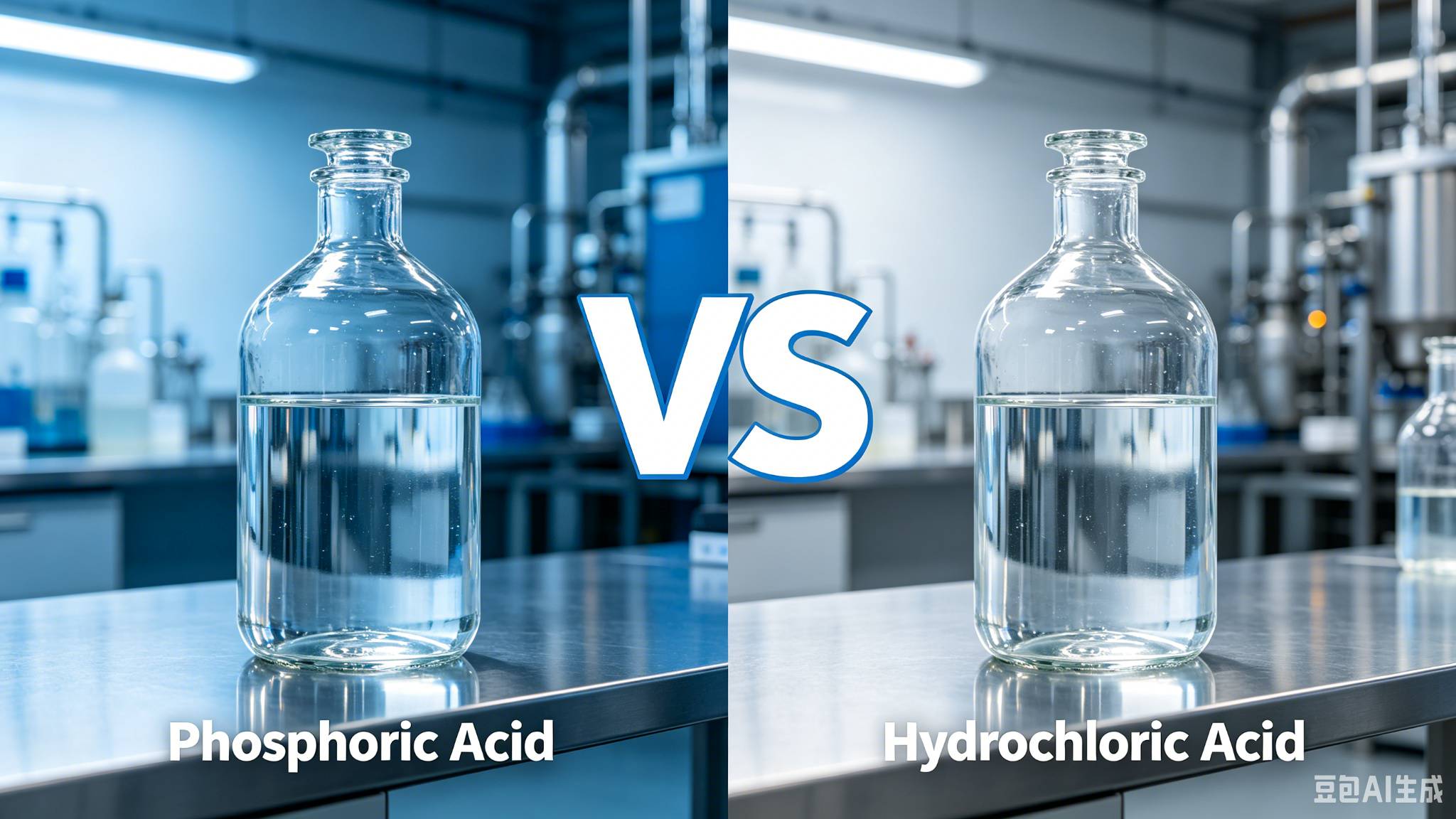
Phosphoric Acid vs Hydrochloric Acid — a side-by-side industrial comparison of two common process acids.
Not sure which phosphoric acid or hydrochloric acid grade fits your exact application? Reach out directly to CAMAL Group’s chemical sourcing specialists for tailored supplier matching and procurement support.
WhatsApp Us for Free a Consultation
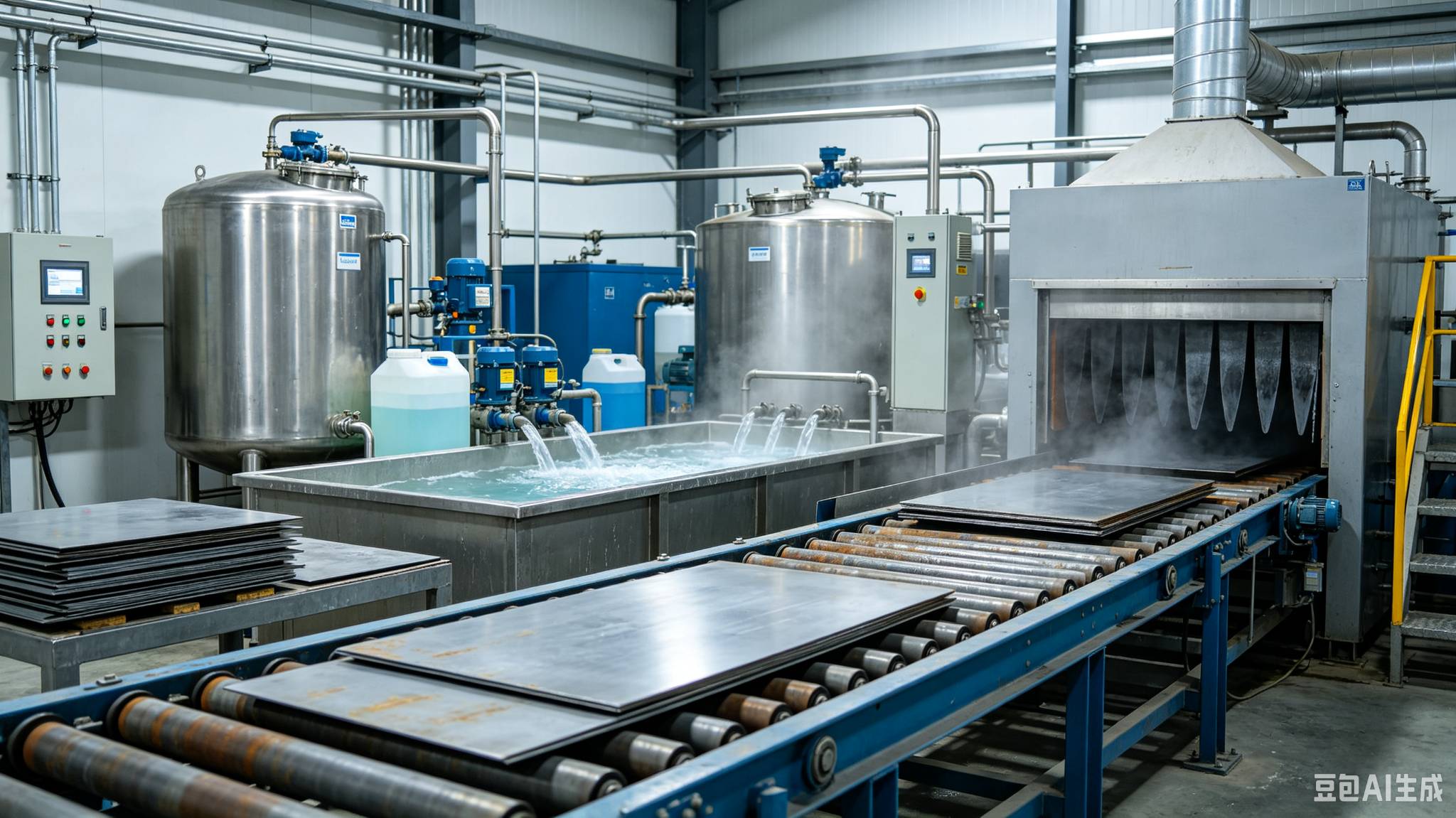
Industrial metal‑treatment production line: acid‑based cleaning and surface preparation are core steps prior to coating or further manufacturing.
Which Acid Is Better for Cleaning and Descaling?
Choose by Scale and Substrate
Both acids may dissolve mineral scale under suitable conditions. The result depends on the deposit, metal, concentration, temperature, contact time, and rinse process.
Hydrochloric acid may give fast mineral-acid cleaning. It can also attack metals. NIOSH describes hydrochloric acid as highly corrosive to most metals.
Phosphoric acid may be considered when the process can accept phosphate chemistry. It is also corrosive. CCOHS warns that phosphoric acid solutions can cause severe skin burns and eye damage.
Before you select a descaler, confirm:
- the chemical composition of the scale;
- the metal, lining, gasket, or coating;
- the acceptable cleaning time;
- the required rinse quality;
- the wastewater treatment route;
- the need for a controlled pilot test.
Do not use a general internet recommendation for a sensitive heat exchanger, membrane, coated surface, or mixed-metal system.

Heat‑exchanger inspection: acid descaling outcomes depend on scale type, metal substrate, rinse performance and wastewater treatment considerations. Always run pilot tests for sensitive equipment.
Which Acid Is Better for Rust Treatment and Metal Preparation?
Phosphoric Acid for Selected Rust Treatments
Phosphoric acid is used in some rust-treatment and surface-preparation systems. The final surface depends on the metal, rust condition, concentration, time, rinsing, and coating system.
Do not assume that every phosphoric acid product is suitable for every metal or paint system.
Hydrochloric Acid for Defined Pickling Processes
Hydrochloric acid is used in metal cleaning and pickling. It may be suitable for a defined process, but it can increase metal attack and fume-control requirements.
A buyer should test the real material before ordering bulk supply. Record the surface result, base-metal loss, rinse result, and coating performance.
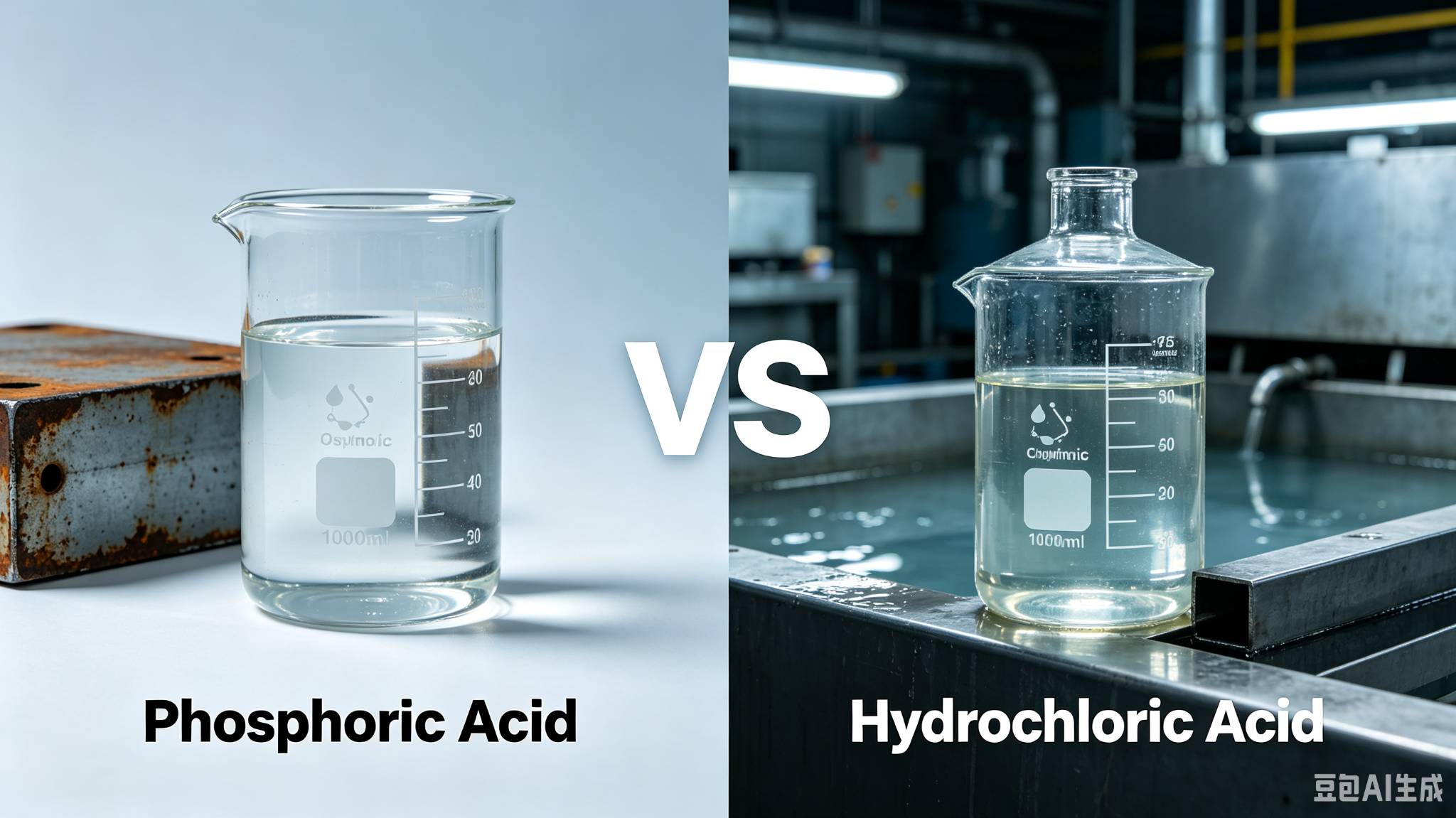
Comparing phosphoric acid for rust treatment versus hydrochloric acid for industrial metal pickling; always perform material trials before bulk chemical purchasing.
Can Either Acid Be Used for Water Treatment?
Either acid may be used in some water or process-control systems. The choice depends on the water chemistry and discharge rules.
Hydrochloric acid adds chloride. Phosphoric acid adds phosphate. These ions may affect:
- corrosion;
- scaling;
- precipitation;
- biological treatment;
- nutrient loading;
- final water quality.
Before buying, provide the supplier with your target pH, water analysis, equipment material, injection system, and discharge requirements. A generic “water-treatment grade” statement is not enough.

Hydrochloric acid introduces chloride ions, while phosphoric acid introduces phosphate ions that may affect corrosion, scaling, precipitation, biological treatment and final water quality.
Which Grade Should You Buy?
Industrial Grade or Food Grade?
Industrial grade and food grade are different purchasing decisions. Food-grade phosphoric acid may be used only when its specification and legal status match the intended food application. Industrial phosphoric acid should not be used for food applications just because the concentration looks similar — compare the Food Grade and Industrial Grade specifications directly before assuming either one fits.
For a grade review, ask for:
- product name and CAS number;
- concentration and tolerance;
- assay method;
- impurity limits;
- current SDS and TDS;
- batch CoA;
- packaging details;
- destination-market compliance documents.
You can also review Camachem’s Phosphoric Acid 85% product page. Confirm the current product specification before placing an order.
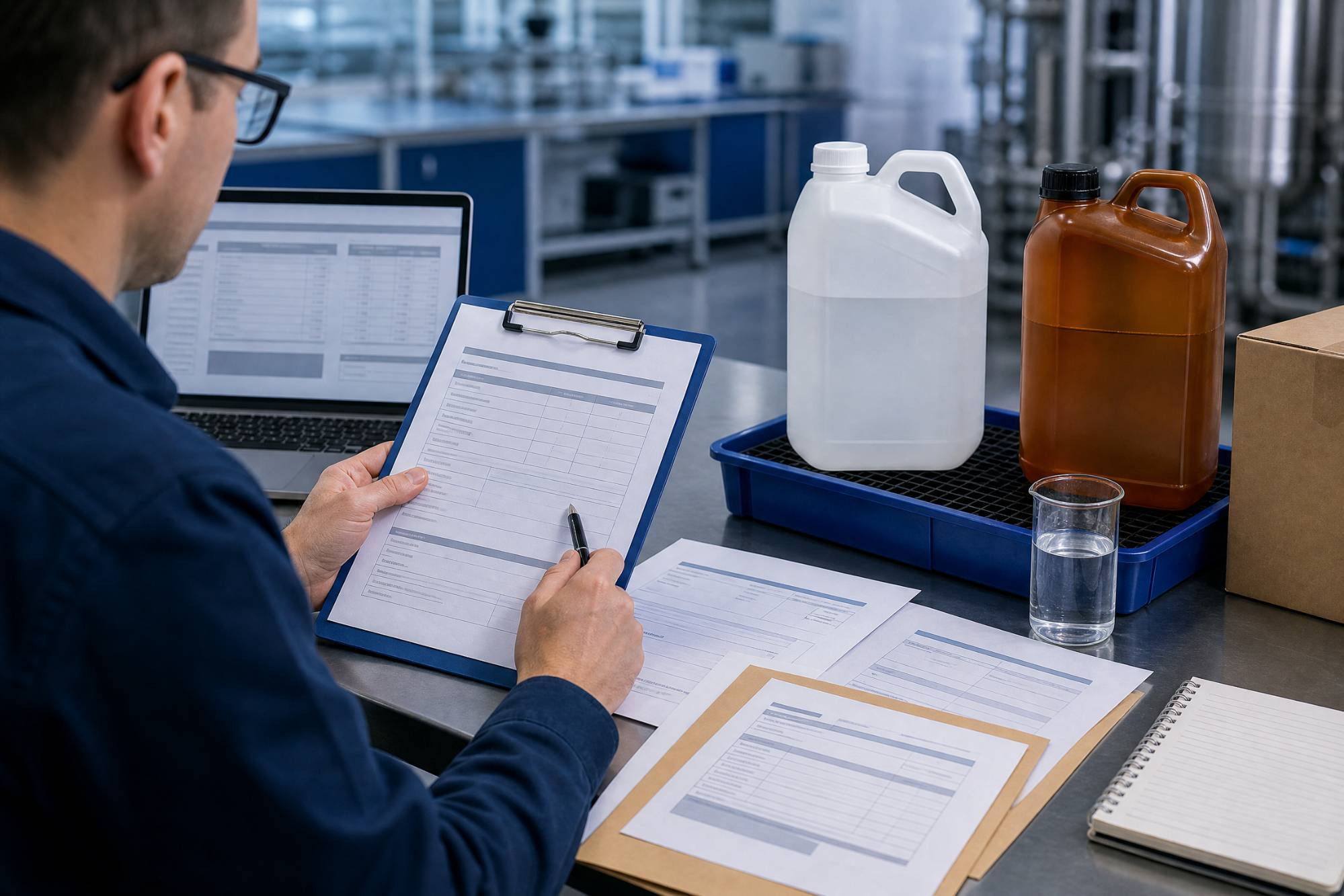
Procurement due diligence: verify CAS, impurity limits, SDS, TDS and CoA documents to confirm whether industrial‑grade or food‑grade phosphoric acid meets project compliance requirements.
Why Buy Phosphoric Acid from Camachem?
Camachem’s official product page lists Phosphoric Acid 85% and provides a product inquiry route. The page states that Camachem has more than a decade of experience exporting from a phosphoric acid manufacturer in China. A short Camachem video shows a phosphoric acid 85% export shipment being loaded in China, which can help buyers visualize what that export stage looks like in practice: https://www.youtube.com/watch?v=pJHnazY4JLc.
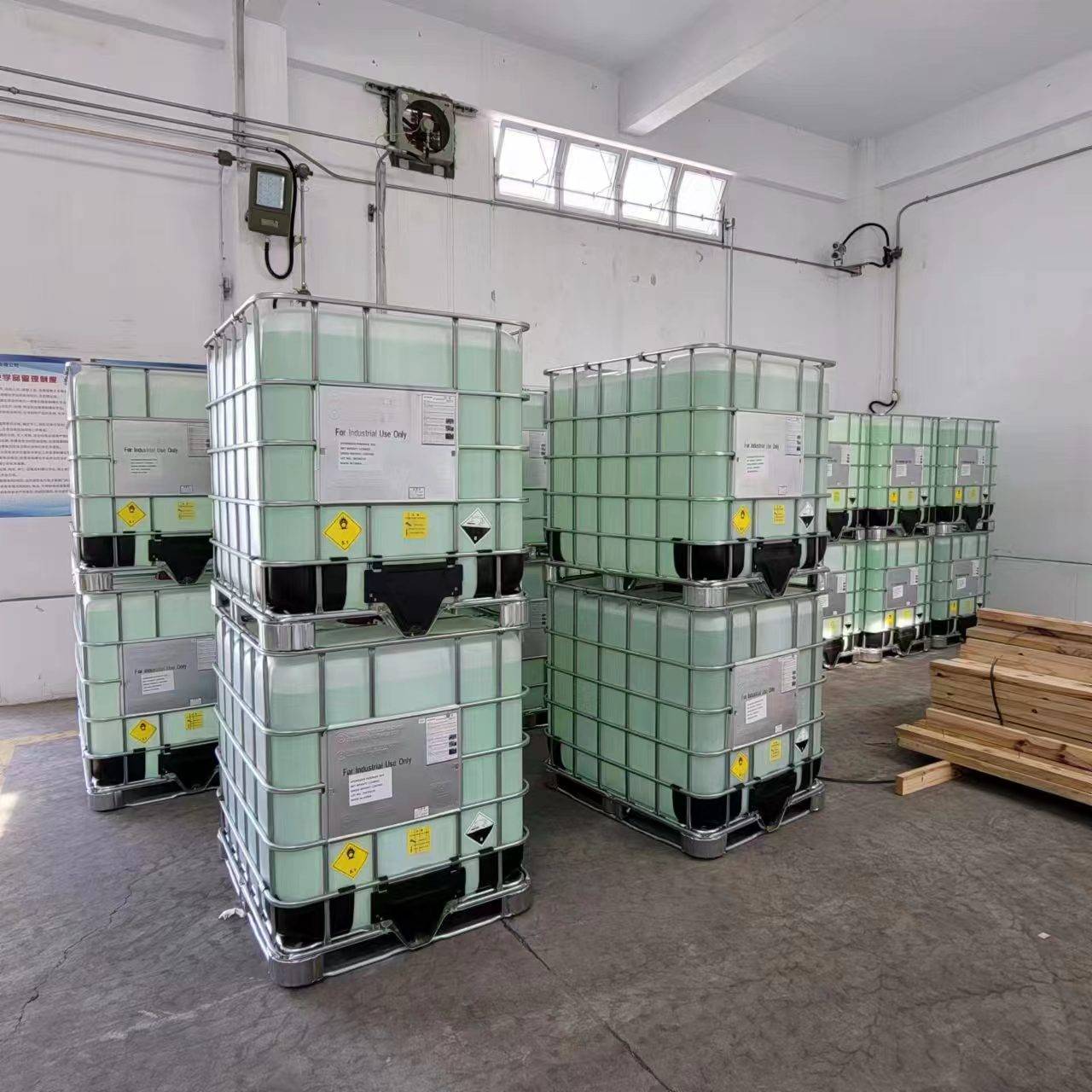
Receiving and storage requirements should be checked before a bulk phosphoric acid shipment.
What Should You Ask Before Ordering?
Use this short checklist before you compare quotations:
- Is the product phosphoric acid or hydrochloric acid?
- What is the exact concentration?
- Is it industrial grade or food grade?
- What impurity limits apply to my process?
- Can I receive the SDS, TDS, and CoA?
- Can I test a representative sample?
- What packaging will be used?
- Is the packaging suitable for the product?
- Who is the legal supplier on the contract and shipping documents?
- Can the supplier repeat the same specification?
- What export and destination-country documents are required?
- Who pays for independent testing, COC, or PVOC if needed?
A supplier that answers these questions clearly is easier to qualify.
Are you interested in quotation.Contact CAMAL Group today to get custom export pricing options:
WhatsApp Us for Free a Consultation

The factory and production evidence should be checked before a buyer places a bulk order.
How Can CAMAL Group and Camachem Help?
Finding a chemical supplier in China is only the first step. The more important question is whether the supplier can meet your specification and supply it again.
Camachem’s official product page lists Phosphoric Acid 85% and provides a product inquiry route. The page states that CAMACHEM has more than a decade of experience exporting from a phosphoric acid manufacturer in China.
The page also states that Camachem may support buyers with:
- bulk orders;
- small orders or samples for testing;
- SDS and MSDS document requests;
- international shipping arrangements;
- independent testing through SGS, Bureau Veritas, Intertek, and CCIC;
- COC or PVOC arrangements where available;
- OEM or company-logo packaging requests.
These options depend on the product, country, order, and current commercial terms. Ask Camachem to confirm the details in writing.
For a quotation, use the Camaphosphoricacid contact page. Include the product, concentration, grade, quantity, destination, packaging, application, and document requirements.
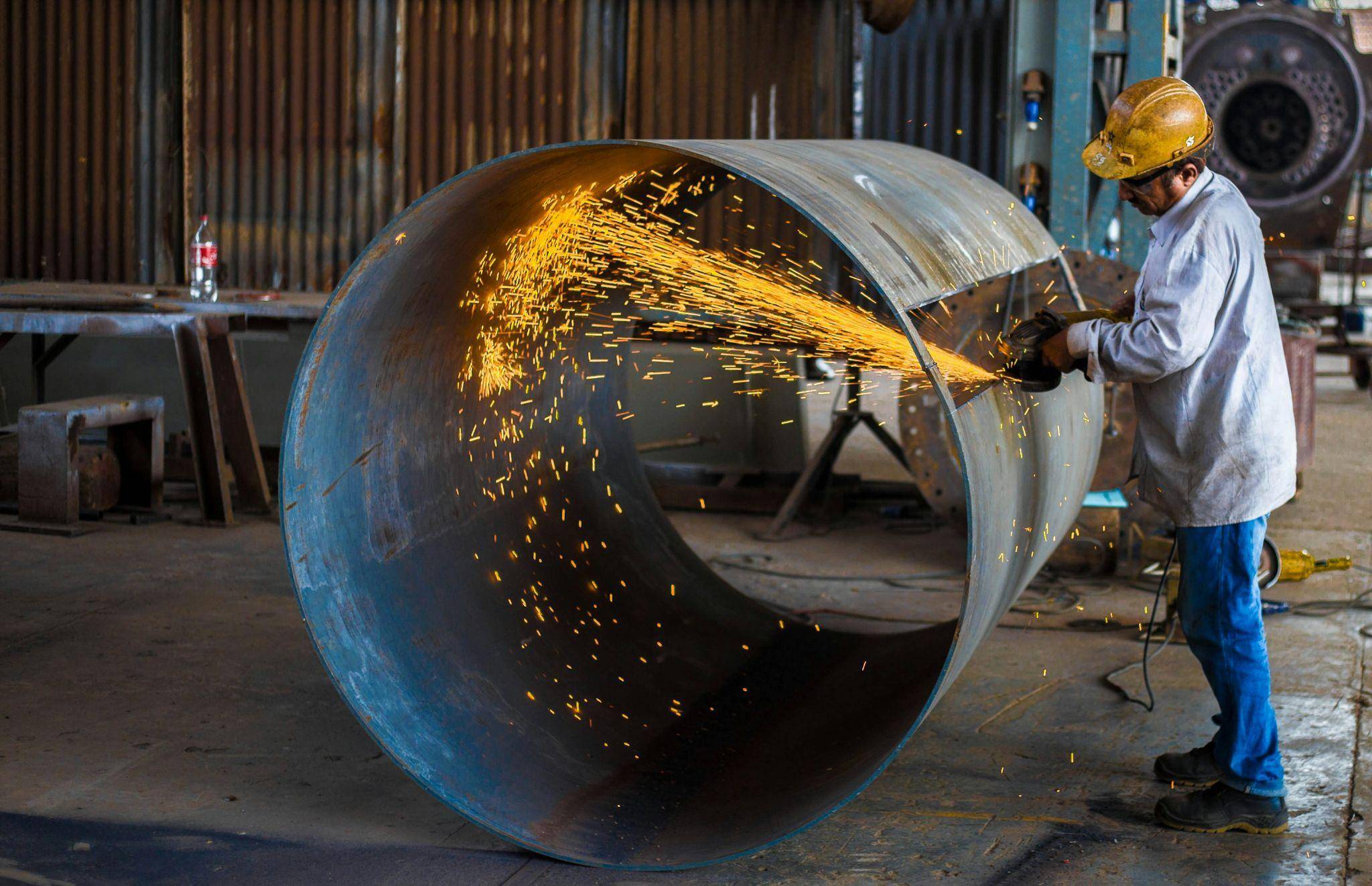
The right chemical choice begins with understanding the process, equipment, and supply requirements—not only the product name.
Need a Specification Review?
Before requesting a quotation, prepare these details:
- product required;
- concentration;
- grade;
- application;
- monthly quantity;
- packaging preference;
- destination country and port;
- required SDS, TDS, CoA, COC, or PVOC documents;
- sample or third-party testing requirement.
Message CAMAL Group on WhatsApp for a phosphoric acid specification and supply review:
WhatsApp Us for Free a Consultation
Frequently Asked Questions
Is hydrochloric acid stronger than phosphoric acid?
Hydrochloric acid is generally treated as a strong acid in water. However, process performance also depends on concentration, substrate, temperature, time, and downstream chemistry.
Which acid is better for rust?
Phosphoric acid may fit some rust-treatment systems. Hydrochloric acid may fit defined pickling processes. Test the actual metal and coating system before choosing.
Which acid is better for descaling?
Neither acid is always better. Select the product after checking the scale, substrate, corrosion risk, residue, wastewater, and required cleaning time.
Can industrial phosphoric acid be used for food?
Do not assume this. Food applications require the correct grade, impurity limits, documentation, and destination-market approval.
What documents should I request from a supplier?
Request the SDS, TDS, agreed specification, representative or batch CoA, packaging details, origin information, and required export documents.
Can Camachem provide a sample?
Camachem’s official product page states that samples may be available for testing for many products. Confirm whether a phosphoric acid sample can be shipped to your country and whether dangerous-goods rules apply.
Can Camachem arrange third-party testing?
The official product page states that Camachem can work with agencies such as SGS, Bureau Veritas, Intertek, and CCIC for independent testing. Confirm the agency, scope, cost, timing, and report format for your order.
How do I request a quotation?
Send the product, concentration, grade, monthly quantity, packaging, destination, application, and document requirements through the Camachem contact page.
Request a Phosphoric Acid Quotation from Camachem
If phosphoric acid fits your process, send Camachem your specification, quantity, destination, packaging, and document requirements through the Phosphoric Acid 85% product page. Ask the team to confirm the current specification, sample availability, testing option, and delivery terms before you place a bulk order.

Bulk industrial chemical packaging in storage — ready for quotation and shipment from Camachem.
Request a phosphoric acid quotation
If phosphoric acid fits your process, send your specification, quantity, destination, packaging, and document requirements to the Camachem team. Ask them to confirm the current specification, sample availability, testing options, and delivery terms before you place a bulk order.
Contact the correct Camachem representative on WhatsApp — For an approved regional WhatsApp route, use Tina for Australia, Europe, and North America
WhatsApp Us for Free a Consultation
Or Nancy for Africa, Asia, and South America.
WhatsApp Us for Free a Consultation
Conclusion
The choice between phosphoric acid and hydrochloric acid depends on the process.
- Choose phosphoric acid when phosphate chemistry and the required grade fit the application.
- Consider hydrochloric acid for defined strong-acid cleaning or pickling processes when chloride and corrosion risks are controlled.
- Do not replace one acid with the other without a process test.
- Ask every supplier for complete documents and batch evidence.
- For China sourcing, verify the supplier, product source, sample, packaging, testing, and export documents.
Choosing a phosphoric acid manufacturer is a process of matching product evidence with supplier evidence. For broader company information, buyers may also visit Camachem and CAMAL.Camachem can be considered when you need phosphoric acid from China, but the final decision should be based on your approved specification and written order confirmation.
Industrial Buyers: Next Steps for Sourcing Bulk Phosphoric Acid
What makes our Phosphoric Acid Better:
✅ Compliant with EU, UN, ISO Standards – No Legal Headaches
✅ Guaranteed 85% Purity – Stability for your Processing Plant
✅ Extremely Low Impurities – Low Heavy Metals
✅ Batch-Specific COA Provided – Full Transparency per Shipment.
Download Our EU-approved Specifications.[ Food Grade or Industrial Grade]