


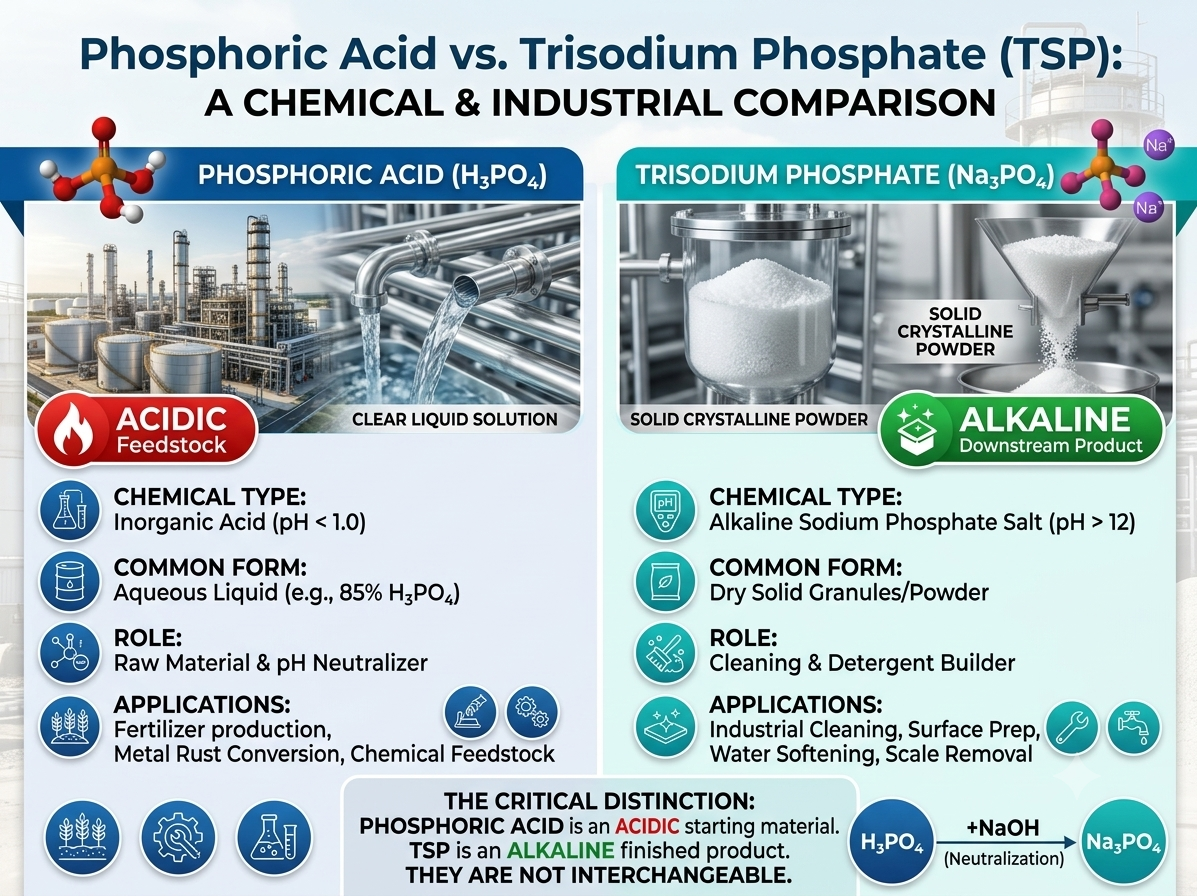
Side-by-side comparison of acidic phosphoric acid liquid vs. alkaline trisodium phosphate powder, detailing key differences in chemical properties, physical forms, and industrial applications
Phosphoric acid and trisodium phosphate (TSP) are both phosphorus-containing chemicals, but they have very different chemical properties and industrial uses.
Phosphoric acid is an inorganic acid with the chemical formula H₃PO₄. It is widely used as a raw material for phosphate-based products, fertilizer production, pH adjustment, metal treatment, and other industrial processes.
Trisodium phosphate, commonly called TSP, is a sodium phosphate salt with the formula Na₃PO₄. It is an alkaline compound used in cleaning formulations, detergent products, water treatment, surface preparation, and other industrial applications.
To see how chemical sourcing and quality evaluation work in practice, watch our

Laboratory testing and quality assurance verification ensuring batch purity and impurity limits meet COA standards
For bulk buyers, these products should not be treated as interchangeable. The right choice depends on the required chemical function, application, grade, concentration or composition, packaging, documentation, and total landed cost.
Phosphoric Acid vs Trisodium Phosphate: Key Differences
| Feature | Phosphoric Acid | Trisodium Phosphate (TSP) |
|---|---|---|
| Chemical type | Inorganic acid | Sodium phosphate salt |
| Chemical formula | H₃PO₄ | Na₃PO₄ |
| General chemical behavior | Acidic | Alkaline |
| Physical form | Commonly supplied as an aqueous liquid | Commonly supplied as a solid/crystalline material |
| Main role | Acid, processing chemical, and phosphate raw material | Cleaning agent, detergent builder, water-treatment and formulation chemical |
| Typical applications | Fertilizer production, metal treatment, pH adjustment, phosphate manufacturing | Cleaning, surface preparation, detergent formulations, water treatment |
| Buyer focus | Concentration, purity, impurities, grade, packaging | Purity, composition, form, application performance, packaging |
| Can one replace the other? | Generally no | Generally no |
The most important distinction is simple: phosphoric acid provides acidic phosphate chemistry, while TSP is an alkaline sodium phosphate salt designed for different applications.
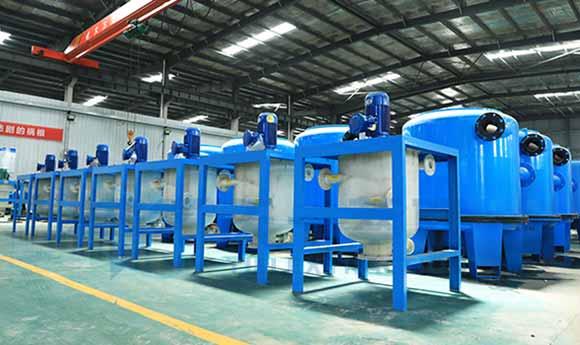
Specialized chemical filtration and reaction equipment used for multi-stage purification of phosphoric acid
If you are sourcing phosphoric acid or trisodium phosphate in bulk, define the required specification, grade, quantity, packaging, destination, documentation, and application before comparing suppliers. Looking for a phosphoric acid or trisodium phosphate supplier in China? Choose your contact route below
WhatsApp Us for Free a Consultation
What Is Phosphoric Acid?
Phosphoric acid, also known as orthophosphoric acid, is an inorganic acid with the chemical formula H₃PO₄.
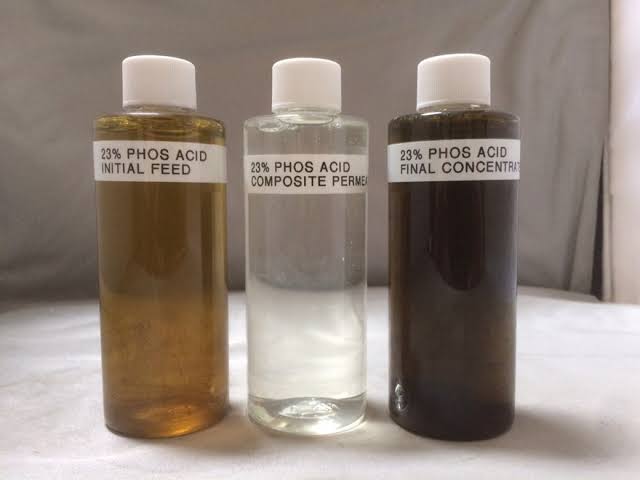
Visual comparison of 23% phosphoric acid samples illustrating color and clarity changes across initial feed, composite permeate, and final concentrate purification stages
It is an important industrial chemical and a major raw material for phosphate-derived products. The U.S. EPA describes phosphoric acid as a key input in the production of phosphate derivative chemicals and identifies applications including fertilizer production, pH adjustment, corrosion control, cleaning formulations, and synthetic phosphate production.
Common Industrial Uses of Phosphoric Acid
Depending on grade and formulation, phosphoric acid can be used for:
● Fertilizer production
● Phosphate compound manufacturing
● Metal surface treatment
● Phosphate-conversion processes
● pH adjustment
● Scale removal and pH neutralization using Phosphoric Acid Industrial Grade.
● Acidulation in beverages using Phosphoric Acid Food Grade.
● Chemical manufacturing
For a complete breakdown of export specifications and regulatory compliance, download the official CAMACHEM Phosphoric Acid SDS MSDS or visit our Phosphoric Acid 85% Core Portal.

Laboratory researcher performing precise liquid volumetric analysis and chemical reagent preparation
The required concentration and impurity limits depend on the intended application. A buyer sourcing phosphoric acid in bulk should therefore define the required grade and specification before comparing suppliers.
Looking for a phosphoric acid or trisodium phosphate supplier in China? Contact our sourcing team:
WhatsApp Us for Free a Consultation
What Is Trisodium Phosphate (TSP)?
Trisodium phosphate, commonly abbreviated as TSP, is a sodium phosphate salt with the chemical formula Na₃PO₄.

White crystalline trisodium phosphate (TSP) powder, an alkaline sodium phosphate salt used for industrial cleaning and water softening.
Unlike phosphoric acid, TSP is an alkaline material. Its industrial applications are largely associated with its cleaning, detergent-building, water-softening, and formulation properties.
PubChem records TSP uses in soaps and detergents, paper and leather manufacturing, water softening, boiler-scale removal, cleaning products, and other industrial applications.
Common Uses of TSP
Depending on grade and formulation, TSP can be used in:
- Industrial and institutional cleaning
- Surface preparation
- Detergent formulations
- Water softening
- Scale-removal applications
- Paper and leather processing
- Certain food-related applications where the applicable grade is permitted
- Other industrial formulations

Phosphoric acid chemical bath tanks used for industrial metal rust removal, electropolishing, and surface treatment
TSP should be selected according to the intended application rather than simply because it contains phosphate.
Ready to evaluate pricing and landed costs for your bulk chemical order? Contact us now!
WhatsApp Us for Free a Consultation
How Are Phosphoric Acid and TSP Related?
Phosphoric acid and TSP are chemically related because TSP is a phosphate salt derived through neutralization chemistry.

Solid crystalline trisodium phosphate (TSP) material on a watch glass, demonstrating its physical form for dry chemical formulations.
A simplified representation is:
Phosphoric acid + sodium-containing base → sodium phosphate products
The final phosphate product depends on the reaction conditions and the amount of sodium introduced.
For phosphate salts, different neutralization ratios can produce different sodium phosphate compounds. EPA supply-chain information describes phosphoric acid being neutralized with sodium hydroxide or sodium carbonate to produce sodium phosphate products, with the resulting product depending on the reaction ratio and processing conditions.
TSP is therefore better understood as a downstream sodium phosphate product, rather than an alternative grade of phosphoric acid.
Phosphoric Acid vs TSP for Cleaning
Both chemicals can appear in industrial cleaning applications, but they work differently.
Phosphoric Acid for Cleaning
Phosphoric acid can be used where an acidic chemical is required for cleaning, descaling, surface treatment, or other processes.
Its suitability depends on the material being treated, required concentration, temperature, contact time, and process conditions.
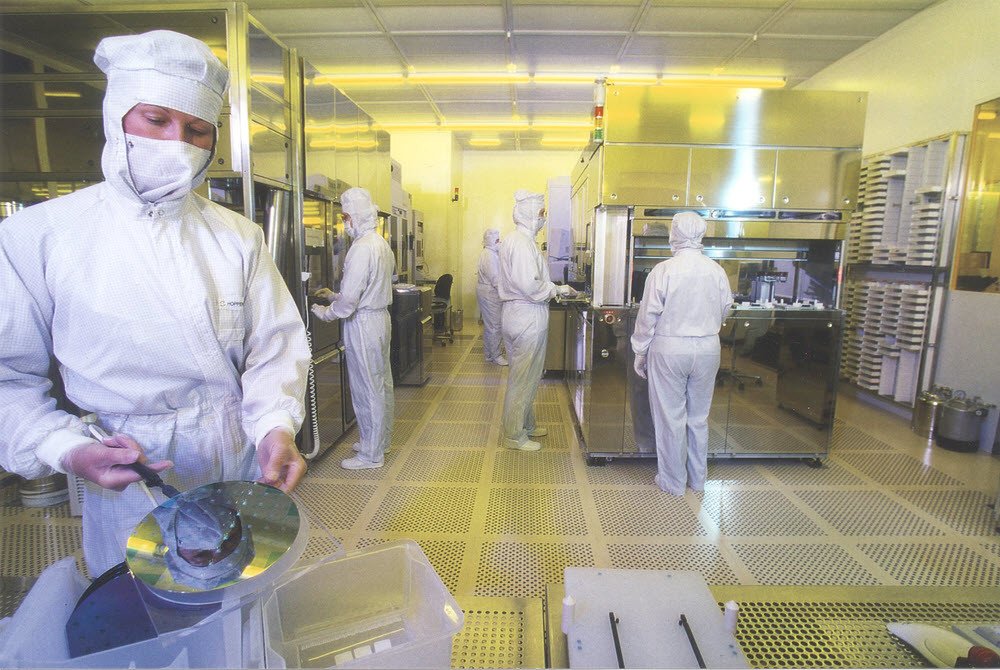
High-purity electronic-grade phosphoric acid used for wet etching and cleaning silicon wafers in semiconductor fabrication
TSP for Cleaning
TSP is an alkaline cleaning and detergent-building chemical. Its properties make it useful in formulations designed to remove soils and prepare surfaces.
The U.S. EPA has documented TSP use in cleaning applications, including industrial and institutional cleaning contexts.
Which Is Better for Cleaning?
There is no universal winner.
Phosphoric acid may be appropriate when the process requires acidic chemistry or phosphate-based acid treatment.
TSP may be appropriate when the formulation requires an alkaline phosphate salt for cleaning or detergent-related functions.
The correct selection depends on the soil, substrate, formulation, concentration, and process requirements.
Ready to evaluate pricing and landed costs for your bulk chemical order? Contact us now:
WhatsApp Us for Free a Consultation
To learn more about our company history and global sourcing footprint, visit our About CAMACHEM Phosphoric Acid Supplier page.

Quality assurance technicians verifying Certificate of Analysis (COA) documentation and test results for a chemical batch in a laboratory setting
Phosphoric Acid vs TSP for Water Treatment
Both phosphoric acid and phosphate salts can have roles in water-treatment chemistry, but they are used differently.
Phosphoric acid can be used for pH adjustment and corrosion control and can also serve as a precursor for phosphate-based water-treatment chemicals.
Sodium phosphate products can be used directly in water treatment or as components of phosphate-based treatment systems. EPA supply-chain profiles describe sodium phosphate products being used for corrosion control and in systems designed to control corrosion and scale. To learn how we manage chemical specifications and initial sourcing requirements, watch our

Industrial-grade phosphoric acid production and bulk chemical storage at a commercial manufacturing facility
For a water-treatment buyer, the important question is therefore not simply whether the product contains phosphate. The buyer should define the required treatment function, dosage, water chemistry, product specification, and applicable regulatory requirements.
Is TSP Made From Phosphoric Acid?
Phosphoric acid can be used in the production of sodium phosphate compounds.
In sodium phosphate manufacturing, phosphoric acid can be neutralized with sodium hydroxide or sodium carbonate. The reaction ratio determines which sodium phosphate product is formed, followed by separation and, where applicable, drying or other processing steps.
This means phosphoric acid can function as an upstream raw material, while TSP is a more specific downstream phosphate product.

Clear glass reagent bottle labeled Phosphoric Acid for laboratory testing
Can TSP Replace Phosphoric Acid?
Generally, no.
TSP and phosphoric acid have different chemical properties, physical forms, and functions.
Replacing phosphoric acid with TSP would change the chemistry of a process because TSP is an alkaline sodium phosphate salt rather than an acid.
For example, a manufacturing process requiring phosphoric acid as an acid reactant or phosphate raw material cannot automatically substitute TSP simply because both contain phosphorus. To explore technical details on how orthophosphoric acid acts as a raw material for downstream manufacturing, read our guide on Phosphoric Acid Use in Fertilizer Production.

Industrial phosphoric acid manufacturing plant and chemical processing facility in China
Before considering a substitution, buyers should verify:
- Required chemical function
- pH requirements
- Concentration or composition
- Reaction chemistry
- Process temperature
- Dosage
- Impurity limits
- Compatibility with the final formulation
- Applicable technical specifications
Phosphoric Acid vs TSP: Which Should You Buy?
The answer depends on what you are trying to manufacture or accomplish.
Choose Phosphoric Acid When You Need:
- An acidic processing chemical
- A phosphate raw material
- A feedstock for phosphate derivatives
- A chemical for certain metal-treatment processes
- pH adjustment
- A specified concentration or purity for industrial processing
- A raw material for manufacturing phosphate-based products
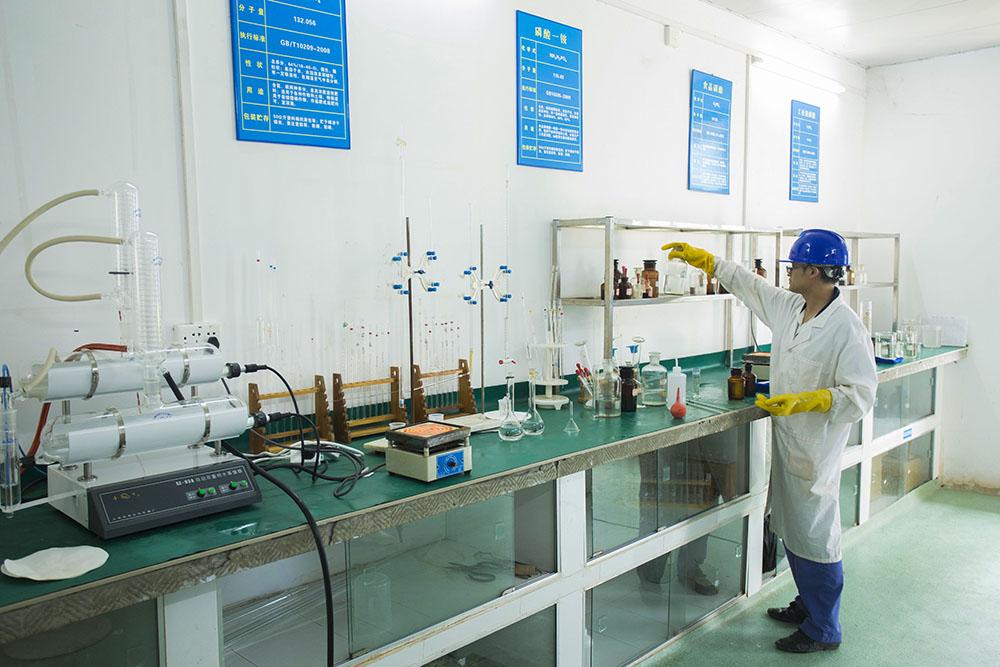
Quality testing and chemical analysis of 85% phosphoric acid in a manufacturer testing lab
Choose TSP When You Need:
- An alkaline phosphate salt
- A cleaning or detergent ingredient
- A surface-preparation chemical
- A water-softening or scale-related formulation component
- A specific sodium phosphate composition
- A solid phosphate material for an industrial formulation
Do not select between these products based only on the word “phosphate.” Their chemical properties and industrial functions are different.
Need to verify purity, heavy metal limits, or request a batch-specific COA for your process?
WhatsApp Us for Free a Consultation
What Should Buyers Check Before Buying Phosphoric Acid?
For bulk phosphoric acid purchasing, price should not be the only consideration.
1. Concentration
Confirm the required concentration before requesting quotations.
Different applications may require different concentrations, and the quoted product should match the technical requirement. First-time chemical importers should review our guide on the Top Mistakes Importing Phosphoric Acid to ensure zero customs delays.
2. Grade and Purity
Define whether you require industrial, technical, food, or another applicable grade.
Do not assume that a stated concentration automatically defines the product’s grade or suitability.
3. COA
Request a Certificate of Analysis for the relevant product and, where applicable, the specific batch.
Review parameters that matter to your application rather than relying only on the product name.

Quality assurance testing of high-purity electronic-grade phosphoric acid in a cleanroom environment
4. SDS
Request the current Safety Data Sheet and review information related to storage, handling, transportation, and hazards. Our post on REACH & ISO certification walks through exactly which documents to verify before you commit to a Chinese supplier.
5. Packaging
Confirm:
- Packaging type
- Unit size
- Total quantity
- Compatibility with the chemical
- Suitability for international transportation
6. Shipping and Logistics
For international bulk purchases, evaluate:
- Loading port
- Destination
- Incoterms
- Lead time
- Shipping method
- Documentation
- Import requirements
For a comparison of container payload efficiency, check our guide on Phosphoric Acid Packaging: Drums vs IBC Totes vs ISO Tanks.
A lower quoted price does not necessarily mean a lower total procurement cost.
What Should Buyers Check Before Buying TSP?
TSP buyers should define the specification according to the intended formulation or process.

Cleanroom manufacturing technicians conducting microscopic quality inspection for electronic and semiconductor applications requiring high-purity phosphoric acid processing
Important purchasing considerations can include:
- Chemical purity
- TSP content or applicable assay
- Hydration state
- Physical form
- Particle size
- Moisture
- pH
- Packaging
- COA
- SDS
- Application requirements
- Regulatory or market-specific requirements
For industrial formulations, physical properties can be as important as chemical composition because they may affect dissolution, handling, storage, and final product performance.
The exact specification should be agreed with the supplier before placing a commercial order.
Phosphoric Acid vs TSP: Price Comparison
A direct price-per-ton comparison is usually not meaningful because phosphoric acid and TSP are different products with different manufacturing processes, physical forms, and applications.
The final purchasing cost can depend on:
- Raw material costs
- Product concentration or composition
- Grade
- Required specification
- Purity
- Packaging
- Order quantity
- Manufacturing location
- Freight
- Port charges
- Import duties
- Testing and inspection
- Delivery terms
- Storage requirements

HDPE plastic jerrycan and amber glass bottles featuring standard GHS hazard labeling for liquid phosphoric acid storage and laboratory handling
For bulk buyers, compare total landed cost and application suitability, not simply the supplier’s quoted price per metric ton.
A manufacturer buying phosphoric acid as a raw material may need additional processing before obtaining a finished phosphate product. A buyer purchasing TSP may instead be purchasing a more application-specific phosphate salt.
The better comparison is therefore based on the actual purpose of the material and the cost of achieving the required process result.
How to Choose a Phosphoric Acid or TSP Supplier
Choosing a supplier should involve more than comparing several quotations.
Step 1: Define Your Requirement
Provide:
- Product name
- Grade
- Required specification
- Quantity
- Application
- Packaging
- Destination
- Required documents
Step 2: Request Technical Documents
Ask for relevant documents such as:
- COA
- SDS
- Technical Data Sheet
- Product specification
- Packaging information

Laboratory technician preparing chemical samples under a laminar flow hood for purity testing and quality control
Step 3: Compare Suppliers
Evaluate suppliers based on:
- Product specification
- Quality consistency
- Documentation
- Manufacturing capability
- Packaging
- Lead time
- Logistics
- Total landed cost
Step 4: Verify Before a Large Order
Where appropriate, buyers can request samples, conduct product testing, and verify documentation before moving to larger commercial quantities.
For first-time sourcing, this step can help identify specification mismatches before significant purchasing commitments are made.
Buyers new to importing should also weigh supplier verification alongside chemical specifications. If this is your first time importing from China, our guide on how to buy phosphoric acid from China without risking low purity walks through the process step by step.
Need Help Sourcing Bulk Phosphate Chemicals In 2026?
Whether your process calls for bulk phosphoric acid or trisodium phosphate (TSP), our sourcing team matches exact batch specifications and provides a batch-specific COA with every shipment.
WhatsApp Us for Free a Consultation
How Can CAMAL Group Help With Phosphoric Acid and TSP Sourcing?
Finding a chemical supplier is only one part of the procurement process.
Industrial buyers also need to evaluate product specifications, technical documentation, packaging, logistics, production capability, and whether the supplier can consistently meet the required specification.

Camal Group representatives conducting an on-site quality inspection and facility audit at a chemical manufacturing factory
CAMAL Group can support businesses in identifying and evaluating suitable chemical suppliers in China based on their sourcing requirements.
If you are sourcing phosphoric acid or trisodium phosphate, provide the product specification, application, required quantity, destination, packaging requirements, and documentation needs.
This gives the sourcing team a clearer basis for evaluating suitable supply options.
FAQs
Is phosphoric acid the same as trisodium phosphate?
No. Phosphoric acid is an inorganic acid with the formula H₃PO₄, while trisodium phosphate is an alkaline sodium phosphate salt with the formula Na₃PO₄.
Can phosphoric acid be used to make trisodium phosphate?
Phosphoric acid can be used as a starting material in the production of sodium phosphate compounds through neutralization with sodium-containing bases.
Is TSP acidic or alkaline?
TSP is an alkaline phosphate salt. Its alkaline properties are important to several of its cleaning and formulation applications.
Can TSP replace phosphoric acid?
Generally, no. They have different chemical properties and serve different functions. A substitution should only be considered after reviewing the specific process and technical requirements.
Is phosphoric acid used for cleaning?
Yes. Phosphoric acid can be used in certain cleaning, descaling, surface-treatment, and formulation applications, depending on the grade and process.

Clear glass reagent bottle containing 85% phosphoric acid solution displayed with CAS registry details and standard GHS hazard markings
Is TSP used for cleaning?
Yes. TSP is used in cleaning products and industrial/institutional cleaning applications.
Which is better for water treatment: phosphoric acid or TSP?
Neither is universally better. The appropriate product depends on the treatment objective, water chemistry, dosage, formulation, and technical requirements.
What documents should I request from a supplier?
Depending on the product and application, buyers should consider requesting a COA, SDS, technical specification, packaging information, and other applicable quality or regulatory documents.
What should I tell a supplier when requesting phosphoric acid or TSP?
Provide the product name, required grade or specification, quantity, application, packaging requirements, destination, and required documentation. This gives suppliers enough information to provide a more useful quotation.

Camal Group team members and international business partners engaging in a corporate strategy and product discussion meeting
Conclusion
Phosphoric acid and trisodium phosphate are chemically related phosphate products, but they are not interchangeable.
Phosphoric acid is an acidic raw material and processing chemical used across fertilizer, chemical manufacturing, metal treatment, pH adjustment, and phosphate-production applications.
Trisodium phosphate is an alkaline sodium phosphate salt commonly associated with cleaning, detergent, water-softening, surface-preparation, and other industrial formulations.
For industrial buyers, the correct choice depends on the intended application rather than simply the fact that both products contain phosphate.
If you are sourcing phosphoric acid or trisodium phosphate in bulk, define the required specification, grade, quantity, packaging, destination, documentation, and application before comparing suppliers.

Industrial warehouse technicians safely handling, palletizing, and preparing chemical drums for bulk phosphoric acid storage and export dispatch
CAMAL Group can help simplify this sourcing process by identifying and comparing suitable manufacturers based on your requirements. From supplier screening and product specification checks to quotation comparison and sourcing coordination, CAMAL Group can help you find a reliable supplier that offers the right balance of quality, price, and supply capability
This CAMACHEM video walks through the process of finding the chemical you need and is useful for buyers starting their sourcing journey.
Industrial Buyers: Next Steps for Sourcing Bulk Phosphoric Acid
What makes our Phosphoric Acid Better:
✅ Compliant with EU, UN, ISO Standards – No Legal Headaches
✅ Guaranteed 85% Purity – Stability for your Processing Plant
✅ Extremely Low Impurities – Low Heavy Metals
✅ Batch-Specific COA Provided – Full Transparency per Shipment.
Download Our EU-approved Specifications.[ Food Grade or Industrial Grade]