


Phosphoric Acid vs Zinc Phosphate: What Is the Difference?
Phosphoric acid and zinc phosphate are both used in metal treatment and corrosion-control applications, but they serve different purposes. Phosphoric acid is an inorganic acid used in chemical processing, metal surface treatment, and as a raw material for phosphate compounds. Zinc phosphate is an inorganic compound mainly used in protective coatings, primers, and corrosion-control applications.
The right choice depends on what you need the chemical to do. If you need an acid or raw material for a treatment or manufacturing process, phosphoric acid may be suitable. If you need a corrosion-inhibiting pigment or coating component, zinc phosphate may be the better option.
For industrial buyers, the decision should also consider product grade, concentration or composition, purity, application requirements, documentation, packaging, and total landed cost.

Industrial-grade phosphoric acid production and bulk chemical storage at a commercial manufacturing facility
Learn how CAMACHEM helps global manufacturing business owners reliably source high-purity industrial chemicals directly from China with transparent logistics and strict quality controls.
What Is Phosphoric Acid?
Phosphoric acid, also called orthophosphoric acid, is an inorganic acid with the chemical formula H₃PO₄.
It is used across several industries, including chemical manufacturing, fertilizers, food processing, and metal surface treatment.

Clear glass reagent bottle labeled Phosphoric Acid for laboratory testing
In metal treatment, phosphoric acid can be used in phosphate-conversion processes. When applied to a metal surface under suitable conditions, the treatment can promote the formation of a phosphate layer that helps improve corrosion resistance and provides a better surface for subsequent coatings.
Common Industrial Uses of Phosphoric Acid
Depending on grade and formulation, phosphoric acid can be used for:
- Metal surface treatment
- Phosphate coating processes
- Fertilizer production
- Chemical manufacturing
- Production of phosphate compounds
- Food & Beverage: Acidulation in food processing using Phosphoric Acid Food Grade.
- Industrial Processing: Scale removal and water treatment using Phosphoric Acid Industrial Grade.
For a complete breakdown of export specifications and regulatory compliance, download the official CAMACHEM Phosphoric Acid SDS MSDS or visit our Phosphoric Acid 85% Core Portal.
Looking to secure stable bulk supplies of 85% food-grade or industrial-grade Phosphoric Acid? Contact CAMAL Group’s global sourcing team to request current market pricing and specifications.
WhatsApp Us for Free a Consultation
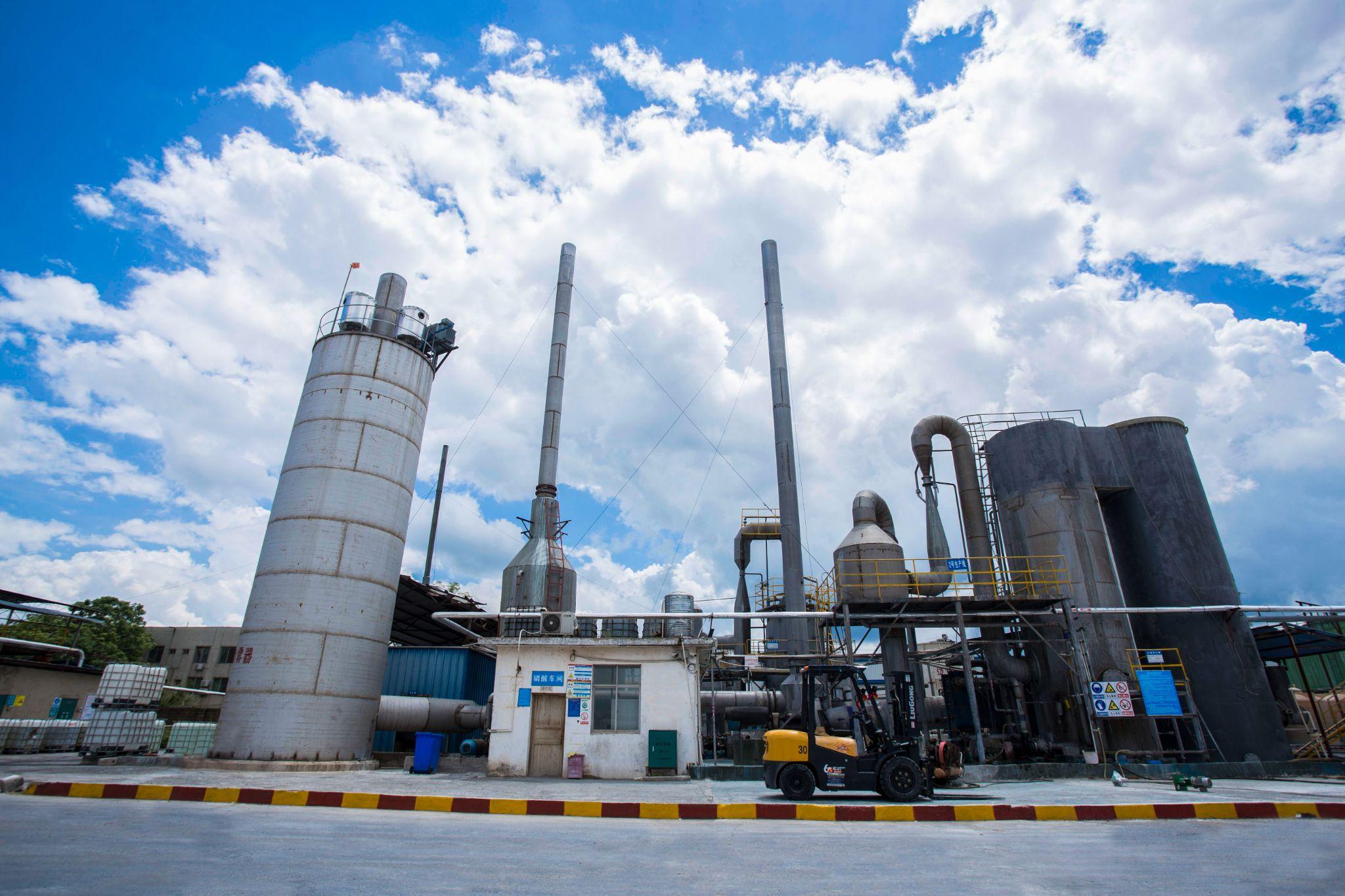
Industrial phosphoric acid manufacturing plant and chemical processing facility in China
The required concentration and purity depend heavily on the intended application.
For example, CAMACHEM’s technical documentation for phosphoric acid 85% lists metal surface treatment and phosphate-related applications among its uses.
What Is Zinc Phosphate?
Zinc phosphate is an inorganic compound with the formula Zn₃(PO₄)₂.
It is widely used in corrosion-control coatings and can function as a corrosion-inhibiting pigment in primers and protective coatings. PubChem identifies zinc phosphate as a corrosion-resistant coating material and a corrosion inhibitor used in industrial applications.

Glass dish containing fine white Zinc Phosphate powder for industrial coatings and corrosion protection
Zinc phosphate can also be used in phosphate-conversion coating systems.
Common Uses of Zinc Phosphate
Zinc phosphate is commonly associated with:
- Anti-corrosion paints
- Protective primers
- Metal coatings
- Zinc phosphate conversion coatings
- Steel surface treatment
- Industrial coating formulations
- Certain cement and dental applications
The EPA’s zinc orthophosphate profile states that zinc orthophosphate is widely used in corrosion-control coatings on metal surfaces and is primarily manufactured using phosphoric acid and a zinc source.
Phosphoric Acid vs Zinc Phosphate: Key Differences
| Feature | Phosphoric Acid | Zinc Phosphate |
|---|---|---|
| Chemical type | Inorganic acid | Inorganic zinc phosphate |
| Formula | H₃PO₄ | Zn₃(PO₄)₂ |
| Physical form | Commonly supplied as an aqueous liquid | Commonly supplied as a solid/powder |
| Main role | Acid, processing chemical and raw material | Corrosion-inhibiting compound/pigment |
| Metal treatment | Used in phosphate treatment systems | Can form or be incorporated into phosphate coatings |
| Coatings | Used as part of some treatment formulations | Used in primers and anti-corrosion coatings |
| Corrosion protection | Application-dependent; often part of a treatment process | Commonly used specifically for corrosion control |
| Manufacturing relationship | Can be a raw material | Can be manufactured using phosphoric acid and a zinc source |
| Buyer focus | Concentration, purity, impurities, packaging and application | Purity, zinc/phosphate composition, particle characteristics and application performance |
The biggest difference: phosphoric acid is usually the acid/raw-material side of the process, while zinc phosphate is the phosphate compound used for corrosion-control applications.
To learn more about our company history and global sourcing footprint, visit our About CAMACHEM Phosphoric Acid Supplier page.
Need technical guidance or competitive quotes for anti-corrosive Zinc Phosphate compounds? Connect directly with CAMAL Group experts for direct manufacturer matching and volume orders.
WhatsApp Us for Free a Consultation
How Are Phosphoric Acid and Zinc Phosphate Related?
Phosphoric acid and zinc phosphate are closely related chemically.
Zinc phosphate can be produced by reacting phosphoric acid with a suitable zinc source. The EPA describes phosphoric acid and a zinc source as common raw materials for producing zinc orthophosphate.
A simplified representation is:
Phosphoric acid + zinc source → zinc phosphate
The actual industrial manufacturing process can involve controlled reaction conditions, pH adjustment, precipitation, filtration, washing, drying, and particle-size control depending on the product specification.
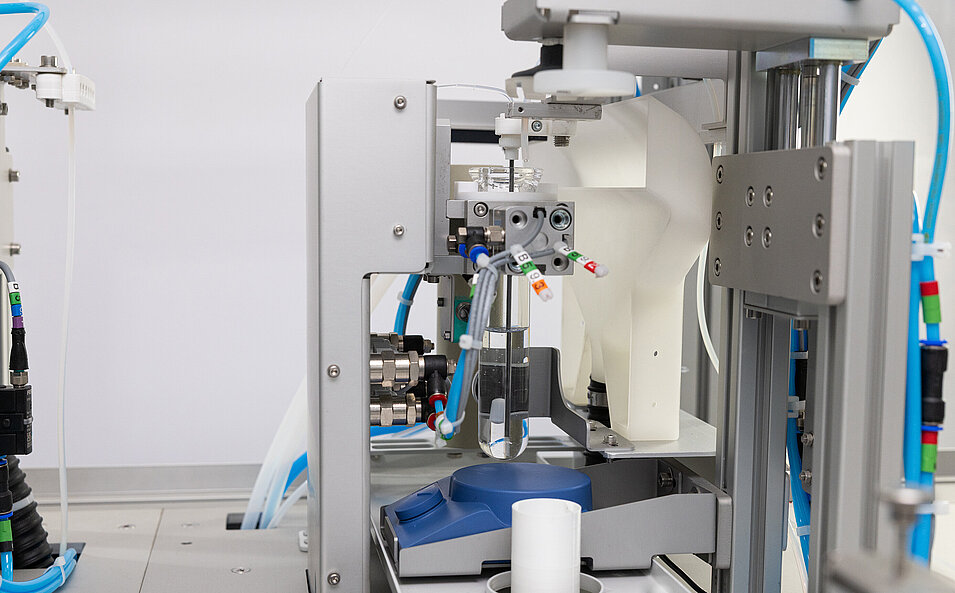
Automated laboratory titration system used for precise assay testing and quality control of liquid chemical solutions
This relationship is important for buyers because phosphoric acid can be an upstream raw material, while zinc phosphate is a downstream phosphate compound.
To learn how we manage chemical specifications and initial sourcing requirements, watch our
Phosphoric Acid vs Zinc Phosphate for Corrosion Protection
This is where the difference becomes particularly important.

Quality testing and chemical analysis of 85% phosphoric acid in a manufacturer testing lab
Phosphoric Acid for Metal Treatment
Phosphoric acid can be used as part of phosphate-conversion treatment.
During phosphating, the acid reacts with the metal surface and changes the local chemical conditions near the surface. This can lead to the precipitation of relatively insoluble phosphate compounds that form a conversion layer.
See our full Applications page for a wider look at where phosphoric acid and related phosphate compounds are used across industries.
The resulting phosphate layer can improve corrosion resistance and provide a suitable base for subsequent paint or coating systems.
Zinc Phosphate for Corrosion Protection
Zinc phosphate is more directly associated with corrosion-inhibiting coatings.
It can be incorporated into primer formulations as a corrosion-inhibiting pigment. Research has also examined zinc phosphate as an alternative to older chromate-based corrosion inhibitors.
Studies of zinc phosphate coatings on steel have demonstrated reduced corrosion rates compared with uncoated steel under specific test conditions.
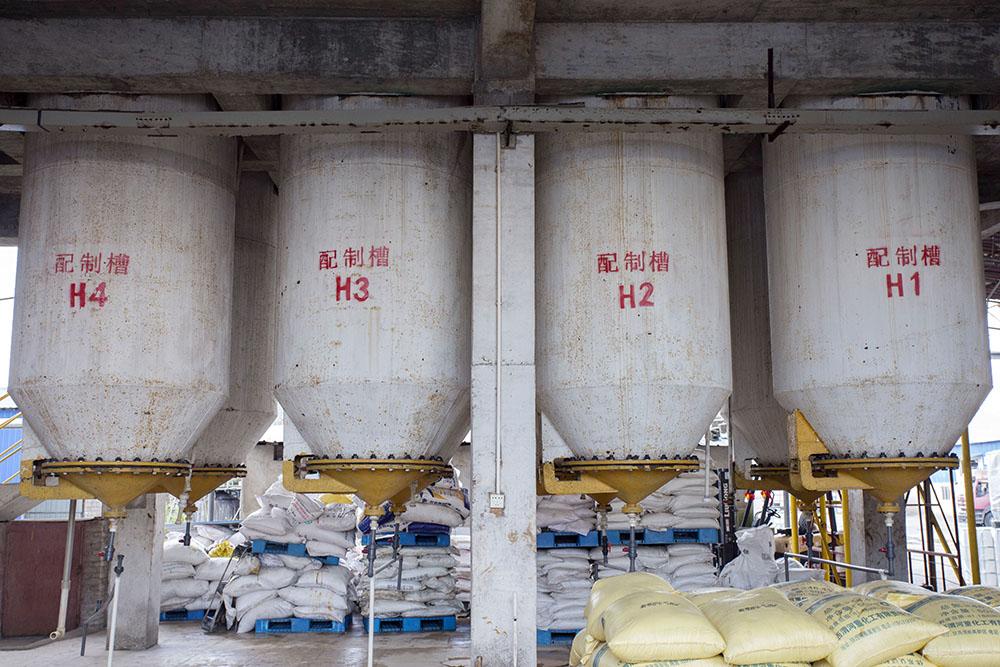
Industrial formulation and mixing hoppers used for controlled concentration batching and pilot sample production of phosphoric acid derivatives
Which Is Better for Corrosion Protection?
There is no universal winner.
Phosphoric acid may be the better choice when you need a chemical treatment or process input.
Zinc phosphate may be the better choice when you need a corrosion-inhibiting pigment or phosphate-based coating component.
The correct choice depends on the coating system, substrate, application method, performance requirements, and processing conditions. To explore technical details on how orthophosphoric acid acts as a raw material for downstream manufacturing, read our guide on Phosphoric Acid Use in Fertilizer Production.
Is Zinc Phosphate Made From Phosphoric Acid?
Yes, phosphoric acid can be used as a raw material to manufacture zinc phosphate.
The EPA identifies phosphoric acid and a zinc source as common raw materials for zinc orthophosphate production.
Industrial zinc phosphate production may involve reacting a zinc-containing raw material with phosphoric acid under controlled conditions.
For example, published technical work on zinc phosphate pigment production describes reactions involving zinc oxide and phosphoric acid, followed by controlled processing to obtain the desired pigment characteristics.
The exact manufacturing route depends on the desired zinc phosphate grade, hydration state, particle size, morphology, and end application.
Need technical guidance or competitive quotes for anti-corrosive Zinc Phosphate compounds? Connect with our sourcing team on WhatsApp
WhatsApp Us for Free a Consultation
What Is Zinc Phosphate Used For?
1. Anti-Corrosion Paints and Primers
One of the most important applications of zinc phosphate is corrosion-control coatings.
It can be incorporated into primer formulations to help protect metal substrates from corrosion.
2. Metal Surface Treatment
Zinc phosphate is also associated with phosphate-conversion coatings.
These treatments are commonly used on metal surfaces to improve corrosion resistance and provide a suitable foundation for later coating or painting.

Phosphoric acid chemical bath tanks used for industrial metal rust removal, electropolishing, and surface treatment
3. Industrial Coatings
Zinc phosphate can be used in coating systems designed for industrial metal protection.
The final performance depends on factors such as:
- Pigment concentration
- Particle characteristics
- Binder system
- Metal substrate
- Surface preparation
- Coating thickness
- Environmental exposure
4. Water Treatment
Zinc orthophosphate can also be used in corrosion-control applications in water-distribution systems, either alone or as part of phosphate blends.
What Is Phosphoric Acid Used For in Metal Treatment?
Phosphoric acid is widely associated with metal surface treatment because phosphate-based conversion coatings can be produced using phosphoric acid-containing solutions.

Quality assurance testing of high-purity electronic-grade phosphoric acid in a cleanroom environment
A typical phosphating system can contain:
- Phosphoric acid
- Zinc, iron, or manganese ions
- Water
- Accelerators or other additives
The treatment can be applied through methods such as immersion or spraying.
The purpose is not simply to “coat the metal with phosphoric acid.” Instead, the chemical treatment promotes the formation of a phosphate conversion layer on the substrate.
Phosphoric Acid vs Zinc Phosphate: Which Should You Buy?
The answer depends on what you are trying to manufacture or achieve.
Choose Phosphoric Acid When You Need:
- A phosphoric-acid-based processing chemical
- A raw material for phosphate compounds
- A component of a metal-treatment formulation
- A chemical for phosphate-conversion processes
- A specific concentration or purity for industrial processing

Laboratory researcher performing precise liquid volumetric analysis and chemical reagent preparation
Choose Zinc Phosphate When You Need:
- A corrosion-inhibiting pigment
- A component for anti-corrosion primers
- A zinc phosphate coating material
- A corrosion-control compound
- A phosphate-based coating ingredient
Do not select the chemical based only on the word “phosphate.”
The two materials have different chemical properties, forms, applications, and purchasing requirements.
What Should Buyers Check Before Buying Phosphoric Acid?
For bulk industrial purchasing, price should not be the only consideration.
1. Concentration
Confirm the required phosphoric acid concentration before requesting quotations.
Different applications can require different concentrations.
2. Purity
Ask the supplier for the relevant specification and confirm whether the product meets your application requirements. First-time chemical importers should review our guide on the Top Mistakes Importing Phosphoric Acid to ensure zero customs delays.
3. COA
Request a Certificate of Analysis (COA) for the specific product and batch where applicable.
Check parameters relevant to your application rather than relying only on the product name.
4. SDS/MSDS
Request the current Safety Data Sheet (SDS) and review storage, handling, transportation, and hazard information. Request the current Safety Data Sheet (SDS) and review storage, handling, transportation, and hazard information. Our post on REACH & ISO certification walks through exactly which documents to verify before you commit to a Chinese supplier.
You can also see how chemical sourcing and quality evaluation work in practice in this CAMACHEM video

Quality assurance technicians verifying Certificate of Analysis (COA) documentation and test results for a chemical batch in a laboratory setting
5. Packaging
Confirm the packaging type, unit size, total quantity, and suitability for international transportation. For a comparison of container payload efficiency, check our guide on Phosphoric Acid Packaging: Drums vs IBC Totes vs ISO Tanks.
6. Shipping Requirements
For bulk chemical purchases, evaluate:
- Shipping method
- Loading port
- Delivery destination
- Packaging
- Incoterms
- Lead time
- Documentation
A low quoted product price does not necessarily mean the lowest total procurement cost.
What Should Buyers Check Before Buying Zinc Phosphate?
Zinc phosphate buyers should focus on specifications related to the final coating or treatment application.

Camal Group team members and international business partners engaging in a corporate strategy and product discussion meeting
Important points can include:
- Zinc content
- Phosphate content
- Purity
- Moisture
- Particle size
- Crystal or hydration form
- Oil absorption
- pH
- Application-specific performance
- Packaging
- COA
- SDS/MSDS
The exact parameters should be agreed with the supplier according to the buyer’s formulation and technical requirements. A low quoted product price does not necessarily mean the lowest total procurement cost. If this is your first time importing from China, our guide on how to buy phosphoric acid from China without risking low purity walks through the process step by step.
For coating manufacturers, particle characteristics can be particularly important because they can influence dispersion and coating performance.
Phosphoric Acid vs Zinc Phosphate: Price Comparison
It is difficult to give a meaningful price comparison without knowing the exact product specification.
Phosphoric acid and zinc phosphate are different products with different manufacturing processes and supply chains.
The final price can be affected by:
- Raw material costs
- Product concentration
- Purity
- Grade
- Packaging
- Order quantity
- Manufacturing location
- Freight costs
- Port charges
- Import duties
- Testing and inspection requirements
- Delivery terms
For bulk buyers, compare total landed cost, not only the supplier’s quoted chemical price.
How to Choose a Phosphoric Acid or Zinc Phosphate Supplier
Choosing a supplier should involve more than comparing three or four quotations.

Chemical storage inspection ensuring proper spill containment and safety compliance for industrial liquid drums
A reliable sourcing process should include:
Step 1: Define Your Requirement
Specify:
- Product name
- Grade
- Required specification
- Quantity
- Application
- Packaging
- Destination
- Required documents
Step 2: Request Technical Documents
Ask for relevant documents such as:
- COA
- SDS/MSDS
- Technical Data Sheet
- Product specification
- Packaging information
First-time chemical importers should review our guide on the Top Mistakes Importing Phosphoric Acid to ensure zero customs delays
Step 3: Compare Suppliers
Compare suppliers based on:
- Product specification
- Quality consistency
- Documentation
- Manufacturing capability
- Packaging
- Lead time
- Logistics
- Total landed cost
Confirm container selection (HDPE Jerrycans, 330kg Drums, IBC Totes, or ISO Tanks). For a comparison of container payload efficiency, check our guide on Phosphoric Acid Packaging: Drums vs IBC Totes vs ISO Tanks.
Step 4: Verify Before Placing a Large Order
Where appropriate, buyers can request samples, conduct testing, and verify documentation before moving to larger commercial quantities. This 20ft container loading video gives buyers a quick look at how chemical cargo can be prepared for shipment.
To learn how to detect off-spec chemical shipments before accepting delivery, read our technical guide on Signs of Diluted or Low-Purity Phosphoric Acid.
How Can CAMAL Group Help You Find the Right Phosphoric Acid and Zinc Phosphate Supplier in China?
Finding a chemical manufacturer is only one part of the sourcing process. Industrial buyers also need to evaluate product specifications, quality documentation, packaging, logistics, and whether the supplier can meet their application requirements consistently.

Camal Group representatives conducting an on-site quality inspection and facility audit at a chemical manufacturing factory
CAMAL Group can help businesses identify and evaluate suitable suppliers in China based on their specific sourcing requirements. Through CAMACHEM, buyers can also access chemical sourcing and procurement support for industrial chemicals.
If you are sourcing phosphoric acid or zinc phosphate, provide the product specification, application, required quantity, destination, packaging requirements, and documentation needs. This gives the sourcing team a clearer basis for evaluating suitable suppliers.
FAQs
Is phosphoric acid the same as zinc phosphate?
No. Phosphoric acid is an inorganic acid with the formula H₃PO₄, while zinc phosphate is an inorganic zinc phosphate compound commonly represented as Zn₃(PO₄)₂.
Can phosphoric acid make zinc phosphate?
Yes. Phosphoric acid can react with a zinc source to produce zinc phosphate.
Is zinc phosphate used for corrosion protection?
Yes. Zinc phosphate is widely used in corrosion-control coatings and primers.
Is phosphoric acid used for corrosion protection?
Phosphoric acid can be used in phosphate-conversion treatment systems that create phosphate layers on metal surfaces.
Which is better: phosphoric acid or zinc phosphate?
Neither is universally better. Phosphoric acid is often selected as a processing chemical or raw material, while zinc phosphate is commonly selected for corrosion-inhibiting coatings and related applications.
Can zinc phosphate be used in paint?
Yes. Zinc phosphate is used as a corrosion-inhibiting pigment in protective coating and primer systems.
What documents should I request from a chemical supplier?
Depending on the product and application, buyers should consider requesting a COA, SDS/MSDS, technical specification, packaging information, and other relevant quality or regulatory documents.
What should I tell a supplier when requesting phosphoric acid or zinc phosphate?
Provide the product name, required grade/specification, quantity, application, packaging requirements, destination, and required documents. This gives suppliers enough information to provide a more useful quotation.

Bulk liquid phosphoric acid tanker loading and transport setup, highlighting scalable industrial procurement and export logistics
Conclusion
Phosphoric acid and zinc phosphate are closely connected but serve different purposes.
Phosphoric acid is an acid and an important raw material for phosphate chemistry. Zinc phosphate is a zinc-containing phosphate compound widely used in corrosion-control coatings and metal treatment.
For industrial buyers, the right choice depends on the application rather than simply the chemical name.
If you are sourcing phosphoric acid or zinc phosphate in bulk, focus on the complete procurement requirement: specification, purity, documentation, packaging, logistics, quality verification, and total landed cost.
The right supplier should be able to clearly explain what product they are offering and provide documentation that allows you to verify whether it matches your technical requirements.
Unsure whether your formulation requires technical-grade or food-grade chemical inputs? Reach out to CAMAL Group now to discuss quality standards, COA specs, and compliance requirements.
WhatsApp Us for Free a Consultation
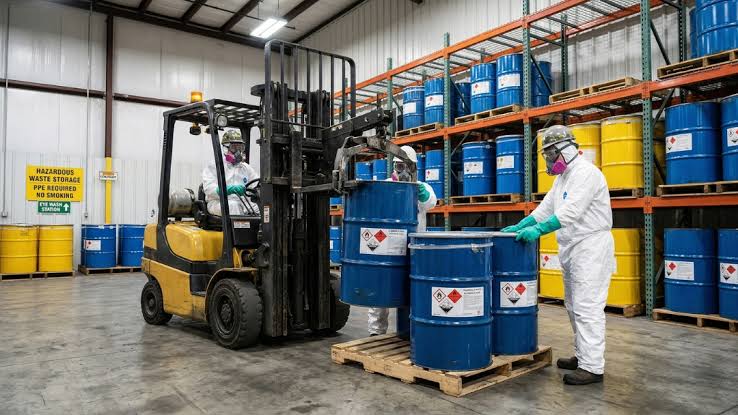
Industrial warehouse technicians safely handling, palletizing, and preparing chemical drums for bulk phosphoric acid storage and export dispatch
Industrial Buyers: Next Steps for Sourcing Bulk Phosphoric Acid
What makes our Phosphoric Acid Better:
✅ Compliant with EU, UN, ISO Standards – No Legal Headaches
✅ Guaranteed 85% Purity – Stability for your Processing Plant
✅ Extremely Low Impurities – Low Heavy Metals
✅ Batch-Specific COA Provided – Full Transparency per Shipment.
Download Our EU-approved Specifications.[ Food Grade or Industrial Grade]