


Choosing between phosphoric acid and oxalic acid is not a simple price decision. The two chemicals can both appear in rust removal and cleaning discussions, but they have different chemistry, physical forms, supply needs, and best-fit applications.
For most bulk industrial buyers, phosphoric acid is the broader choice for fertilizer production, pH adjustment, phosphate-based metal treatment, water treatment, and selected food applications. Oxalic acid is often a better fit for targeted cleaning, rust removal, bleaching, and chelation work. Neither should replace the other without application testing.
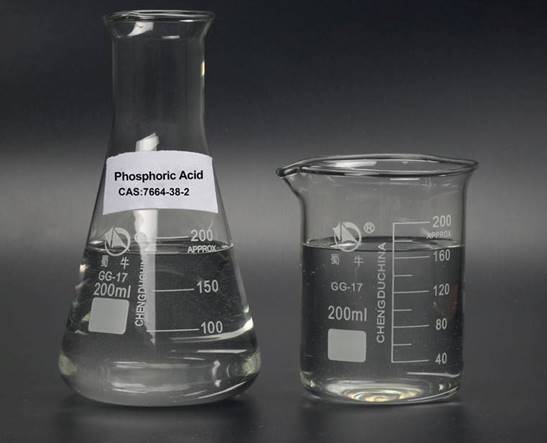
A clear comparison starts with the required concentration, grade, and process result.
What Is the Main Difference Between Phosphoric Acid and Oxalic Acid?
Phosphoric acid is an inorganic mineral acid. Commercial material is commonly supplied as a clear, viscous liquid, often around 75% to 85% concentration. Oxalic acid is an organic dicarboxylic acid. It is commonly supplied as a white crystalline solid, including anhydrous and dihydrate forms.
That difference affects storage, dosing, transport, and plant design. A liquid phosphoric acid supply can feed a dosing system directly. Oxalic acid usually needs controlled weighing, dissolution, and dust management before use.
Phosphoric acid also adds phosphate chemistry to the process. Oxalic acid forms oxalate salts and can bind certain metal ions. Therefore, the right choice depends on what the process must do after the acid reacts.
Phosphoric Acid vs Oxalic Acid by Application
Fertilizer and phosphate production
Phosphoric acid is the clear fit for phosphate-based fertilizer production. Government industrial references list phosphoric acid in the manufacture of superphosphate fertilizers, phosphate salts, polyphosphates, and animal feeds. Oxalic acid does not provide the same phosphate input and should not be treated as a substitute for this purpose.
For a fertilizer buyer, the commercial question is usually concentration integrity and supply consistency. A stable industrial-grade phosphoric acid product can simplify calculations, storage planning, and batch control. Ask for a batch-specific COA and confirm the agreed concentration before shipment.
Metal treatment and rust removal
Both acids can appear in metal cleaning, but the result is not identical. Phosphoric acid is used in rust proofing before painting, metal polishing, pickling, and surface treatment. It can convert iron oxides into phosphate compounds that support a treated surface before coating, depending on the process and formulation.
Oxalic acid is useful for targeted rust and stain removal. It can dissolve iron compounds and is also used in cleaning and bleaching applications. However, it may be selected for its cleaning action rather than for creating a phosphate conversion layer.
The best chemical depends on the next production step:
- Choose phosphoric acid when surface preparation and phosphate treatment are part of the specification.
- Choose oxalic acid when targeted stain or rust removal is the main goal.
- Run a coupon test when the substrate, temperature, contact time, or coating system is new.

Metal fabrication and surface treatment generate intense sparks during industrial processing.
Water treatment, pH adjustment, and process control
Phosphoric acid is widely used for pH adjustment and water-treatment applications. Its liquid form supports metered dosing in many industrial systems. Oxalic acid can have a role in specialist cleaning or metal-ion control, but it is not a general replacement for phosphoric acid in routine pH dosing.
The plant should also evaluate phosphate discharge limits. Phosphoric acid can acidify water and add phosphate to the effluent. Buyers can also review Camachem’s phosphoric acid applications before requesting a process-specific quotation. The final decision must include neutralization, wastewater treatment, and local discharge rules.
Food and beverage applications
Phosphoric acid can be supplied in food-grade forms for approved food uses, including use as food additive E338 in relevant jurisdictions. Industrial-grade phosphoric acid is not automatically suitable for food or beverage production. Grade, purity, permitted use, and documentation all matter.
Oxalic acid is not a general food-grade substitute for phosphoric acid. If the application touches food, beverage, pharmaceutical, or personal-care production, ask for the exact specification and regulatory documents before ordering.
Physical and Purchasing Comparison
| Decision factor | Phosphoric acid | Oxalic acid | What the buyer should confirm |
| Common commercial form | Clear, viscous liquid | White crystalline solid | Tank, drum, IBC, bag, or other approved packaging |
| Typical bulk strength | Often 75% to 85% solutions | Anhydrous or dihydrate grades vary | Assay method and batch COA |
| Strongest fit | Fertilizer, pH control, phosphate treatment, selected food uses | Cleaning, rust removal, bleaching, chelation | Application trials and process result |
| Process handling | Pumping and metered dosing | Weighing, dissolving, and dust control | Equipment compatibility and operator training |
| Main process risk | Corrosion, crystallization, incorrect grade, phosphate discharge | Dust, incorrect hydrate basis, residue, incorrect waste handling | SDS, storage range, and waste route |
| Supplier documents | SDS, TDS, COA, grade statement, shipping documents | SDS, TDS, COA, grade and hydrate statement | Documents must match the shipped batch |
A buyer should not use this table as a substitute for an SDS or technical trial. It is a screening tool for the first supplier conversation.
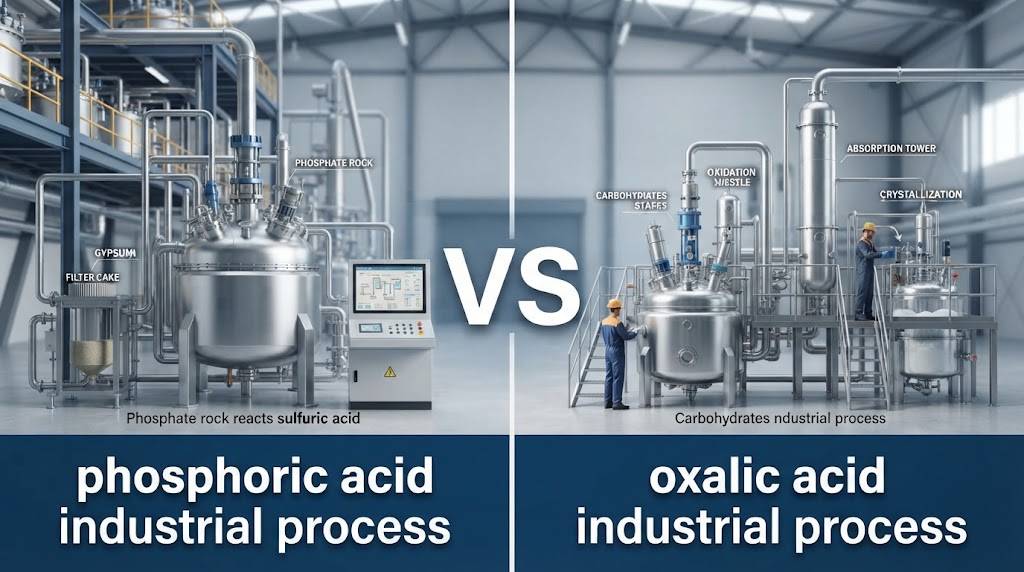
A visual comparison of the distinct industrial processing equipment and methods used to manufacture phosphoric acid and oxalic acid.
Which Chemical Is Better for Rust Removal?
The short answer is: it depends on the surface and the desired finish. Oxalic acid can be effective for focused rust and iron-stain removal, especially when the formulation is designed for cleaning. Phosphoric acid can be preferable when rust removal is part of a wider metal-preparation process and a phosphate-treated surface is useful before painting or coating.
Test both products on the actual substrate. Record the concentration, temperature, contact time, agitation, rinsing method, and final surface condition. Also check whether the treatment affects aluminum, zinc, stainless steel, painted surfaces, seals, or downstream coating adhesion.

Liquid phosphoric acid can support controlled pumping and dosing when the plant uses compatible equipment.
For bulk phosphoric acid, review the industrial-grade phosphoric acid specification before requesting a quotation. For food and beverage work, use the food-grade specification instead.
Supply, Storage, and Safety Checks
Phosphoric acid is corrosive. The Canadian Centre for Occupational Health and Safety warns that it can cause severe skin burns and eye damage. It can also react with some metals and release flammable hydrogen gas. Store it in compatible, labelled containers and follow the product SDS.
Oxalic acid also requires controlled handling. The solid form adds a different practical risk: dust, weighing errors, and incomplete dissolution. The exact hazard classification depends on the product form and grade, so buyers should request the supplier’s current SDS rather than rely on a generic internet summary.
Before either chemical enters the plant, verify:
- Compatibility. Confirm tanks, pumps, valves, seals, and transfer lines.
- PPE. Use the SDS and site risk assessment to set glove, eye, face, and clothing requirements.
- Ventilation. Control mist, dust, and vapors at the point of use.
- Storage. Keep containers labelled, closed, protected from heat, and separated from incompatible materials.
- Emergency response. Maintain eyewash, shower, spill, and neutralization procedures.
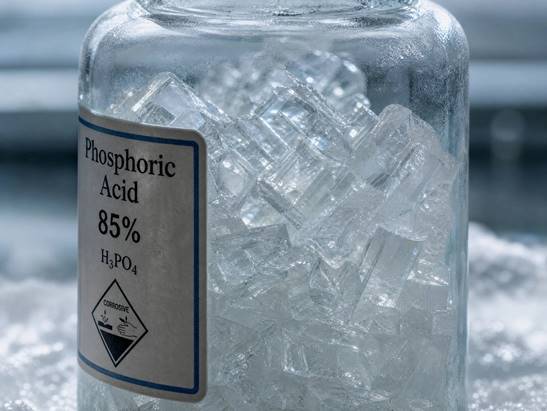
Temperature control matters when storing and transporting concentrated phosphoric acid.
For a China import, the supplier should also confirm packaging, UN transport information where applicable, loading photos, and the documents attached to the shipment. Camachem’s bulk phosphoric acid buying guide can help structure that first request. Buyers can also review how to buy phosphoric acid from China before contacting a supplier.
Need Help Sourcing Bulk Phosphoric Acid In 2026?
If your process needs a consistent 85% phosphoric acid supply, request a specification review, sample discussion, and bulk quotation before choosing a chemical.
WhatsApp Us for Free a Consultation
How Camachem Helps Buyers Compare the Right Product
A sound comparison starts with the application, not with a supplier’s product title. Share the process target, expected monthly volume, packaging preference, destination country, and any limits on impurities or effluent. The supplier can then confirm whether 85% industrial-grade phosphoric acid is suitable or whether a different grade is needed.
Camachem presents a direct path for buyers who need phosphoric acid from China: discuss the requirement, review samples, test the material, place a one-container trial order, and then plan repeat supply. The buyer should still verify every commercial and technical point in writing.

Shipping visibility helps a buyer connect the approved product specification to the delivered bulk order.
Use the About Camachem page to review the supplier context, then ask for the exact COA, TDS, SDS, packaging details, and lead-time plan for your order. For current pricing and order planning, use the Camachem contact page.
A Practical Buyer Review Before the First Order
A first order should be treated as a controlled qualification step. The buyer can compare the supplier’s legal and product documents, request a sample, and check whether the sample matches the agreed specification. A factory visit or third-party inspection can add another layer of confidence when the volume or application risk is high.
If you want to compare your current chemical against bulk phosphoric acid, contact the team with your existing specification:
WhatsApp Us for Free a Consultation
Watch this short export and container-loading video to see why shipment planning, packaging, and documentation matter when buying phosphoric acid internationally.
See how export loading connects product preparation with the buyer’s delivery plan.
Frequently Asked Questions
Is phosphoric acid stronger than oxalic acid?
“Stronger” is not a useful purchasing conclusion by itself. Acid strength, concentration, reaction speed, substrate, temperature, and formulation all affect performance. Select the chemical by process result and validate it with a controlled test.
Can oxalic acid replace phosphoric acid in fertilizer production?
No. Oxalic acid does not provide the phosphate chemistry required for phosphate-based fertilizer production. Phosphoric acid is the relevant industrial feedstock for that purpose.
Which is better for rust removal, oxalic acid or phosphoric acid?
Oxalic acid can suit targeted rust and iron-stain cleaning. Phosphoric acid can suit rust removal that is also part of phosphate-based surface preparation. Test the actual substrate and coating system before selecting a bulk chemical.
Is 85% phosphoric acid always industrial grade?
No. Industrial-grade and food-grade phosphoric acid can both be sold near 85% concentration. Grade depends on purity, permitted use, specifications, and documentation, not concentration alone.
What documents should I request from a phosphoric acid supplier?
Request the current SDS, TDS, batch-specific COA, grade statement, packaging details, shipping information, and any destination-market documents required for import and use.
Can these acids be stored in the same type of container?
Do not assume that they can. Phosphoric acid is commonly handled as a corrosive liquid, while oxalic acid may be supplied as a solid. Confirm material compatibility, closure, ventilation, moisture control, and the product SDS for each chemical.
Should I buy phosphoric acid or oxalic acid for a new cleaning line?
Start with the soil, substrate, target finish, waste route, and downstream coating or process step. Then run a small trial with both candidates if the application is uncertain. A supplier should help you compare the specification, but the plant remains responsible for validation.
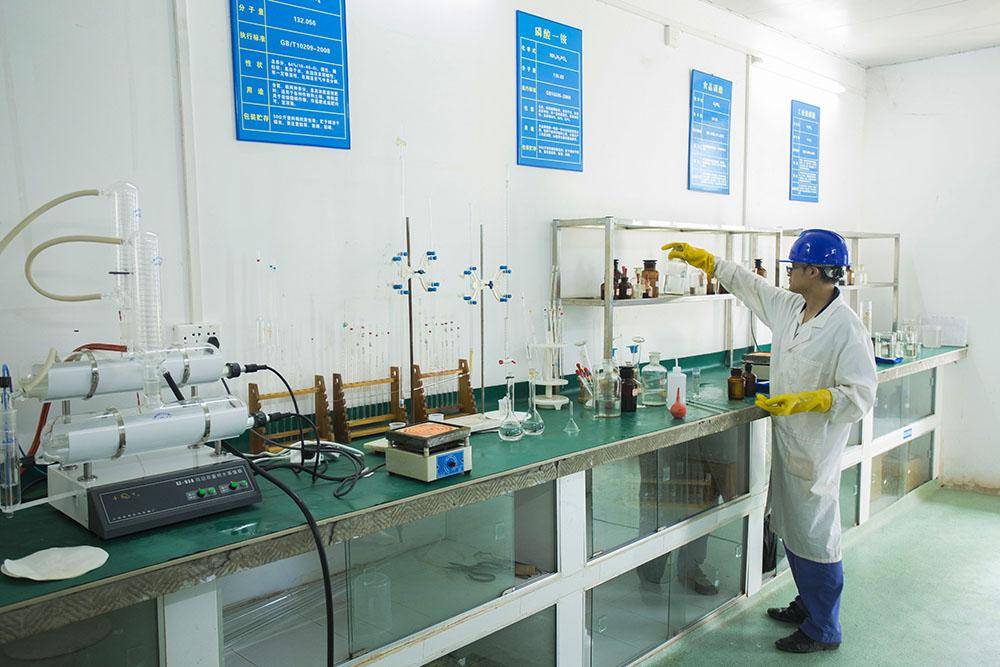
Laboratory technician handling chemical samples and equipment in a testing facility.
Conclusion: Choose by Process Result, Not by Acid Name
Phosphoric acid vs oxalic acid is a decision about chemistry, handling, and business risk. Phosphoric acid is usually the broader bulk option for fertilizer, pH control, water treatment, phosphate-based metal treatment, and approved food applications. Oxalic acid is often better for focused cleaning, rust removal, bleaching, and chelation work.
For buyers importing from China, the safest route is to define the process result, request a sample, verify the COA and SDS, confirm packaging compatibility, and run a controlled trial. If phosphoric acid is the better fit, choose a supplier that can support consistent concentration, clear grade separation, and repeat shipment documentation.
If you are ready to review an industrial phosphoric acid requirement, send the application, monthly volume, and destination country to Camachem. You can also browse the latest phosphoric acid blog articles for related buying and application guidance:
WhatsApp Us for Free a Consultation
Industrial Buyers: Next Steps for Sourcing Bulk Phosphoric Acid
What makes our Phosphoric Acid Better:
✅ Compliant with EU, UN, ISO Standards – No Legal Headaches
✅ Guaranteed 85% Concentration – Stability for your Processing Plant
✅ Extremely Low Impurities – Low Heavy Metals
✅ Batch-Specific COA Provided – Full Transparency per Shipment.
Download Our EU-approved Specifications. [ **Food Grade** or **Industrial Grade** ]