


Choosing between phosphoric acid and polyphosphoric acid is not only a chemistry question. It affects dosing, storage temperature, pump design, product quality, shipping, and final process results. For many plants, standard 85% phosphoric acid is the practical choice. For other processes, polyphosphoric acid can deliver a higher phosphate load or a different reaction profile.
The safest choice depends on what your line must do. Do you need an easy-to-dose acid for fertilizer, metal treatment, water treatment, or food processing? Or do you need a highly condensed acid for fertilizer intermediates, asphalt modification, chemical synthesis, or dehydration?
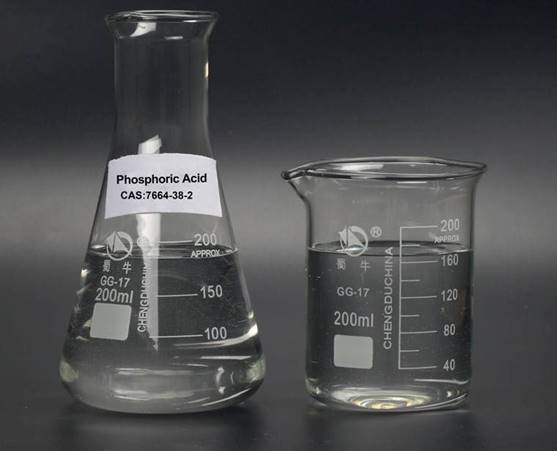
Concentration and chemical form both matter when selecting an acid for production.
Introduction: Start With the Process, Not the Product Name
The words “phosphoric acid” can describe more than one practical feedstock. Orthophosphoric acid is the familiar H3PO4 form used in many industrial and food-grade products. Polyphosphoric acid, or PPA, contains condensed phosphate chains and is often sold using a P2O5-equivalent specification.
In this guide, you will learn:
- How the two acids differ in chemistry and handling.
- Which production processes commonly fit each one.
- What to check in the specification, COA, and SDS.
- How packaging, storage, and shipping can change your decision.
- When to request a sample before placing a bulk order.
If you are still defining your purchase requirements, the bulk phosphoric acid buying guide provides useful background on grades, packaging, and supplier checks.
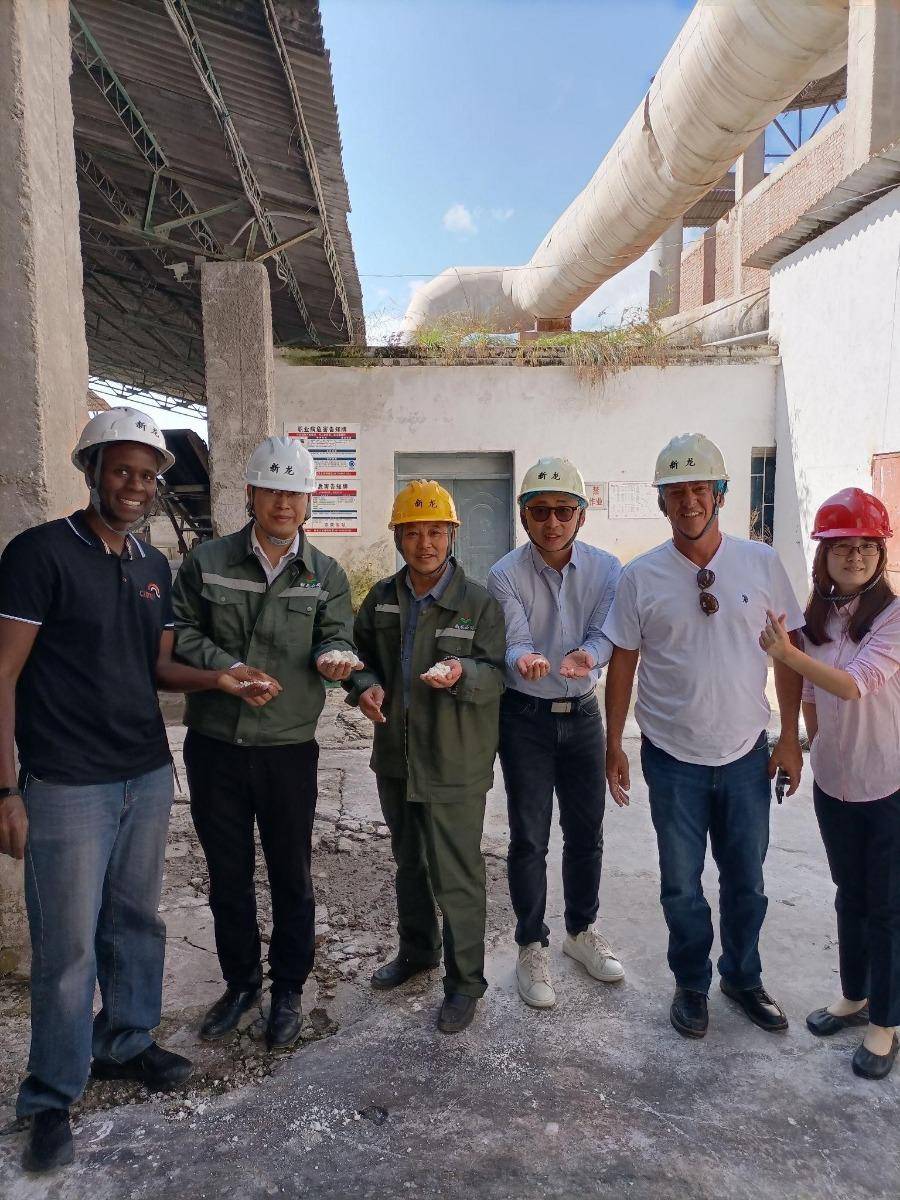
Camachem specialists and clients evaluating materials on-site, relevant to comparisons of phosphoric acid vs polyphosphoric acid.
| Decision-Maker Insight: The wrong acid can create more than a technical problem. It can cause pump changes, heated storage, off-spec batches, production delays, or a costly rework cycle. Confirm process fit before you compare supplier prices. |
Phosphoric Acid vs Polyphosphoric Acid: What Is the Difference?
Phosphoric acid normally means orthophosphoric acid in water. Commercial 85% phosphoric acid contains about 85% H3PO4 by weight, with the balance mainly water and small amounts of permitted impurities that depend on grade and process route.
Polyphosphoric acid is made by removing water from phosphoric acid. This creates condensed phosphate species such as pyrophosphoric and longer-chain acids. When PPA contacts water, it hydrolyzes back toward orthophosphoric acid and releases heat. Clariant describes PPA as a high-viscosity, hygroscopic liquid and notes that products above 68% P2O5 are commonly called polyphosphoric acids. Clariant’s PPA 84% product page gives a useful example of how these products are specified.
That point is important for purchasing. “84% PPA” does not mean the same thing as “84% H3PO4.” Ask the supplier whether the percentage is reported as H3PO4, P2O5, or another basis.
The practical comparison for production teams
| Decision factor | Standard phosphoric acid | Polyphosphoric acid |
| Main chemical form | Mostly orthophosphoric acid in water | Mixture of condensed phosphoric acids |
| Common commercial reference | Around 75% or 85% H3PO4 | Often specified by P2O5 equivalent, such as 84% P2O5 |
| Viscosity | Usually easier to pump and meter | Much higher, especially at lower temperatures |
| Water behavior | Already aqueous | Hydrolyzes in water and generates heat |
| Typical fit | Fertilizer, food, water treatment, metal treatment | Fertilizer intermediates, asphalt modification, specialty synthesis, dehydration |
| Storage focus | Corrosion control and temperature management | Moisture exclusion, heated transfer, and compatible materials |
| Best buying check | H3PO4 concentration, impurities, grade | P2O5 basis, chain distribution, viscosity, temperature, and hydrolysis behavior |
This table is a starting point. Your actual choice should follow your recipe, equipment, destination-market rules, and batch-test results. For a broader purchasing framework, review the phosphoric acid buyer guide.
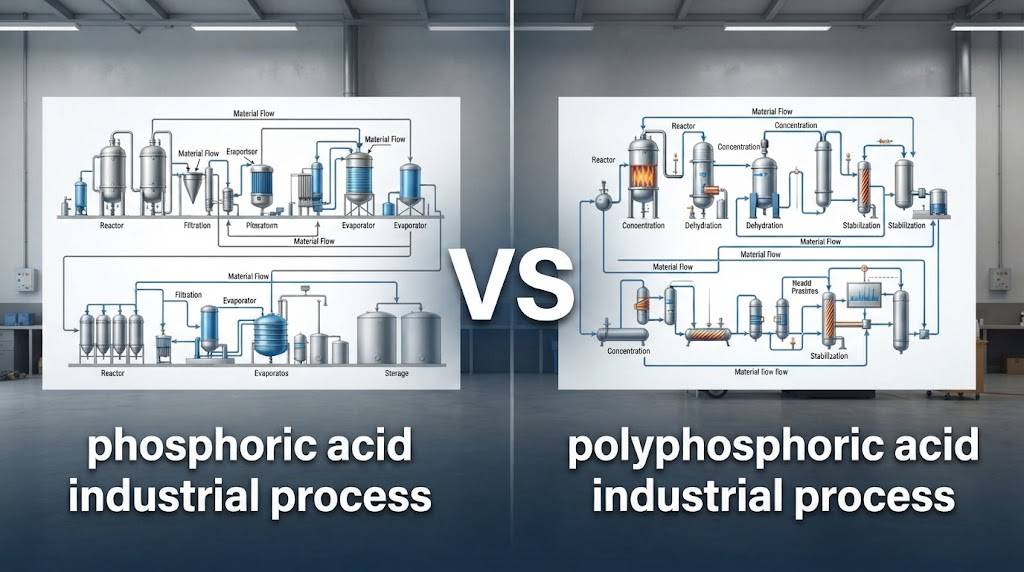
Side-by-side technical comparison of the standard phosphoric acid production method versus the multi-stage polyphosphoric acid concentration process.
Need Help Sourcing Bulk Phosphoric Acid In 2026?
Get a free specification review and sample discussion for phosphoric acid or polyphosphoric acid. Share your process, monthly use, packaging, and destination market with the team.
WhatsApp Us for Free a Consultation
When Standard Phosphoric Acid Is the Better Choice
Fertilizer and agriculture
Standard phosphoric acid is often selected when the plant needs a reliable acid source for phosphate fertilizer production or liquid fertilizer formulation. It is also easier to dilute and blend when the recipe is built around an aqueous acid feed.
For fertilizer buyers, the key issue is not simply “85% is stronger.” Confirm the required phosphate basis, impurity limits, color, density, and compatibility with ammonia, potassium, micronutrients, or other raw materials in the formulation. Camachem’s industrial-grade page is a useful reference point when preparing that request.

Phosphoric acid serves as an essential raw material for formulating liquid NPK fertilizers and high-analysis phosphate plant nutrients.
Metal treatment and surface preparation
Phosphoric acid is used in descaling, rust removal, and phosphate conversion processes. It can be easier to control when the bath requires a defined aqueous concentration and regular replenishment.
However, the bath may also contain surfactants, accelerators, iron, zinc, or other additives. The supplier should review the complete formulation rather than recommend an acid from concentration alone. For a new line, test the acid on the actual metal and coating system.
Water treatment and general process dosing
Many water-treatment and industrial dosing systems are designed around liquid phosphoric acid. Standard solutions can be more practical when operators need consistent metering, quick dilution, and simple temperature control.
For these applications, ask for a clear industrial-grade phosphoric acid specification. The document should state concentration, density, appearance, impurity limits, packaging, and recommended storage conditions.
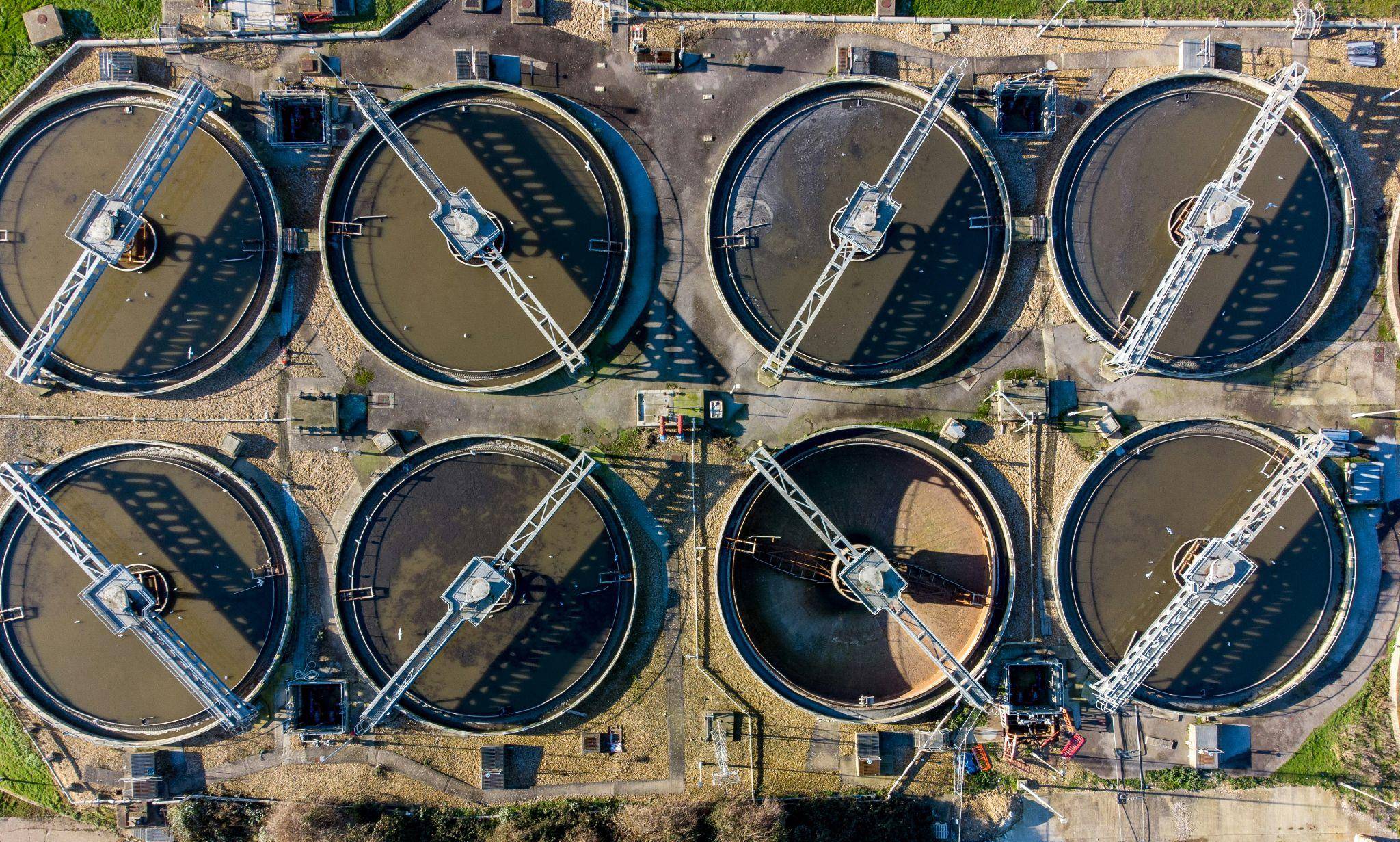
Phosphoric acid is applied in water treatment systems for pH adjustment and corrosion control.
Food and beverage processing
Food-grade phosphoric acid may be suitable for acidification and other permitted uses when the application and local rules allow it. Food grade and industrial grade can both be sold near 85% concentration, but they are not interchangeable by default.
The food-grade decision depends on purity, permitted use, documentation, and regulatory requirements. Review the Food Grade Specifications and confirm that the COA matches the batch being shipped.
When Polyphosphoric Acid Is the Better Choice
Higher phosphate loading in fertilizer processes
PPA can provide a concentrated phosphorus source with less water than a more dilute orthophosphoric acid feed. This may be useful in fertilizer intermediates or formulations where water balance matters.
The advantage only exists if the plant can handle the material. High viscosity can slow unloading, blending, and transfer. The process engineer should check heated lines, pump capacity, tank materials, and the order in which water and other ingredients are added.
Asphalt and bitumen modification
PPA is used as an asphalt modifier. Industry literature reports changes such as higher viscosity, a higher softening point, and lower penetration at room temperature. It can also be used with polymer or crumb-rubber systems.
The result depends on the base binder, PPA type, dosage, temperature, mixing time, and test method. Do not copy a dosage from another project without testing your own binder. The PPA asphalt-binder review explains several documented application routes. For supplier-side support, the Camachem contact page can route a process-specific inquiry.
Chemical synthesis and dehydration
PPA can act as a strong acid, dehydrating agent, or reagent in selected chemical reactions. Clariant lists organic synthesis, catalyst manufacture, metal-surface treatment, gas drying, phosphate esters, and phosphorus-based polyols among its applications.
This is a specialty-process decision. The plant may need a particular P2O5 level, viscosity range, water content, or impurity profile. A generic 85% phosphoric acid COA is not enough evidence that a PPA product will work.
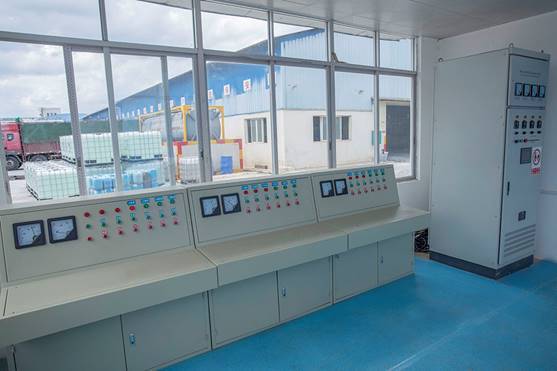
A process-specific sample test helps confirm whether the selected acid meets the plant’s technical needs.
| Technical Note: PPA is hygroscopic. If it absorbs moisture, its concentration and viscosity can change. In a cold or humid supply chain, moisture control and temperature planning are part of the product specification, not just a logistics detail. |
Request a fertilizer-focused specification review, sample, and packaging recommendation for your production line.
WhatsApp Us for Free a Consultation
Dosing, Storage, and Equipment: The Decision Most Buyers Miss
Pumping and viscosity
Standard phosphoric acid is generally easier to transfer with normal liquid-handling equipment. PPA can be much more viscous, particularly at lower temperatures. A product that looks acceptable on paper may still create a transfer problem at your actual warehouse or plant temperature.
Ask the supplier to provide viscosity data at a stated temperature. Then compare that value with the pump curve and line size used at your facility. You can also review the site’s packaging information before selecting drums, IBCs, or bulk delivery.
Moisture and hydrolysis
PPA reacts with water and gives off heat. Operators should follow the supplier’s SDS and site procedures for dilution, addition order, ventilation, and personal protection. Never assume that adding water to a concentrated acid is a routine mixing step.
The same issue matters during shipping. Inspect drum closures, IBC valves, seals, and tanker connections. Moisture ingress can change the material before it reaches the process.
Materials and temperature
A PPA system may need heated storage or transfer. Clariant states that its PPA 84% is normally pumped and stored at 70–90°C under specified conditions, and it recommends compatible materials because hot PPA is corrosive. Your supplier’s current SDS and technical data must take priority over a general article.
Standard phosphoric acid may be stored without the same heating requirement, but the product can still be corrosive and may crystallize or change behavior in cold conditions depending on concentration. Confirm the supplier’s recommended temperature range for your exact grade.
What to Check Before You Buy in Bulk
A trustworthy supplier should answer these questions before you place a container or tanker order:
- Specification basis. Is the concentration reported as H3PO4 or P2O5?
- Grade and application. Is the product industrial, food, or application-specific?
- COA detail. Does the COA include concentration, density, impurities, and test methods?
- SDS and labels. Are the documents current for your destination market?
- Packaging. Are drums, IBCs, or bulk tankers suitable for the acid and route?
- Sample testing. Can you test a representative sample before the full order?
- Batch consistency. Can the supplier show recent batch records or retained-sample results?
- Factory evidence. Is the seller a producer, or is it reselling another company’s material?
For a first China order, you can also review the supplier’s registered business information through China’s National Enterprise Credit Information Publicity System. A factory visit or third-party inspection can add further confidence when the order value is significant. Buyers can also review Camachem’s success stories for context on supplier and shipment verification.
How Camachem Can Support the Choice
The right comparison is not only acid versus acid. It is also a comparison between a documented, process-matched supply plan and a product chosen from a short quotation.
Camachem’s About page describes the company and its phosphoric-acid supply focus. Buyers can request specifications, samples, packaging options, and batch documents before they commit to a larger shipment.
If your plant is comparing a new supplier with an existing one, the phosphoric acid blog can help your team review related topics such as storage, packaging, purity, and application fit.
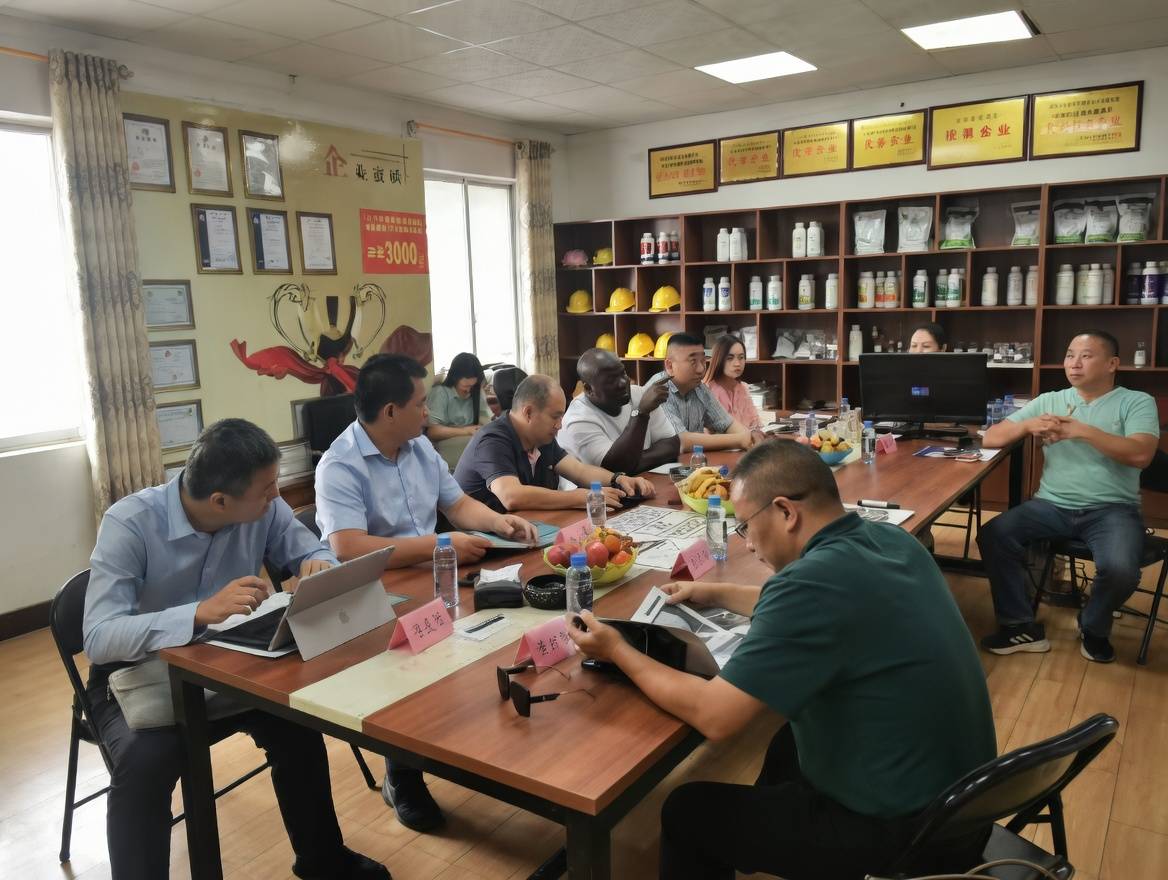
Camachem representatives discussing chemical specifications and sourcing requirements with clients.
Case Study and Quality Proof: What to Ask For
A supplier’s brochure is useful, but it does not prove that every future shipment will match your process. Ask for evidence that links the product, the batch, and the production site. The Camachem homepage provides the main product and company context before a buyer requests documents.
A useful supplier review can include:
1. Sample approval. Test the material with your actual recipe or process conditions.
2. Document review. Compare the COA, SDS, label, and purchase specification.
3. Factory verification. Confirm production capability, storage, loading, and quality-control practice.
4. Shipment control. Match the seal number, packaging, batch number, and documents at dispatch.
A real supply plan should also explain where the cargo is loaded and how it is protected. Chemical exports from Shandong and nearby industrial areas may route through Qingdao, while other suppliers may use Ningbo-Zhoushan, Shanghai, or Lianyungang. The correct route depends on the factory, packaging, dangerous-goods requirements, and destination.
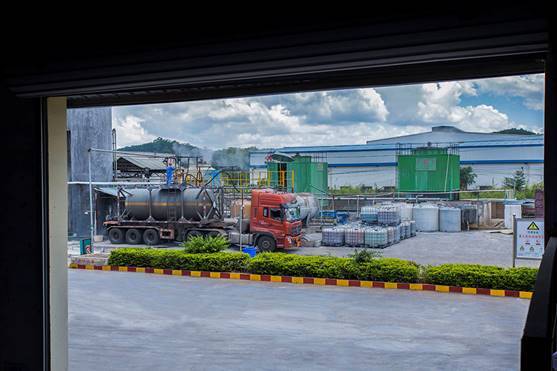
Packaging integrity and loading controls help protect acid quality from the factory to the receiving plant.
Before approving a supplier, request a current phosphoric acid specification sheet and ask which values are delivery specifications and which are typical data. That distinction matters when you are writing acceptance criteria into the purchase order.
Watch the short container-loading video below if you are planning your first bulk shipment. It can help your procurement team see why packaging, loading, and documentation should be reviewed together.
Watching the loading process can help your team ask better questions about packaging, documentation, and shipment control before the first order.
Frequently Asked Questions
Is polyphosphoric acid stronger than phosphoric acid?
Not in a simple one-number sense. PPA is more highly condensed and may be sold with a high P2O5-equivalent value, but that value is not the same as the H3PO4 percentage on a standard phosphoric acid label. Compare the correct chemical basis and the process result, not only the number in the product name.
Can I replace 85% phosphoric acid with polyphosphoric acid?
Usually not without a process review. PPA can have much higher viscosity and different water behavior. It may need heated storage, different pumps, a controlled dilution step, or a revised recipe. Run a sample test and confirm equipment compatibility before making a substitution.
Which acid is better for fertilizer production?
It depends on the fertilizer route and water balance. Standard phosphoric acid is often easier to dilute and blend. PPA can be useful where a concentrated phosphorus feed is valuable. Your technical team should compare phosphate basis, impurities, viscosity, reaction heat, and final product performance.
Is polyphosphoric acid suitable for food processing?
Do not assume it is. Food applications require the correct food-grade product, permitted use, purity, and documentation for the destination market. A product sold as industrial PPA should not be used in a food process unless the supplier and your regulatory team confirm that it meets the required rules.
What packaging is used for bulk phosphoric acid?
Common options include drums, IBCs, and bulk tankers. The best choice depends on monthly use, unloading equipment, storage capacity, transport rules, and the acid’s viscosity and temperature needs. Ask the supplier to confirm packaging compatibility and dangerous-goods documentation for your route.
Why does PPA need more storage planning?
PPA is highly viscous and hygroscopic. Moisture can change its concentration, and low temperatures can make pumping difficult. Some products are stored or transferred warm. Confirm the exact temperature, material, and moisture-control requirements in the supplier’s current technical data and SDS.
What should I request before placing a first bulk order?
Request a product specification, current SDS, representative COA, sample, packaging details, storage guidance, and a clear statement of the concentration basis. Also ask for factory information and a plan for batch identification, loading, and shipment documents. These checks reduce the risk of buying the wrong material.
Bulk Sourcing CTA: Request a Shipment and Documentation Review
If you are preparing a first bulk order, ask Camachem to review the specification basis, COA, SDS, packaging, and shipment plan before you approve the purchase.
WhatsApp Us for Free a Consultation
Conclusion: Choose the Acid That Fits Your Line
Choose standard phosphoric acid when your process needs an aqueous, easier-to-dose acid for fertilizer, metal treatment, water treatment, or an approved food application. Choose polyphosphoric acid when your process specifically benefits from condensed phosphate chemistry, higher phosphate loading, dehydration, or asphalt modification.
The final decision should be based on the recipe, equipment, storage temperature, documentation, and sample results. If a supplier cannot clearly explain the H3PO4 or P2O5 basis, the viscosity, the impurity limits, and the handling plan, you do not yet have enough information to place a bulk order.
Industrial Buyers: Next Steps for Sourcing Bulk Phosphoric Acid
What makes our Phosphoric Acid Better:
✅ Compliant with EU, UN, ISO Standards – No Legal Headaches
✅ Guaranteed 85% Concentration – Stability for your Processing Plant
✅ Extremely Low Impurities – Low Heavy Metals
✅ Batch-Specific COA Provided – Full Transparency per Shipment.
Download Our EU-approved Specifications. [ Food Grade or Industrial Grade ]