


Phosphoric acid and sulfuric acid are two important industrial acids used across manufacturing, fertilizers, metal treatment, electronics, water treatment, and chemical processing. They may both be used for acidic reactions, cleaning, or pH adjustment, but they do not perform the same chemical role. Phosphoric acid has the formula H₃PO₄, while sulfuric acid has the formula H₂SO₄.
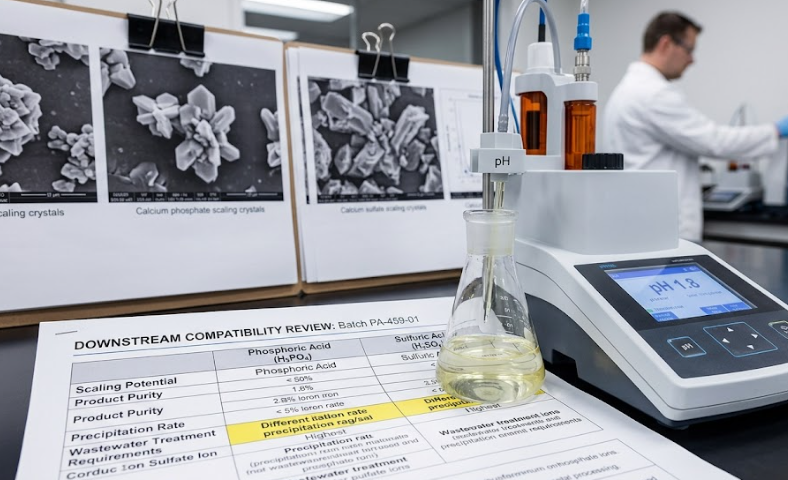
A downstream compatibility review compares scaling potential, purity, and precipitation rate before switching between phosphoric acid and sulfuric acid.
For industrial buyers, choosing between phosphoric acid and sulfuric acid should start with the application rather than the price per ton. The right choice depends on the required acid strength, chemical contribution, impurities, equipment compatibility, downstream reactions, safety requirements, and final product specifications. This guide compares both acids to help procurement and technical teams make a more informed purchasing decision.
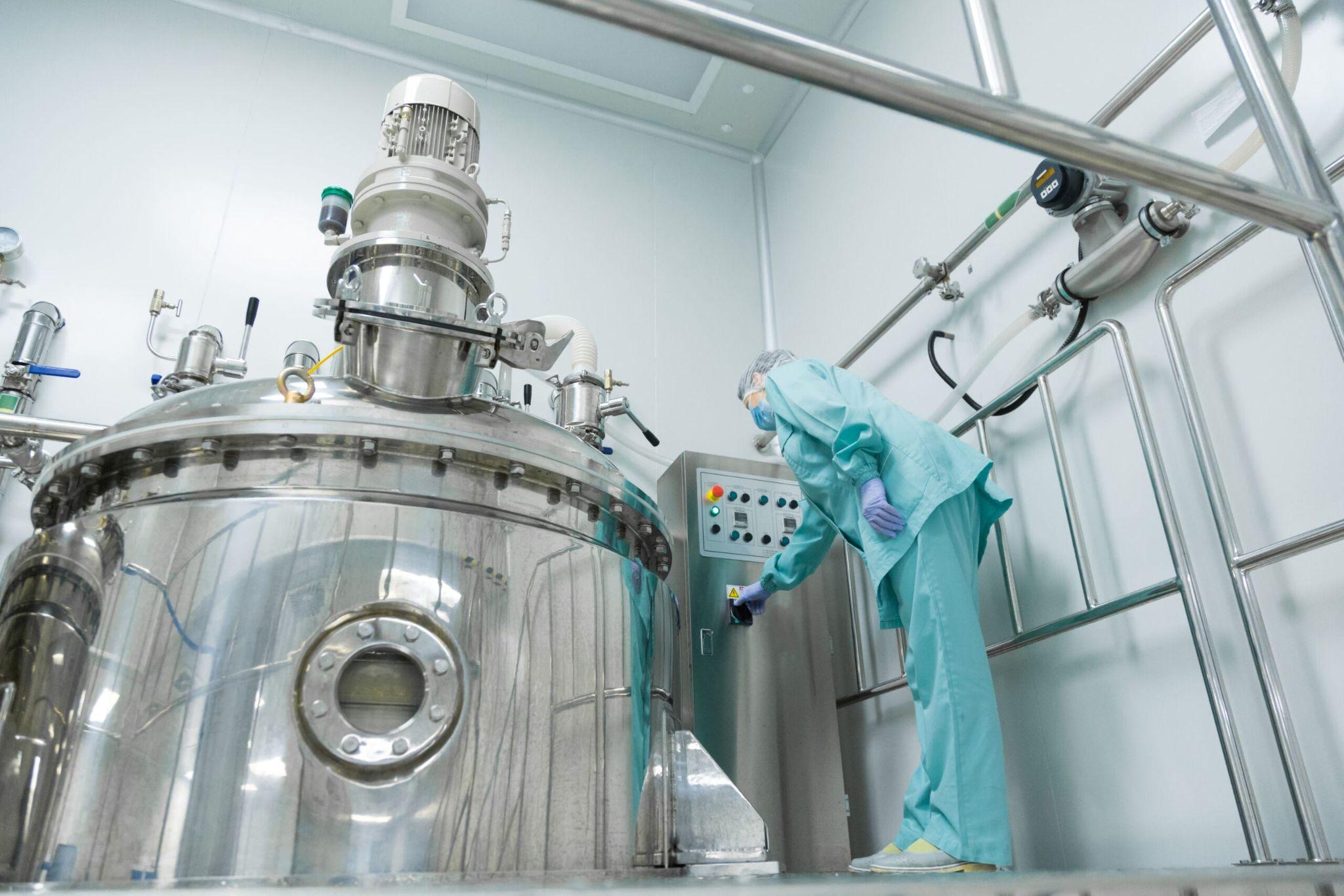
Industrial chemical production facility showing wet-process reaction and purification infrastructure for bulk phosphoric acid
Phosphoric Acid vs. Sulfuric Acid: What Is the Main Difference?
The most important difference is the chemistry each acid brings into the process.
Phosphoric Acid
Phosphoric acid, or H₃PO₄, is an inorganic acid containing phosphorus. CAMACHEM’s 85% phosphoric acid product is listed with a CAS number of 7664-38-2 and is available in drum and IBC packaging. CAMACHEM lists applications in fertilizers, food and beverage processing, metal surface treatment, and electronics.
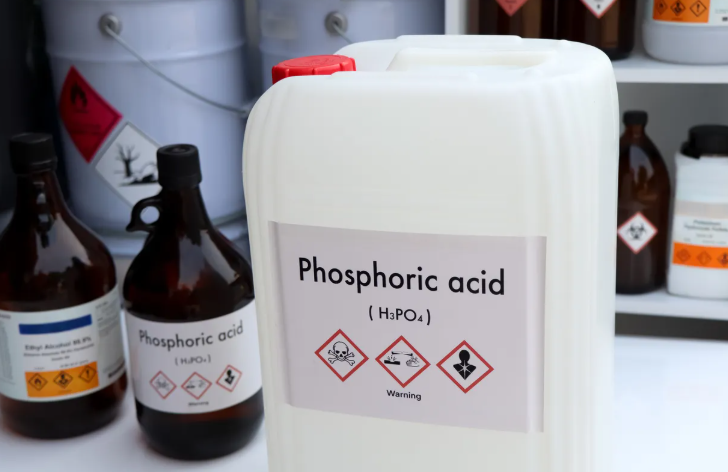
HDPE plastic jerrycan and amber glass bottles featuring standard GHS hazard labeling for liquid phosphoric acid storage and laboratory handling
For buyers, phosphoric acid is particularly relevant when the process needs phosphate chemistry rather than only strong acidity.
CAMACHEM also supplies different phosphoric acid grades and provides COA, TDS, and SDS documentation for its 85% product.
See CAMACHEM’s Phosphoric Acid 85% specifications
Sulfuric Acid
Sulfuric acid, or H₂SO₄, is a strong mineral acid widely used in industrial processes. CAMACHEM’s sulfuric acid product page lists a 98% concentration and provides separate specifications for reagent, battery, and industrial grades.
CAMACHEM lists sulfuric acid applications including fertilizer production, water treatment, metal cleaning, petroleum-related processes, batteries, textiles, paper, and chemical manufacturing.
See CAMACHEM’s Sulfuric Acid 98% specifications
Decision-Maker Insight: Do not treat phosphoric acid and sulfuric acid as interchangeable simply because both can provide acidity. One introduces phosphate chemistry, while the other introduces sulfate chemistry. That difference can affect the entire downstream process.
Phosphoric Acid vs. Sulfuric Acid: Side-by-Side Comparison
The following comparison provides a practical starting point for industrial procurement.
| Factor | Phosphoric Acid | Sulfuric Acid |
|---|---|---|
| Chemical formula | H₃PO₄ | H₂SO₄ |
| Common bulk concentration | 75% and 85% grades are available | 98% is a common industrial concentration |
| Acid strength | Weak acid in the usual acid-strength classification | Strong acid |
| Main chemical contribution | Phosphate | Sulfate |
| Fertilizer applications | Phosphorus source and phosphate production | Used in fertilizer and phosphoric-acid production |
| Food applications | Food-grade applications exist | Generally selected for industrial chemistry rather than food formulation |
| Metal applications | Surface treatment, rust removal, phosphating | Cleaning, pickling, and oxidation removal |
| Electronics | Cleaning and etching | Cleaning and acidifying processes |
| Water treatment | Selected pH and phosphate-related applications | pH adjustment and other water-treatment processes |
| Main purchasing concern | Grade, concentration, phosphate purity, impurities | Concentration, grade, purity, corrosion, and handling |
| Bulk packaging | Drums, IBCs, and other bulk formats depending on grade | Drums and IBC packaging depending on grade |
| Key question | Does the process require phosphate? | Does the process require strong acid or sulfate chemistry? |
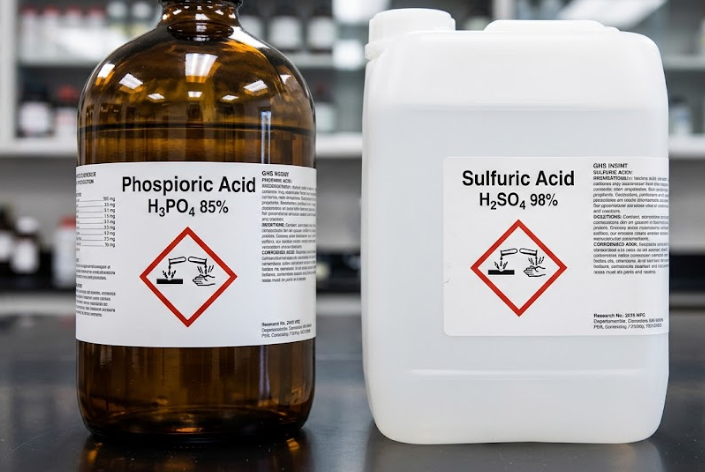
Laboratory chemical containers for Phosphoric Acid and Sulfuric Acid displaying red GHS hazard warnings for corrosive materials
CAMACHEM’s electronics article also discusses both phosphoric acid and sulfuric acid as chemicals used in electronics manufacturing, but their roles differ. Phosphoric acid is described for cleaning and etching, while sulfuric acid is described for cleaning, acidifying, PCB-related processes, and battery applications.
Read CAMACHEM’s guide to chemicals used in electronics
Bulk phosphoric acid is available in different packaging formats and grades for industrial applications.
When Should You Choose Phosphoric Acid?
Phosphoric acid is a logical option when the process needs phosphate chemistry, controlled acidity, or a phosphoric-acid-specific reaction.
Fertilizer Production
Phosphoric acid has a major role in phosphate fertilizer production. It provides the phosphorus component needed for many phosphate-based fertilizer products.
CAMACHEM’s phosphoric acid buying guide identifies fertilizers as one of the major applications of phosphoric acid.
Learn more about phosphoric acid uses and purchasing
Sulfuric acid can also be important in fertilizer manufacturing. However, its role is different. Sulfuric acid can be used to process phosphate-containing raw materials and produce phosphoric acid or other sulfate-based fertilizer products.
This distinction matters when purchasing raw materials.
Food and Beverage Processing
Food-grade phosphoric acid is used in selected food and beverage applications. CAMACHEM lists food-grade phosphoric acid as being used as an acid additive, clarifier, yeast nutrient, and in the production of food-grade phosphates.
This is a different purchasing requirement from industrial-grade acid.
A buyer should not select a product only because the chemical name is correct. The grade and impurity specification must match the application.
CAMACHEM provides a food-grade 85% phosphoric acid COA with specifications covering parameters such as H₃PO₄, lead, arsenic, and fluoride.
Review CAMACHEM’s Phosphoric Acid 85% Food Grade documentation
Metal Surface Treatment
Phosphoric acid is used for metal surface treatment and rust-related applications.
Its chemistry can help remove or convert iron oxide on metal surfaces and prepare surfaces for subsequent processing.
The process still needs to be validated for the specific metal, concentration, temperature, contact time, and finishing system.
Electronics and Semiconductor Processing
Phosphoric acid is also used in electronics manufacturing.
CAMACHEM describes phosphoric acid as a cleaning and etching chemical for semiconductor and wafer-related applications. High-purity requirements can be important in these applications because unwanted impurities can affect sensitive manufacturing processes.
See CAMACHEM’s electronics chemical guide
Technical Note: “85% phosphoric acid” describes concentration. It does not automatically mean that the product is suitable for every application. Buyers should separately evaluate grade, impurity limits, and documentation.
When Should You Choose Sulfuric Acid?
Sulfuric acid is generally selected when the process requires strong acid chemistry, sulfate chemistry, or an established sulfuric-acid process.
Fertilizer and Chemical Manufacturing
Sulfuric acid is an important industrial raw material in fertilizer and chemical manufacturing.
CAMACHEM lists applications including superphosphates, ammonium sulfates, and ammonium phosphates.
The acid can also be used in the production of phosphoric acid from phosphate-containing raw materials.

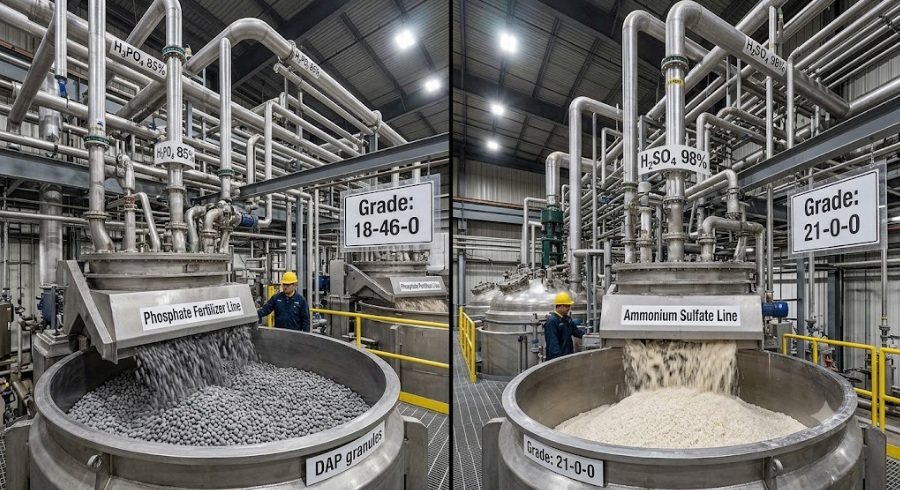
Advanced machinery ensures the precise application of phosphate and sulfuric fertilizers, maximizing crop efficiency and environmental sustainability.
This means sulfuric acid and phosphoric acid can appear in the same manufacturing chain without being direct substitutes.
Metal Cleaning and Processing
Sulfuric acid is used in metallurgical processes, including cleaning rust and removing oxidation.
Its strong acidic properties make it suitable for applications where aggressive acid treatment is required.
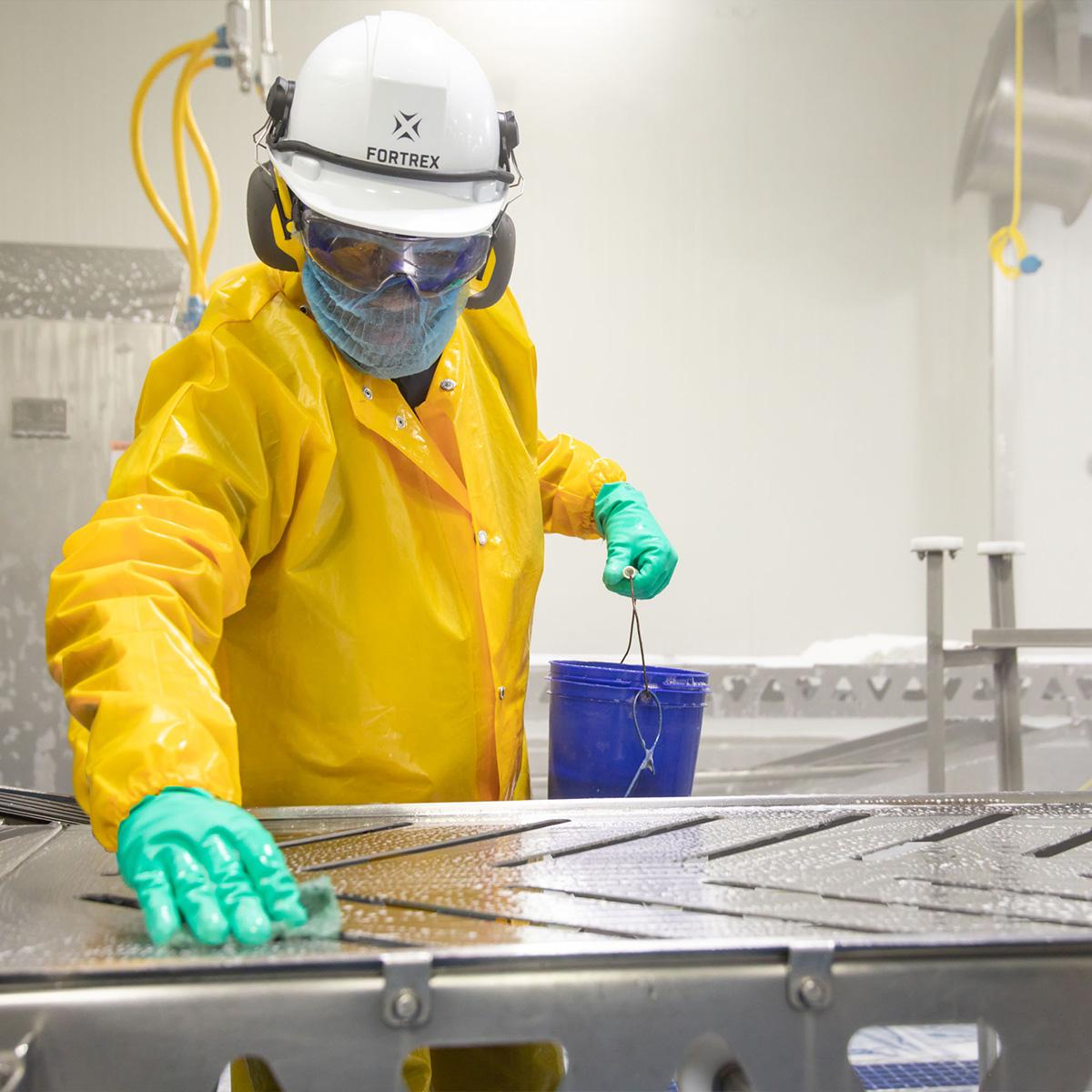
Precision cleaning with phosphoric acid ensures high-quality welds and prevents defects caused by surface contaminants.
However, its corrosive nature means equipment compatibility and safety controls must be carefully reviewed.
Water Treatment
Sulfuric acid is used in some water-treatment processes, including pH adjustment.
The correct choice depends on what happens after the acid is added.
If sulfate ions create a downstream issue, another acid may be more appropriate. If phosphate could create an unwanted nutrient or scaling issue, phosphoric acid may also require careful evaluation.
The decision should therefore be based on the complete water chemistry.

Our experts ensuring optimal water quality using advanced chemical treatments.
Phosphoric Acid vs. Sulfuric Acid for Electronics
Electronics manufacturing is a useful example of why the two acids should not be treated as interchangeable.
Phosphoric Acid in Electronics
CAMACHEM describes phosphoric acid as a cleaning and etching chemical in semiconductor manufacturing.
It can help remove oxide layers and impurities from surfaces during processing.
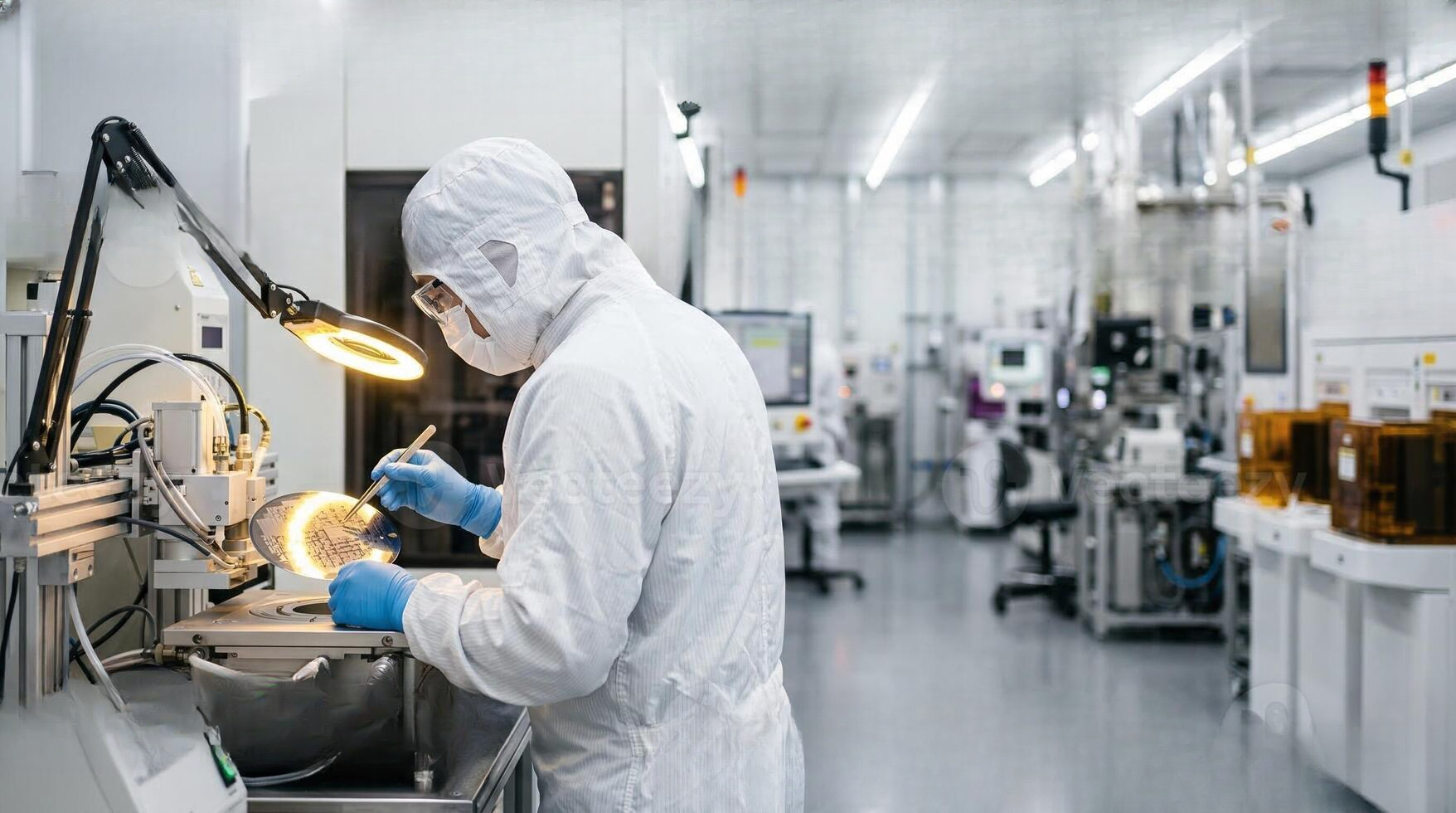
An engineer meticulously inspects a silicon wafer in a state-of-the-art cleanroom, a testament to the precision required in semiconductor manufacturing.
Sulfuric Acid in Electronics
Sulfuric acid is also used in electronics manufacturing, but CAMACHEM describes applications including cleaning and acidifying processes, PCB-related manufacturing, and lead-acid battery production.
The choice therefore depends on the exact manufacturing step.
| Electronics requirement | Possible chemical choice | Main consideration |
|---|---|---|
| Oxide removal and etching | Phosphoric acid | Process-specific concentration and purity |
| General acidic cleaning | Phosphoric or sulfuric acid | Surface compatibility |
| PCB-related cleaning | Sulfuric acid | Process chemistry and concentration |
| Semiconductor processing | High-purity phosphoric acid in selected processes | Very low impurity requirements |
| Battery applications | Sulfuric acid | Battery-grade specification |
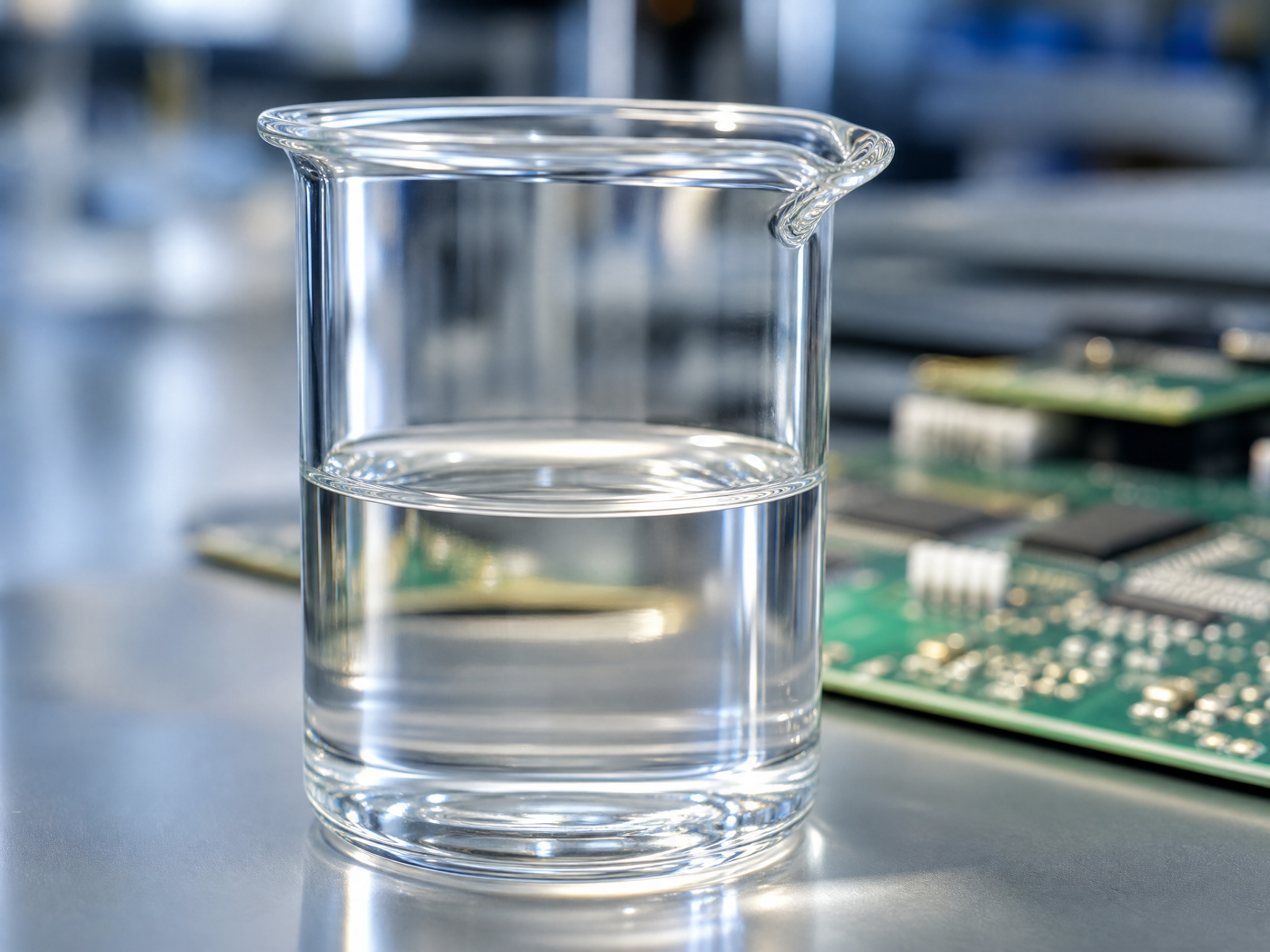
A beaker holds high-purity phosphoric acid, a vital chemical for etching and cleaning in electronics production.
Compare both acids in CAMACHEM’s electronics chemicals guide
Which Acid Is More Cost-Effective?
There is no universal answer.
A buyer should avoid comparing only the quoted price per ton because the acids have different concentrations, densities, process roles, and dosing requirements.
Compare Cost per Useful Chemical Input
Suppose one process needs phosphate chemistry.
A low-cost sulfuric acid quotation may not actually reduce costs if the process requires phosphoric acid as the phosphorus source.
Similarly, if a process only requires strong acidity and sulfate is acceptable, purchasing phosphoric acid could add unnecessary cost.
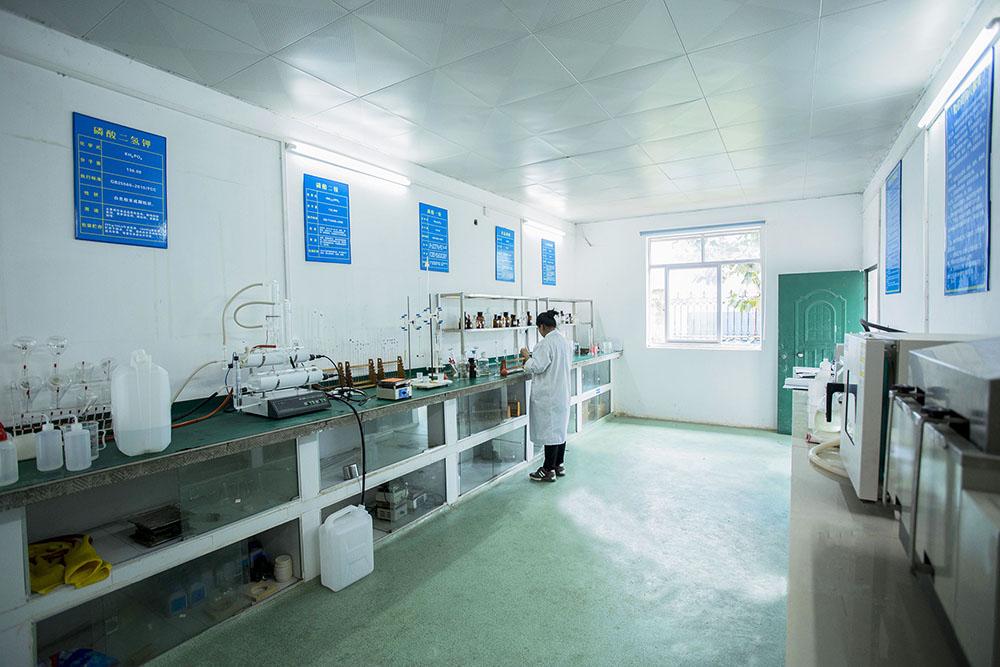
On-site laboratory quality control testing and batch verification to ensure phosphoric acid meets specified purity standards before shipment
The correct comparison is therefore:
Total delivered cost + dosing requirement + process performance + downstream cost
Consider:
- Purchase price
- Concentration
- Required dosage
- Freight
- Packaging
- Storage
- Equipment maintenance
- Waste treatment
- Product losses
- Process downtime
- Quality testing
Do Not Compare 85% Phosphoric Acid With 98% Sulfuric Acid by Percentage Alone
An 85% phosphoric acid product and a 98% sulfuric acid product cannot be compared simply by saying that 98% is “stronger” or that 85% is “cheaper.”
They are different chemicals.
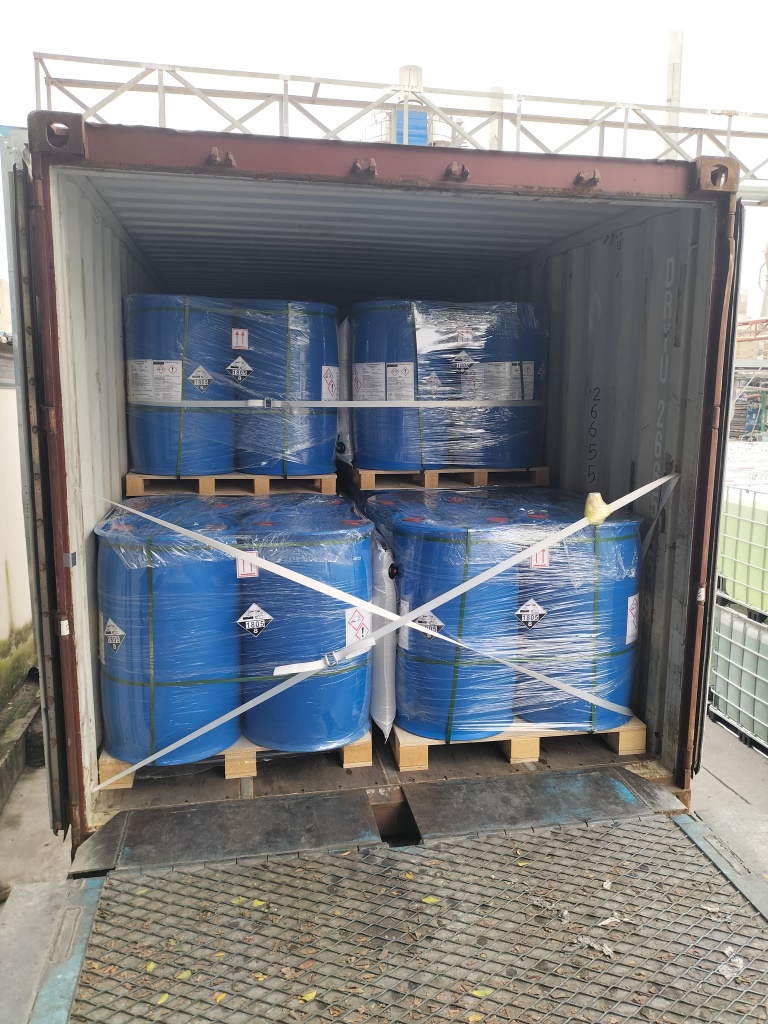
Secure containerized shipping and cargo lashing setup for bulk drum packaging of liquid phosphoric acid exports
CAMACHEM’s current product pages show that its 85% phosphoric acid and 98% sulfuric acid products also have different specifications and packaging options.
Check CAMACHEM’s Phosphoric Acid 85% product
Check CAMACHEM’s Sulfuric Acid 98% product
What Should Industrial Buyers Check Before Choosing?
A technical and procurement review should happen before changing acids.
1. Define the Process Objective
Ask:
- Is the goal pH adjustment?
- Is the acid acting as a reactant?
- Is it being used for cleaning?
- Is phosphate required?
- Is sulfate acceptable?
- Is the acid part of the final product?
- Is the acid removed before the next process?
The answers can quickly narrow the options.
Thorough supplier vetting and regular factory audits are key to maintaining a reliable supply chain.
2. Compare Grade and Purity
Do not compare chemical names alone.
Check:
- Concentration
- Grade
- H₃PO₄ or H₂SO₄ content
- Heavy metals
- Iron
- Lead
- Arsenic
- Fluoride where relevant
- Ash
- Appearance
- Other application-specific impurities
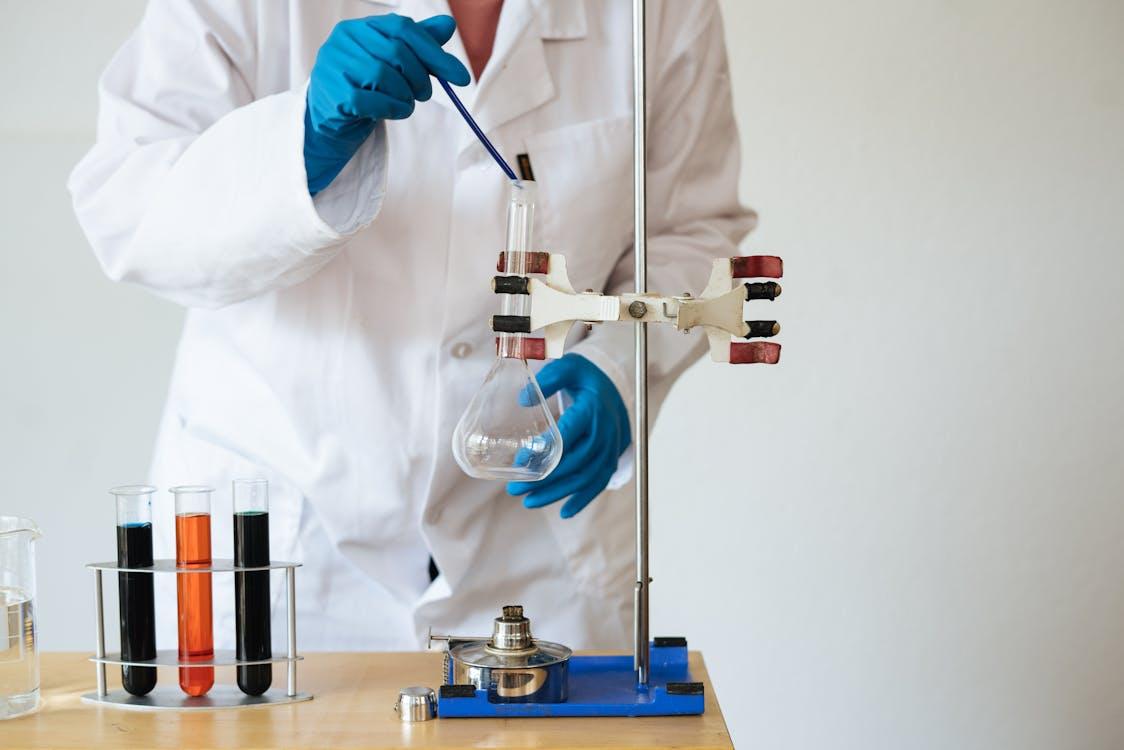
Regular laboratory testing ensures that every batch of phosphoric acid meets your exact specifications.
CAMACHEM’s sulfuric acid page, for example, provides separate reagent, battery, and industrial specifications, including limits for ash, lead, iron, arsenic, transparency, and chromaticity.
Review CAMACHEM’s sulfuric acid specifications
3. Request the Right Documents
Before placing a bulk order, request:
- COA
- TDS
- SDS/MSDS
- Grade specification
- Packaging details
- Batch information
- Shipping documentation
- Regulatory documents required by the destination market
Want us to check a COA or TDS before you approve a switch between acids? Send the document and we’ll help you confirm the grade, impurity limits, and batch match.
WhatsApp Us for Free a Consultation

Quality assurance technicians verifying Certificate of Analysis (COA) documentation and test results for a chemical batch in a laboratory setting
CAMACHEM provides COA/TDS and SDS documentation for its listed phosphoric acid and sulfuric acid products.
View CAMACHEM’s 85% phosphoric acid COA/TDS
4. Check Storage and Equipment
Acid selection also affects storage.
Review:
- Tank material
- Pump material
- Pipe material
- Seals and gaskets
- Temperature
- Ventilation
- Secondary containment
- Loading and unloading procedures
- Emergency response equipment
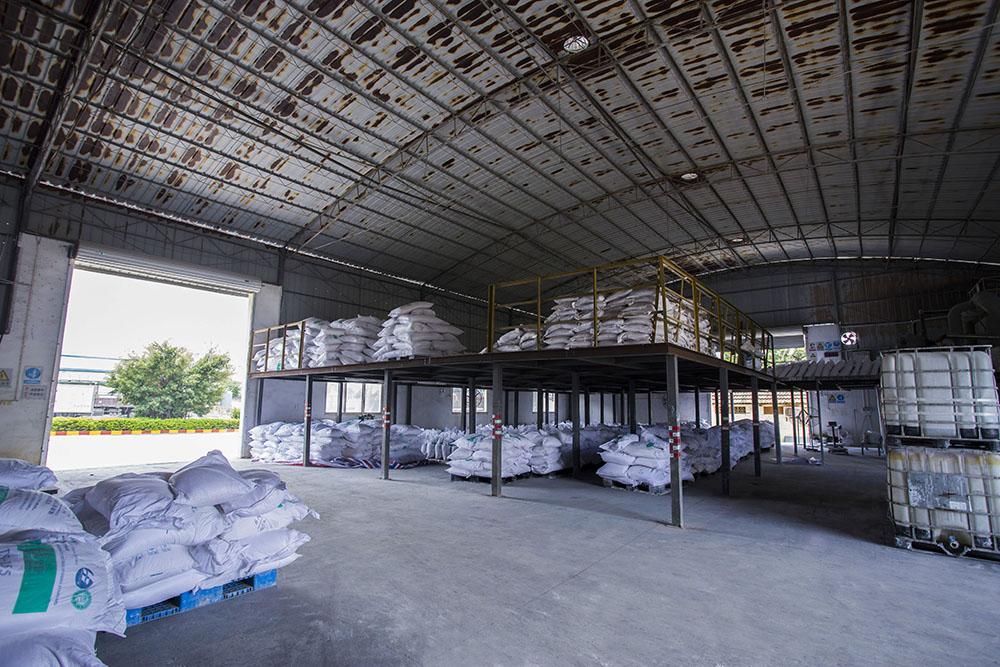
Industrial chemical storage warehouse featuring organized mezzanine racking for bagged products and IBC totes ready for bulk shipment and distribution
Do not assume that equipment designed for one acid is automatically suitable for the other.
5. Evaluate the Downstream Chemistry
This is one of the most overlooked factors.
Phosphoric acid introduces phosphate.
Sulfuric acid introduces sulfate.
Ask whether these ions can affect:
- Product purity
- Scaling
- Precipitation
- Wastewater
- Corrosion
- Subsequent reactions
- Final product specifications
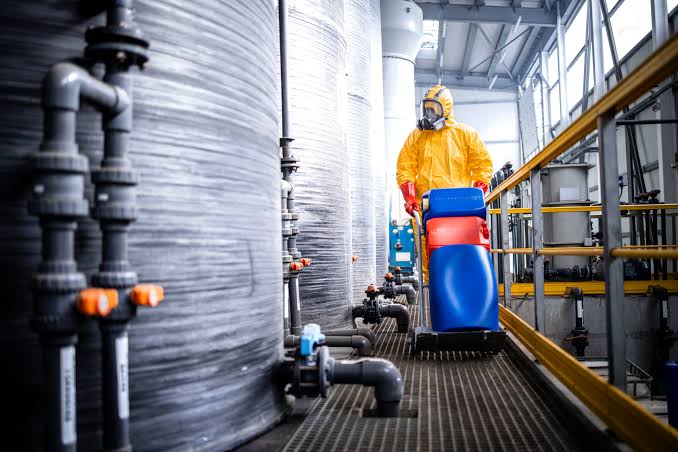
Industrial-grade phosphoric acid production and bulk chemical storage at a commercial manufacturing facility
Decision-Maker Insight: The cheapest acid at the supplier’s warehouse is not necessarily the lowest-cost chemical for your factory. Compare the full process cost after dosing, treatment, maintenance, and waste handling.
A Practical Buyer Checklist
Use this checklist before approving a change from one acid to another.
| Buyer question | What to verify |
|---|---|
| What is the process objective? | Cleaning, reaction, pH adjustment, fertilizer, etc. |
| Which ion is required? | Phosphate or sulfate |
| What concentration is required? | Exact process specification |
| Which grade is required? | Industrial, food, battery, reagent, electronic, etc. |
| What impurity limits apply? | Match the application |
| Is the existing equipment compatible? | Tanks, pumps, pipes, seals |
| What happens downstream? | Wastewater, reactions, scaling |
| What documents are required? | COA, TDS, SDS, regulatory documents |
| What packaging is suitable? | Drum, IBC, tank, or other format |
| What is the delivered cost? | Product + freight + handling |
| Has the chemical been tested? | Sample or controlled production trial |
Need Help Choosing Bulk Phosphoric Acid?
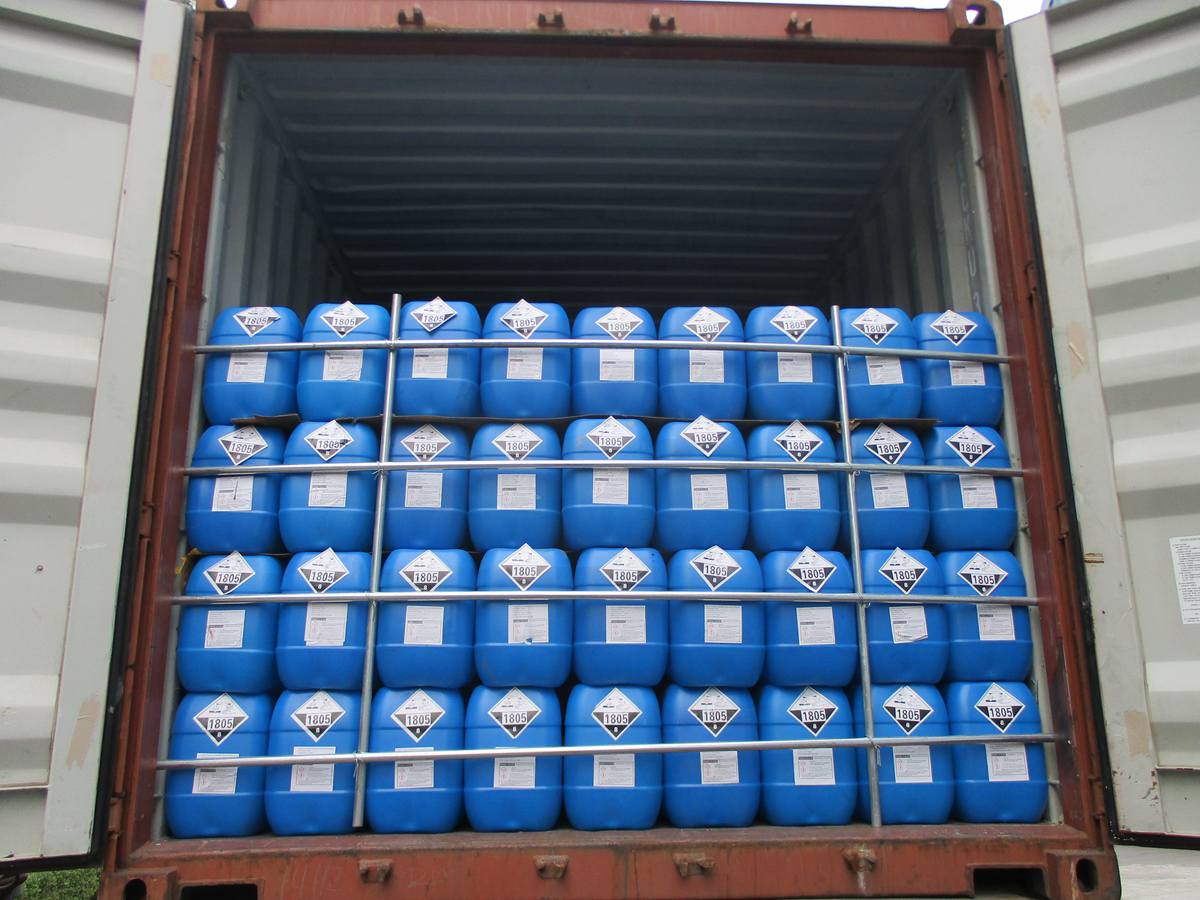
Understanding the logistics of container loading can help prevent delays and reduce shipping costs.
If your process requires phosphoric acid, send CAMACHEM your required grade, concentration, quantity, destination, and application. The technical specification can then be matched to the intended use before you commit to a bulk shipment.
WhatsApp Us for Free a Consultation
How Does Phosphoric Acid Compare With Sulfuric Acid in Real Applications?
The comparison becomes clearer when the final application is considered.
Fertilizer Manufacturing
Both acids can be important.
Phosphoric acid supplies phosphorus for phosphate fertilizer production.
Sulfuric acid can be used to process phosphate-containing raw materials and manufacture phosphoric acid and sulfate-based fertilizers.
Metal Treatment
Both can be used in metal-related processes, but the required chemistry is different.
Phosphoric acid is used for metal surface treatment and rust-related applications.
Sulfuric acid is used for cleaning, oxidation removal, and other metallurgical processes.
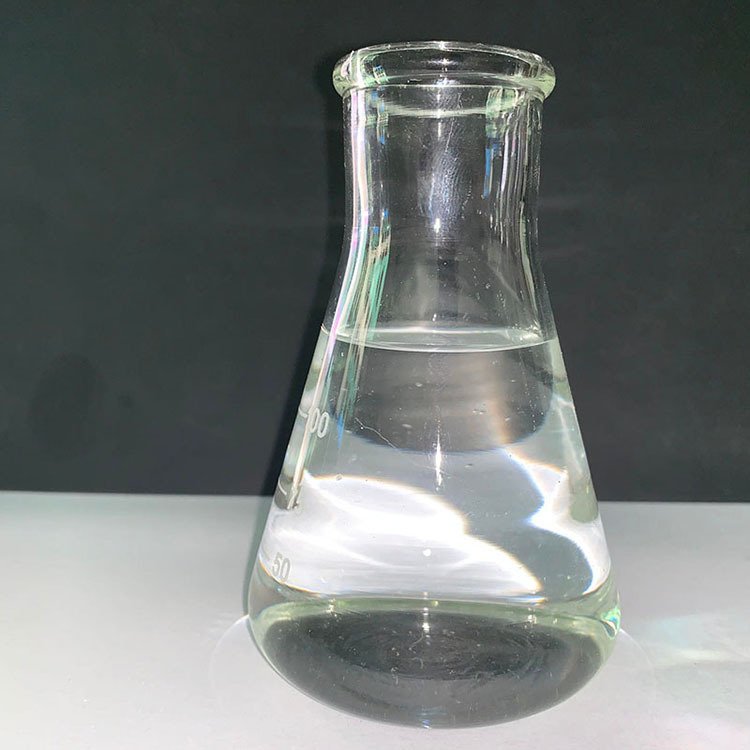
Clear glass reagent bottle labeled Phosphoric Acid for laboratory testing
Electronics
Both acids have applications in electronics manufacturing.
Phosphoric acid is used in selected cleaning and etching processes.
Sulfuric acid is used for cleaning, acidifying, PCB-related processing, and battery applications.
Food and Beverage
Phosphoric acid has food-grade applications.
Sulfuric acid is generally not selected as a food acidulant.
Therefore, a food manufacturer requiring an acid additive should begin with food-grade requirements rather than comparing industrial acid prices.
CAMACHEM’s phosphoric acid documentation identifies food-grade and industrial-grade products separately.
Learn more about phosphoric acid applications from CAMACHEM
Frequently Asked Questions
Is phosphoric acid the same as sulfuric acid?
No. Phosphoric acid is H₃PO₄, while sulfuric acid is H₂SO₄. They have different chemical properties and introduce different ions into a process.
Which acid is stronger, phosphoric acid or sulfuric acid?
Sulfuric acid is classified as a strong acid, while phosphoric acid is classified as a weak acid. CAMACHEM’s phosphoric acid FAQ also explains this difference in acid strength.
Read CAMACHEM’s phosphoric acid FAQ
Can sulfuric acid replace phosphoric acid?
Not automatically. If the process requires phosphate chemistry or phosphorus, sulfuric acid cannot provide the same chemical function.
Can phosphoric acid replace sulfuric acid?
Not automatically. If the process specifically requires sulfate chemistry or the properties of sulfuric acid, phosphoric acid may not provide the required result.
Which acid is used in fertilizer production?
Both can be involved in fertilizer manufacturing, but they serve different roles. Phosphoric acid is an important phosphorus source, while sulfuric acid is used in the manufacture of phosphoric acid and several fertilizer products.
Which acid is used in electronics manufacturing?
Both have applications. CAMACHEM describes phosphoric acid for cleaning and etching and sulfuric acid for cleaning, acidifying, PCB-related processes, and battery applications.
See CAMACHEM’s electronics chemicals guide
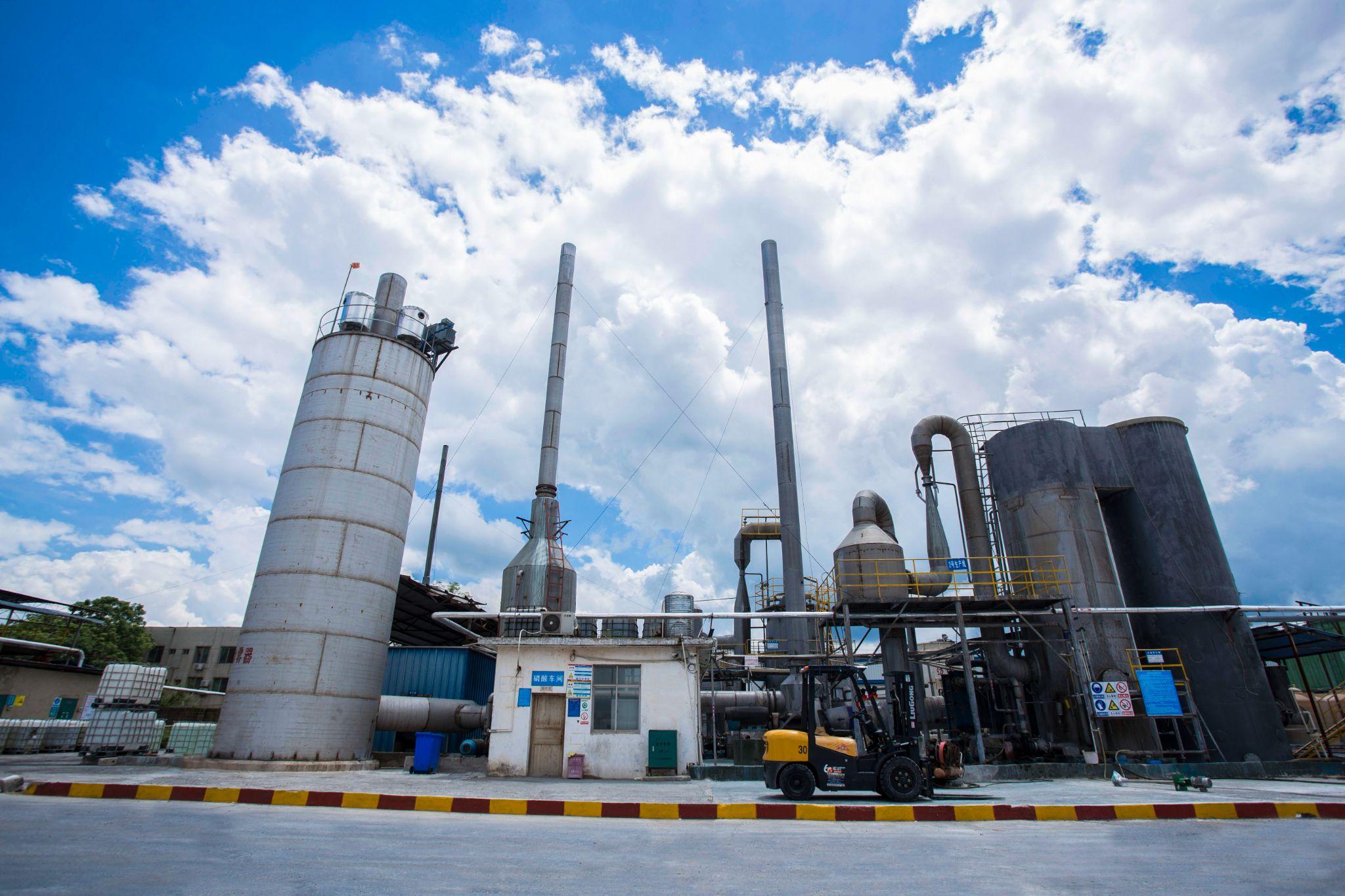
Industrial phosphoric acid manufacturing plant and chemical processing facility in China
Is phosphoric acid safer than sulfuric acid?
Safety depends on concentration, exposure, equipment, and process conditions. Both are corrosive chemicals and require appropriate handling, storage, PPE, and emergency procedures.
What documents should I request before buying bulk phosphoric acid?
Request the relevant COA, TDS, and SDS/MSDS. Depending on the application and destination, additional regulatory and shipping documents may also be required.
What concentration of phosphoric acid does CAMACHEM supply?
CAMACHEM’s product page lists Phosphoric Acid 85% and also provides documentation for 75% food-grade and 85% food-grade and industrial-grade products.

China’s robust port infrastructure supports the reliable global distribution of industrial chemicals.
View CAMACHEM’s Phosphoric Acid 85% product page
Conclusion: Choose the Chemistry Your Process Actually Needs
Phosphoric acid and sulfuric acid both have major industrial applications, but they should not be selected simply because they can both provide acidity.
Phosphoric acid is particularly relevant when phosphate chemistry is required. CAMACHEM lists applications in fertilizers, food and beverage processing, metal treatment, and electronics.
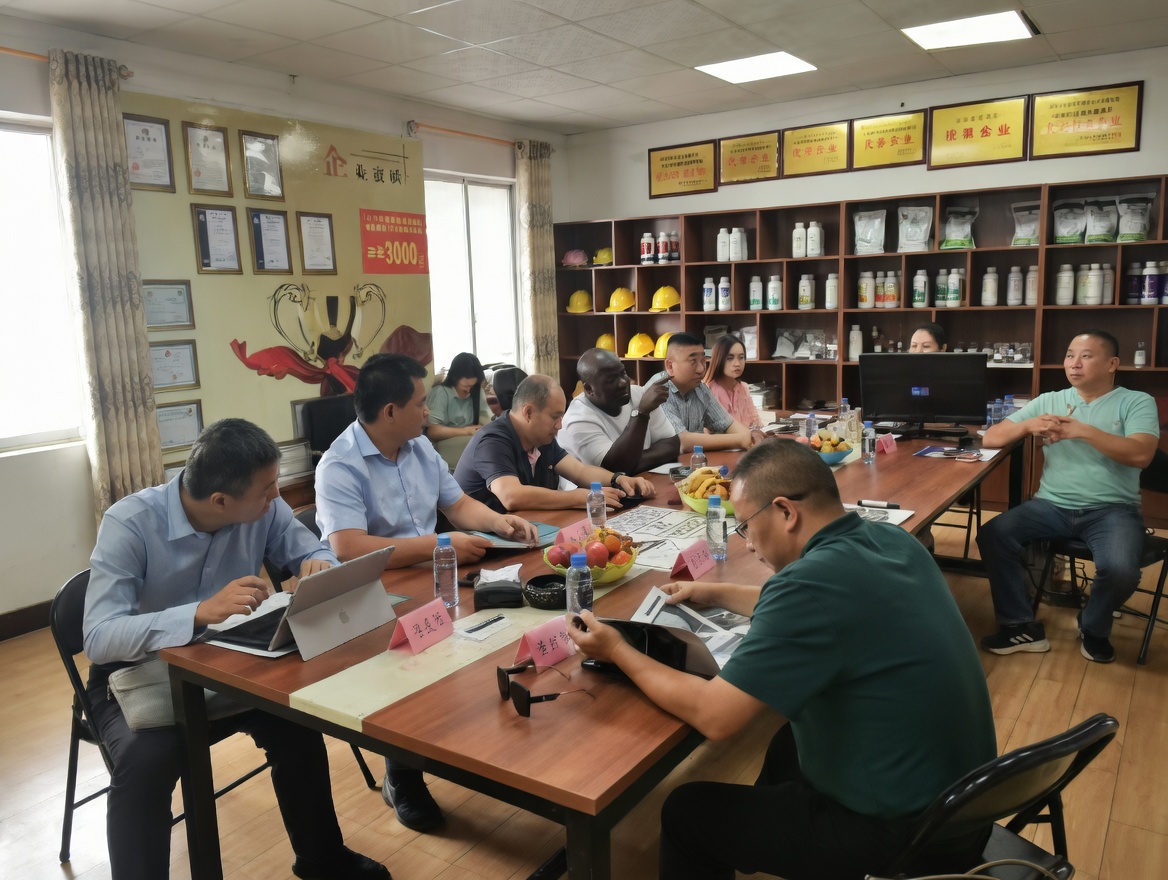
Camal Group team members and international business partners engaging in a corporate strategy and product discussion meeting
Sulfuric acid is used across a broader range of strong-acid industrial processes, including fertilizer manufacturing, water treatment, metal processing, chemical production, petroleum-related applications, and batteries.
The best purchasing decision starts with the process.
Identify the required chemical reaction first. Then compare concentration, grade, purity, impurity limits, equipment compatibility, documentation, packaging, logistics, and total delivered cost.
If phosphoric acid is the required chemical, CAMACHEM offers 85% phosphoric acid with multiple packaging options and supporting technical documentation. Buyers can request a quotation based on their required concentration, grade, quantity, and destination.
Ready to confirm which acid your process actually needs? Share your application, required ion (phosphate or sulfate), and volume, and we’ll help you match the right grade and packaging.
WhatsApp Us for Free a Consultation
Industrial Buyers: Next Steps for Sourcing Bulk Phosphoric Acid
What makes our Phosphoric Acid Better:
✅ Compliant with EU, UN, ISO Standards – No Legal Headaches
✅ Guaranteed 85% Purity – Stability for your Processing Plant
✅ Extremely Low Impurities – Low Heavy Metals
✅ Batch-Specific COA Provided – Full Transparency per Shipment.
Download Our EU-approved Specifications.[ Food Grade or Industrial Grade]