


Almost every industrial buyer asks the same question before placing a bulk order: is this phosphoric acid pure enough, and consistent enough, for my process? The answer often starts with how the acid was made. Wet process and thermal process are the two ways phosphoric acid gets produced, and the method behind your drum or IBC affects purity, price, and which applications it fits best.
For most fertilizer, metal treatment, and water treatment buyers, wet process acid is the practical and cost-effective choice. Thermal process acid still has a role in ultra-high-purity work, but it costs far more to make. This guide breaks down both processes in plain terms, compares them side by side, and helps you match the right acid to your application.

Phosphoric acid can be made two different ways, and the route it takes shapes its purity, price, and best-fit applications.
How Wet Process Phosphoric Acid Is Made
Wet process production is the workhorse method behind most of the world’s phosphoric acid supply. It reacts phosphate rock with sulfuric acid at a moderate temperature, usually around 70°C to 80°C. This is far cooler than the thermal route, which is one reason wet process acid costs less to produce.
The basic steps look like this:
- Grind and react. Phosphate rock is ground fine, then reacted with sulfuric acid.
- Separate the gypsum. The reaction produces dilute phosphoric acid plus calcium sulfate, or gypsum, as a byproduct. The gypsum is filtered out.
- Concentrate the acid. The dilute acid, usually 26% to 32% P2O5, is evaporated up to the commercial strength most buyers order, commonly 85% H3PO4.
- Purify if needed. For food-grade phosphoric acid or other high-purity uses, the concentrated acid goes through extra purification steps such as solvent extraction or crystallization to strip out metals and other impurities.
Wet process acid naturally carries more trace impurities than thermal acid straight out of the reactor, since it comes directly from mined rock. Modern purification has closed much of that gap, though, which is why wet process acid now supplies a large share of food-grade demand too, not just industrial and fertilizer markets.
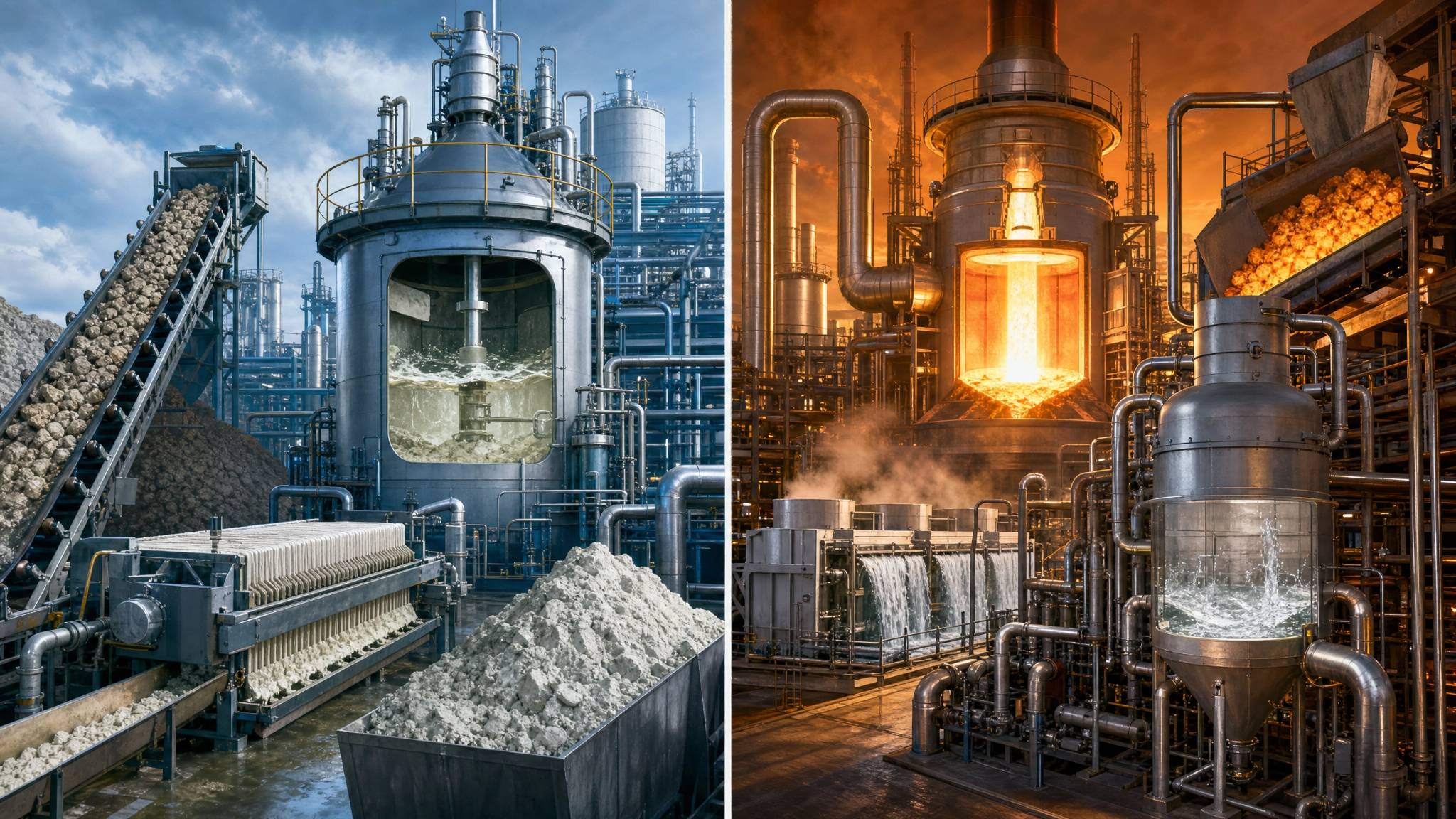
Conceptual comparison of wet-process and thermal-process phosphoric acid production, showing phosphate-rock processing on the left and high-temperature phosphorus oxidation on the right.
How Thermal Process Phosphoric Acid Is Made
Thermal process acid, sometimes called the dry or furnace process, takes a very different path. Phosphate rock, silica, and coke are fed into an electric arc furnace and heated to extreme temperatures, often in the range of 1,650°C to 2,760°C. This reduces the rock to elemental phosphorus, which is then burned to phosphorus pentoxide and hydrated with water to form phosphoric acid.
Because the reaction never touches sulfuric acid or raw ore contaminants the way wet process does, thermal acid comes out naturally low in metals and other impurities. That is why it was historically the default source for food-grade and technical-grade acid, before wet process purification technology caught up.
The tradeoff is cost. Running an electric arc furnace at those temperatures demands enormous amounts of electricity, heavy-duty equipment, and strict emissions controls for the combustion gases. That makes thermal process acid considerably more expensive to produce than wet process acid, and it is why thermal process now accounts for only a small slice of global phosphoric acid output.

Wet process plants rely on careful pumping and dosing control to keep concentration and quality consistent batch after batch.
Quotation enquiry: Request a bulk phosphoric acid quotation on WhatsApp:
WhatsApp Us for Free a Consultation
What Does Purity Mean in Each Process?
Concentration Is Not the Same as Purity
An 85% label tells you the concentration of phosphoric acid. It does not show the full impurity profile or prove that the material fits a food, water, electronics, or fertilizer use. Buyers should compare the complete specification before comparing prices.
- Confirm H3PO4 concentration and the test method.
- Review iron, chloride, sulfate, heavy metals, color, and insoluble limits where relevant.
- Check whether the specification is industrial-grade, food-grade, or another controlled grade.
- Match the limits to the buyer’s process and downstream product.
What Should a COA Show?
A certificate of analysis should identify the product, batch, test date, test method, and measured results. A generic sample COA may explain the normal range, but it does not replace a shipment-specific COA.
Review the [phosphoric acid specifications](https://camaphosphoricacid.com/en/specifications/) before requesting a quote.
- Product name, concentration, batch number, and production date.
- Test results against the agreed specification.
- Units, methods, and any applicable detection limits.
- Issuing laboratory or quality-control reference.
How Does the Choice Affect Total Cost?
Energy and Production Cost
Wet process acid usually has a lower production cost because it does not require the same electric-furnace route as thermal acid. The buyer should still compare delivered cost, not only the factory price.
Purification and Testing Cost
Purified wet process acid may require additional treatment, testing, and tighter batch control. Thermal acid may carry a higher price because the production route starts with a lower impurity burden. The right comparison depends on the limits the buyer actually needs.
- Separate product price from freight, insurance, handling, and import charges.
- Add testing, storage, and packaging costs to the purchase review.
- Ask what changes if the buyer needs food-grade or high-purity documentation.
- Compare the cost of rejected material or rework, not just the quoted unit price.
What Should Buyers Ask Before Ordering?
Questions for the First Quote
A first quote should give the supplier enough information to recommend a suitable route without guessing. Use the bulk phosphoric acid buyer’s guide when preparing the enquiry.
- What is the end use and required grade?
- What concentration and impurity limits are required?
- What monthly volume and first-shipment quantity are expected?
- Which packaging and receiving equipment are available?
Questions Before Shipment
Before shipment, the buyer should close the document and logistics gaps. Ask for the current SDS, shipment-specific COA, packing details, labels, and agreed loading plan.
- Can the supplier confirm the exact batch and production date?
- Do the documents match the product name and declared use?
- Has the receiving site approved the packaging and unloading method?
- Is the carrier prepared for the agreed hazardous-goods requirements?
Wet Process vs Thermal Process: Key Differences at a Glance
The table below lines up the two processes on the factors that matter most to an industrial buyer.
| Factor | Wet Process | Thermal Process |
| Raw materials | Phosphate rock + sulfuric acid | Phosphate rock, silica, coke |
| Reaction temperature | Roughly 70°C to 80°C | Roughly 1,650°C to 2,760°C |
| Typical starting concentration | 26% to 32% P2O5, concentrated afterward | High purity from the start |
| Natural impurity level | Higher, from raw rock contaminants | Lower, since elemental phosphorus is isolated first |
| Energy and cost | Lower energy use, lower cost | High energy use, higher cost |
| Common commercial grade | 85% H3PO4, industrial and (with purification) food grade | 85% H3PO4, typically technical or food grade |
| Share of global output | Roughly 90% or more | A small remaining share |
| Best-fit industries | Fertilizer, metal treatment, water treatment, and (purified) food and beverage | Electronics, semiconductors, and other ultra-high-purity uses |
Decision-Maker Insight: Wet process acid, once purified, meets the concentration and quality most industrial buyers actually need, at a lower delivered cost than thermal acid. Paying a premium for thermal-grade purity only makes financial sense when your process genuinely requires it.
Technical Note: Concentration alone will not tell you which process made your acid. Both processes commonly ship at 85% H3PO4. Ask your supplier for a certificate of analysis that shows heavy metal and impurity levels, not just the percentage on the drum.
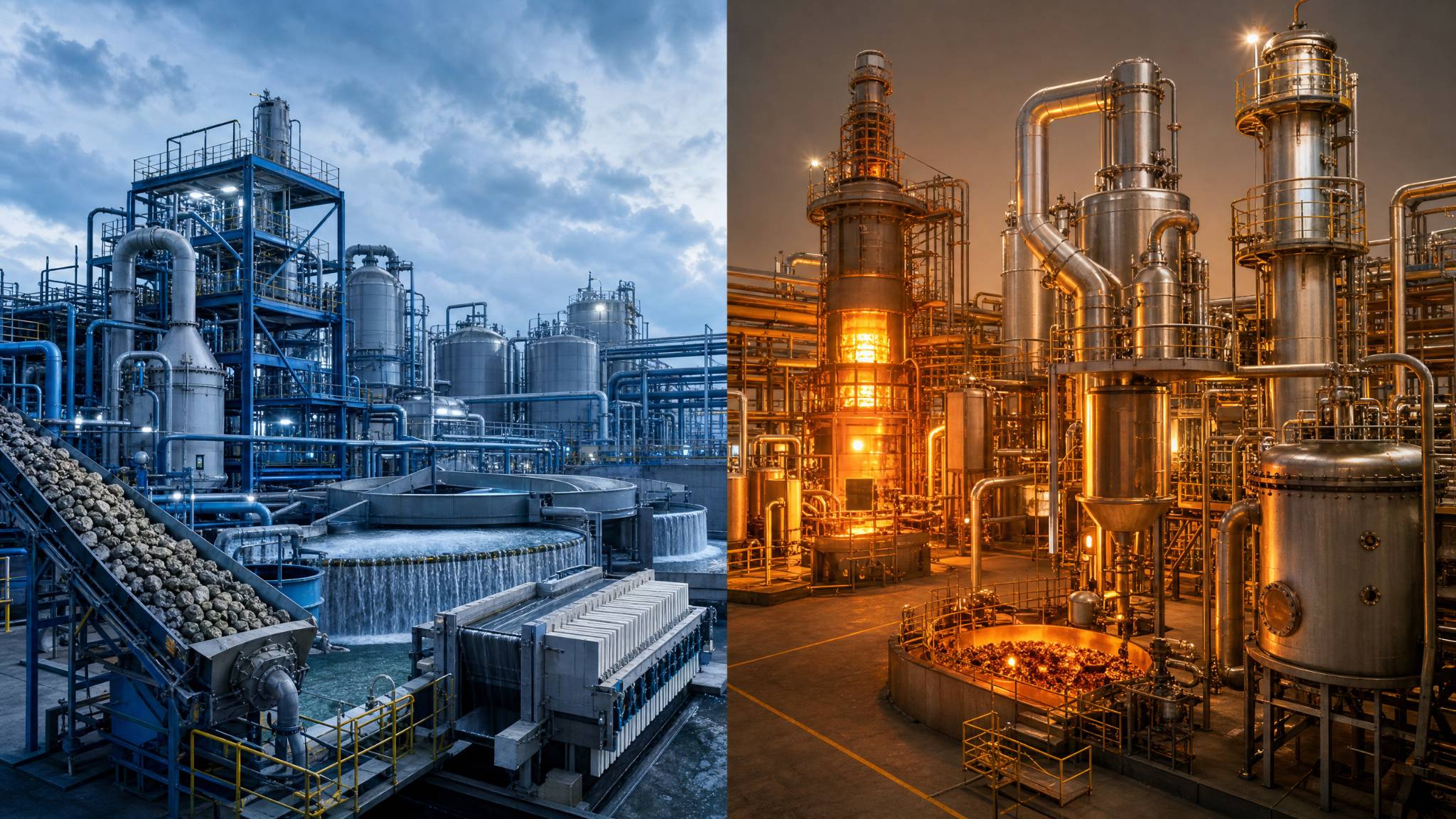
A visual comparison of two phosphoric acid manufacturing routes: a water-intensive wet-process plant on the left and a high-temperature thermal-process facility on the right.
Need Help Sourcing Bulk Phosphoric Acid In 2026?
Whether your process calls for wet process or thermal-grade purity, our team can match the right specification to your application and send a batch-specific COA with every shipment.
WhatsApp Us for Free a Consultation
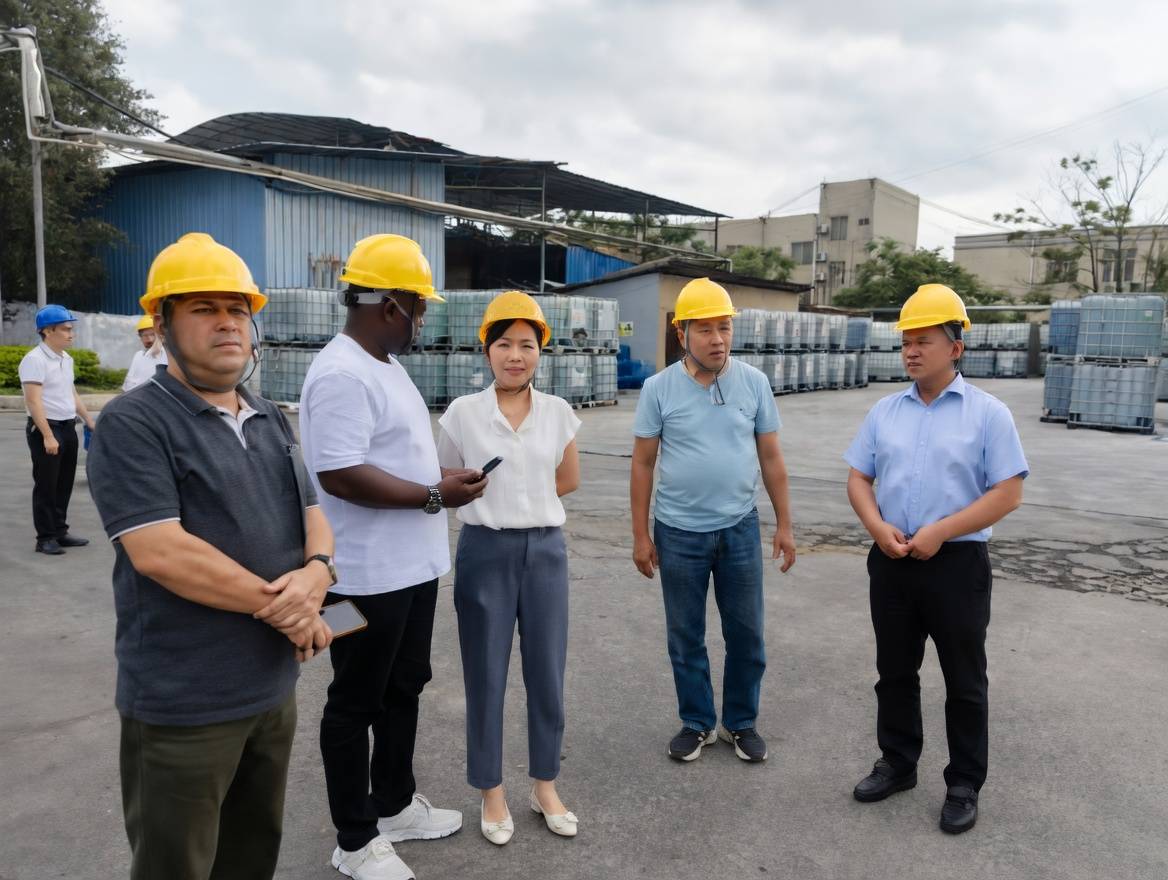
Camal teams help buyers confirm product, grade, documents, and logistics before ordering.
Which Process Is Better for Your Industrial Application?
There is no single winner. The right process depends on what you are making and how strict your purity requirements are.
- Fertilizer and agriculture. Wet process, 85% industrial grade, is the standard choice here. It is cost-effective at the volumes fertilizer producers need.
- Metal treatment and rust removal. Wet process acid handles phosphating and surface preparation well, and its lower viscosity at 75% concentration can simplify dosing for some setups.
- Water treatment. Wet process industrial grade is typically sufficient for corrosion control and pH adjustment applications.
- Food and beverage. Purified wet process acid now commonly meets food-grade phosphoric acid standards, including E338, though buyers with the tightest specifications sometimes still request thermal-sourced material.
- Electronics and semiconductor cleaning. This is where thermal process acid still holds a real edge, thanks to its naturally low metal content straight from the furnace.
Buyers new to importing should also weigh supplier verification alongside the chemistry. Review the phosphoric acid buyer’s guide for a full walkthrough of certifications, sampling, and factory checks before placing a first bulk order, and see real outcomes from other buyers in our customer success stories.

Once the acid meets spec, our logistics team handles drum, IBC, and bulk container loading for export.
Want to see how bulk phosphoric acid actually gets loaded and shipped from a Chinese plant? Watch this short video showing 85% phosphoric acid container loading before export.
This walkthrough shows real container loading for an 85% phosphoric acid export order, useful if you want to see quality checks and packaging before your own first shipment.
How Do Packaging and Shipping Requirements Change?
Drums and Smaller Lots
Drums may suit trials, smaller production lines, or buyers without bulk unloading equipment. Confirm closure integrity, pallet configuration, label language, and manual-handling controls.
- Confirm net weight and number of drums per pallet.
- Review closure, leak-control, and label requirements.
- Check whether the receiving team can move and store the units safely.
IBC Supply
IBCs can reduce handling compared with drums, but the receiving site still needs compatible connections, a suitable pump, and a plan for empty-container management.
- Confirm IBC material compatibility and filling weight.
- Check discharge fittings and transfer equipment.
- Agree inspection and cleaning expectations where applicable.
Bulk Container Loading
Bulk container loading can make sense for larger repeat orders. It requires stronger coordination between the supplier, carrier, terminal, and receiving site. The industrial-grade phosphoric acid page is a useful starting point when defining the grade discussion.
- Confirm loading, unloading, and emergency-control responsibilities.
- Check the receiving terminal, pump, hose, and storage capacity.
- Reconcile the shipping documents before the container is released.
FAQs About Wet Process and Thermal Process Phosphoric Acid
Is wet process phosphoric acid pure enough for industrial use?
Yes. For fertilizer, metal treatment, and water treatment, wet process acid at 85% industrial grade meets the purity most processes require. Extra purification is only needed for food-grade, pharmaceutical, or electronics-level specifications.
Can wet process acid be upgraded to food grade?
Yes. Purification methods such as solvent extraction and crystallization remove metals and other impurities from wet process acid, which is how most food-grade phosphoric acid on the market is made today.
Why is thermal process phosphoric acid more expensive?
Thermal process acid requires an electric arc furnace running at very high temperatures, along with heavy energy use and emissions control equipment. Wet process acid reacts at a much lower temperature, so it costs far less to produce.
What concentration does industrial grade phosphoric acid usually come in?
Most industrial buyers order 85% H3PO4, regardless of which process made it. Some buyers choose 75% for easier pumping and lower crystallization risk in cold storage.
Does Camachem supply wet process or thermal process acid?
We supply purified wet process phosphoric acid in both industrial-grade and food-grade specifications, with a batch-specific COA provided for every shipment.
How do I verify the purity of phosphoric acid before a bulk order?
Request a certificate of analysis for the specific batch, ask for a pre-shipment sample of around 500 grams to 1 kilogram for independent testing, and consider a factory visit before committing to a large first order.
Which process is used for phosphoric acid in electronics and semiconductor cleaning?
Thermal process acid has traditionally been preferred here because it starts out naturally low in metal impurities. Highly purified wet process acid is increasingly used for the same applications as purification technology improves.
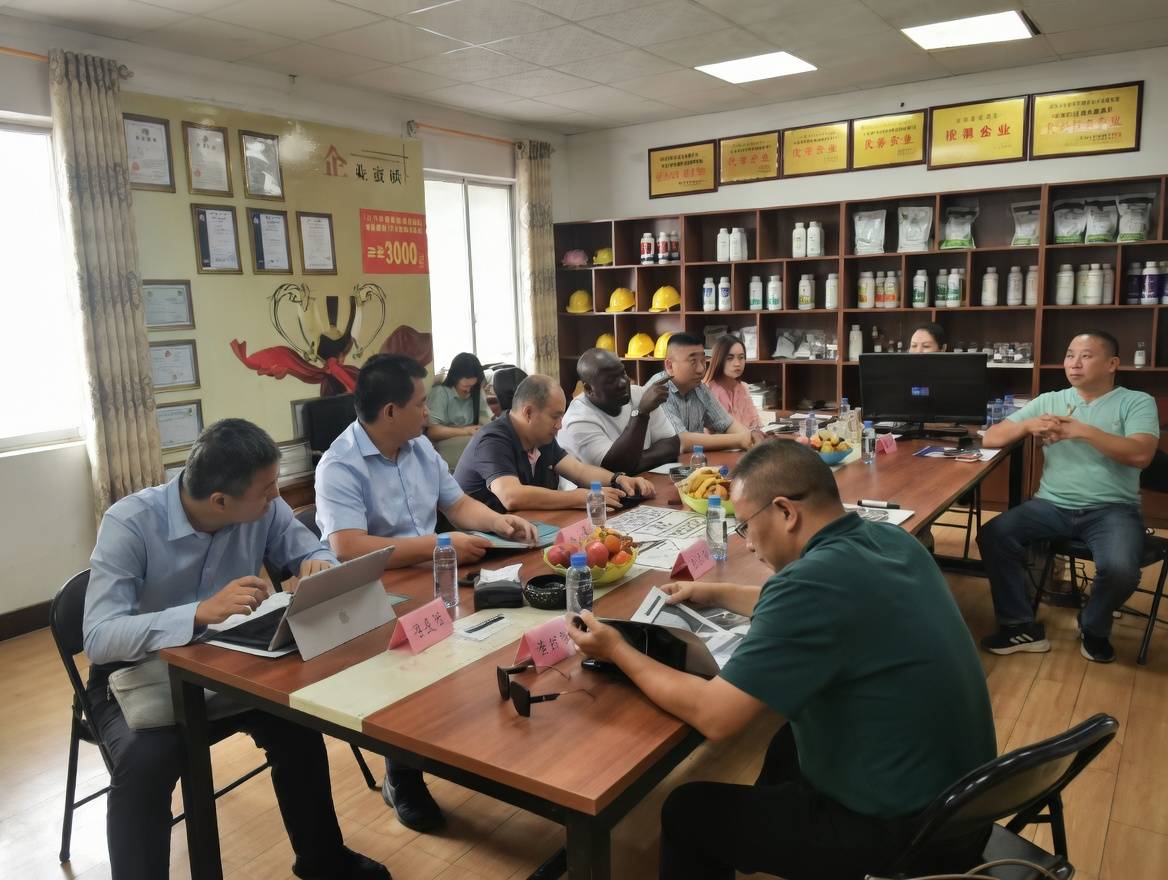
Face-to-face supplier verification helps international buyers review phosphoric acid products, certifications, quality documents, and export arrangements before placing a bulk order.
Conclusion
Wet process and thermal process phosphoric acid both start from phosphate rock, but they end up serving different buyers. Wet process acid, especially once purified, covers the vast majority of industrial needs, from fertilizer to food and beverage, at a much lower cost. Thermal process acid still earns its place in ultra-high-purity work like electronics manufacturing, where its naturally low impurity level justifies the higher price. Match the process to your actual specification, not just the percentage on the label, and you will avoid paying for purity you don’t need or risking purity you do.
Once you have confirmed the required grade, specifications, documentation, packaging, and delivery requirements, the next step is to contact the appropriate supplier team. You can review the CAMACHEM phosphoric acid contact route and the CAMAL website before sending your request. Use the contact route that matches your confirmed region and buying need to help ensure a more efficient inquiry process and a response tailored to your sourcing requirements.
Industrial Buyers: Next Steps for Sourcing Bulk Phosphoric Acid
What makes our Phosphoric Acid Better:
✅ Compliant with EU, UN, ISO Standards – No Legal Headaches
✅ Guaranteed 85% Purity – Stability for your Processing Plant
✅ Extremely Low Impurities – Low Heavy Metals
✅ Batch-Specific COA Provided – Full Transparency per Shipment.
Download Our EU-approved Specifications.[ Food Grade or Industrial Grade]