


A bulk phosphoric acid shipment can look fine from the gate. The drums are stacked, the seals are on, and the paperwork is in a folder. The real test starts at your dock. That is the last point where a problem is cheap to catch, before the acid goes into your tank or process. For product context, see our phosphoric acid homepage.
This guide gives you seven receiving inspection checks. They follow the order a receiving team would use: documents, packaging, transport condition, appearance, concentration, samples, and safe unloading. Each check is simple and uses basic equipment. The same routine works for 85% industrial acid and for food grade acid.

A good inspection routine starts at the dock, before any package is moved.
Part 1: Check the Shipment Before You Open Anything
The first three checks need no lab. They need a clipboard, a phone camera, and a few minutes. Done well, they catch most paperwork errors and handling damage before the acid is touched. The graphic below shows how all seven checks fit together.
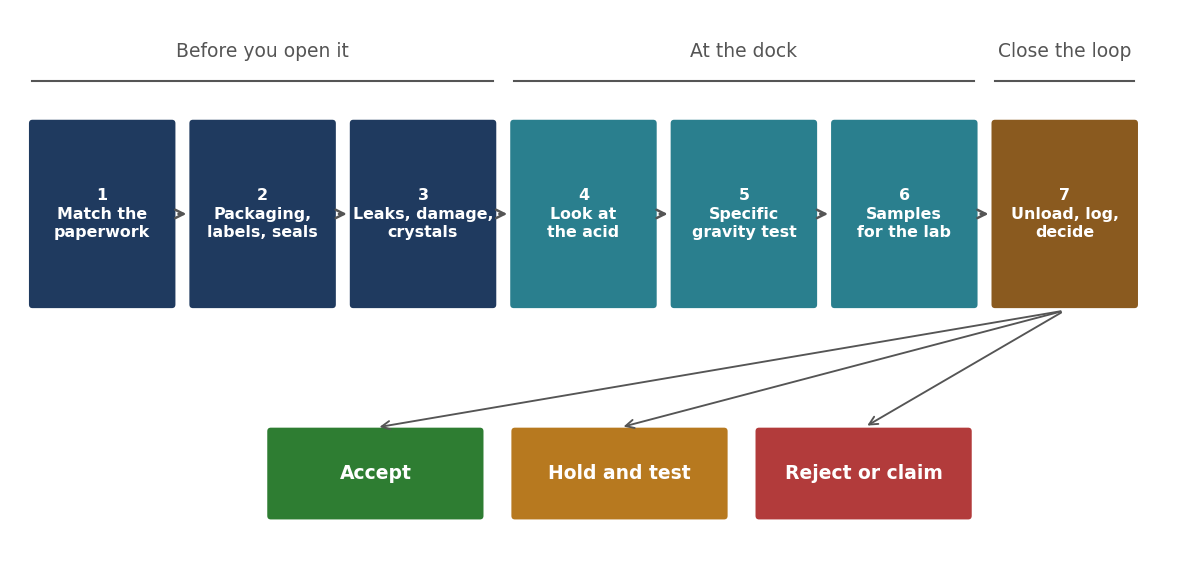
The seven checks run in order, and each one can stop the shipment and trigger a hold.
Check 1: Match the Paperwork to the Shipment
Start with the documents, not the drums. A mismatch here is the cheapest problem you will ever find.
You should have these in hand:
- A commercial invoice and packing list.
- A bill of lading or delivery note.
- A batch-specific certificate of analysis (COA).
- A safety data sheet (SDS).
- Dangerous goods papers showing UN 1805, phosphoric acid solution, Class 8 (corrosive).
- Any certificates your contract names, such as ISO 9001 or REACH documents.
Then match the key facts across every page:
- Product name, concentration, and grade (industrial or food grade).
- Batch or lot number.
- Quantity and packaging type.
- Consignee name and address.
The batch number on the COA must match the number printed on the packages. If it does not, hold the shipment and call the supplier the same day. Not sure which certificates matter? Our guide to the three certifications to check when choosing a supplier explains what each one should prove.
What the COA Should Show
A COA is the supplier’s test record for one batch, and it is only useful if it is specific. Look for the batch number, the test date, the concentration as % H3PO4, and the measured results next to the specification limits. For food grade acid, also look for arsenic, heavy metals, and fluoride. For food-grade buyers, our food-grade phosphoric acid page explains the grade requirements.
Our shipments carry a batch-specific COA, so each delivery can be matched to the lot that was tested. You can compare it with our 85% phosphoric acid specifications before the order ships.
Check 2: Inspect Packaging, Labels, and Seals
Walk the whole load before anything moves. Bulk acid usually arrives in 35 kg drums, 330 kg drums, or 1600 kg and 1650 kg IBC totes (intermediate bulk containers). For a full comparison of container types, see our guide to phosphoric acid packaging for bulk orders.
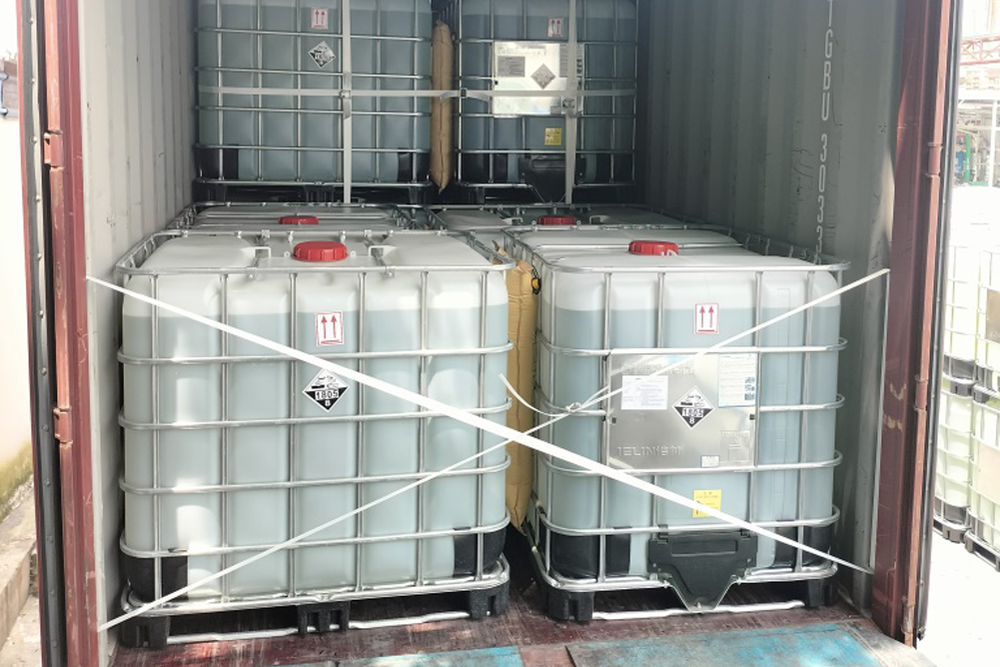
Check the IBC label, seal, and outlet valve before the tote moves off the truck.
Use this short list on every delivery:
- Labels show the product name, UN 1805, the Class 8 corrosive mark, the batch number, and the net weight.
- Seal numbers match the shipping papers, and no seal is broken or replaced.
- Drum caps and IBC valves are tight, with no weeping or dried residue.
- Drums and totes are not bulging, cracked, or dented.
- Pallets are stable and the load has not shifted.
Weigh a few packages on a calibrated scale and compare them with the net weight on the label. A short-weight package is easy to prove at the dock and hard to prove a week later.
Check 3: Look for Leaks, Damage, and Cold-Weather Crystals
Now look at the truck bed or container floor. Wet patches, white residue, or corroded metal point to a leak in transit. Photograph everything before the first package moves, and note any damage on the delivery receipt before the driver leaves.
Cold-Weather Crystals
Strong phosphoric acid freezes at room-like temperatures. Published data gives these freezing points:
- 85% acid freezes at about 21 °C (70 °F).
- 80% acid freezes at about 4.6 °C.
- 75% acid freezes at about -17.5 °C. For grade-specific storage guidance, compare the industrial-grade phosphoric acid requirements.
For grade-specific storage guidance, compare the industrial-grade phosphoric acid requirements.
The acid can also supercool, which means it stays liquid below its freezing point until something triggers crystals. That is why a load can arrive clear in one package and crystallized in the next.
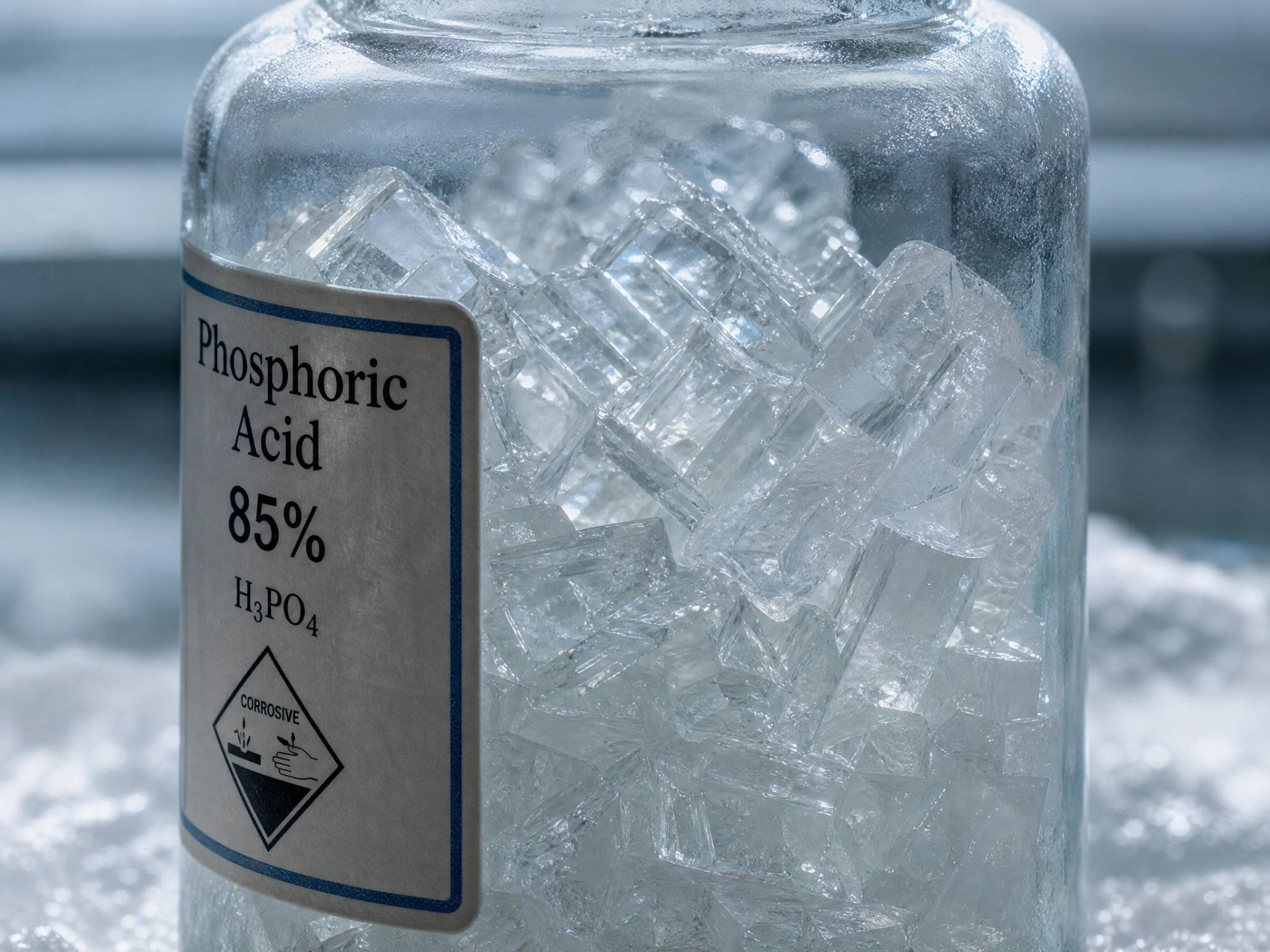
Crystals in a cold-exposed container are a reason to warm and mix the acid before you sample it.
Crystals do not mean the acid is bad. They mean the acid is cold. Move the package to a warm area, wait until the crystals melt, and mix well before you take any sample. A sample drawn from a partly frozen package will not represent the whole lot.
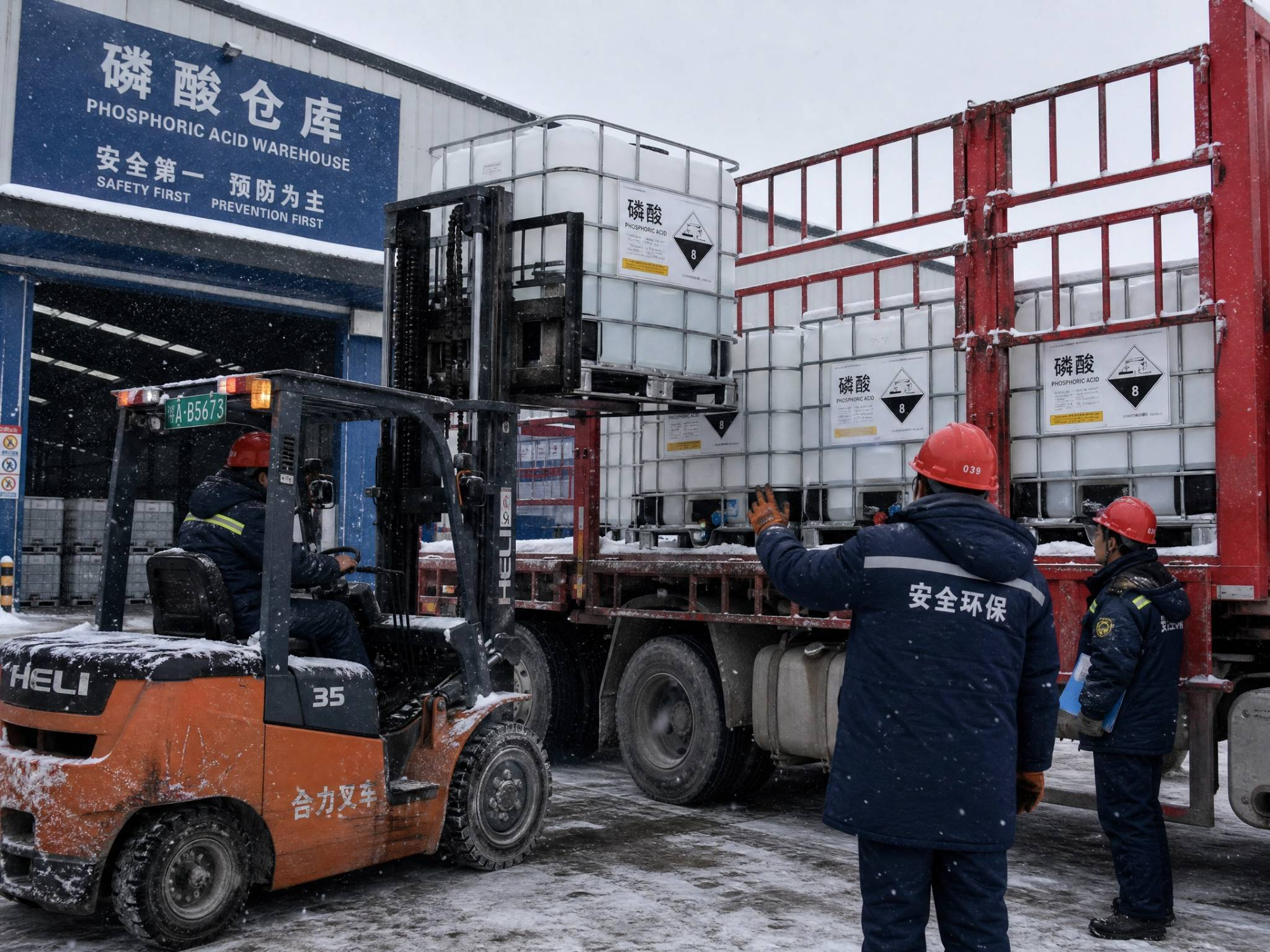
Winter loading is why receiving teams should check IBC totes for crystals and seal damage on arrival.
Decision-Maker Insight
The paperwork and packaging checks cost almost nothing, yet they protect your legal position. Agree an inspection routine and a claim window in the contract before the first shipment leaves. When both sides hold clear records, disputes end faster. For more on contract terms and supplier questions, read our Industrial Buyer’s Guide to Bulk Phosphoric Acid. Our customer success stories show how repeat buyers manage quality checks. You can also learn about our quality team and arrange a factory visit through our contact team.
Part 2: Test the Acid at the Dock
Once the load passes the outer checks, look at the acid itself. Wear chemical goggles, impervious gloves, and an apron for all three checks below. Add a face shield near a bulk transfer.
Check 4: Look at the Acid: Color, Clarity, and Solids
Pour a small sample into a clean, dry, clear container and hold it against a white background. Good phosphoric acid is a water-white liquid. It is colorless, thick like syrup, and has no odor.
Treat any of these as a reason to hold the lot:
- Cloudiness or haze.
- Sediment or floating particles.
- A green, yellow, or brown tint.
- Any sharp or unusual smell.
A green tint deserves special attention. Technical literature notes that some stainless steel grades, such as types 302, 304, and 316, can add metals to the acid and turn it green. Carbon steel corrodes quickly in contact with the acid. So a tint can mean the acid touched the wrong metal somewhere on its trip. A tint does not prove the batch is bad, but it does justify a lab test.
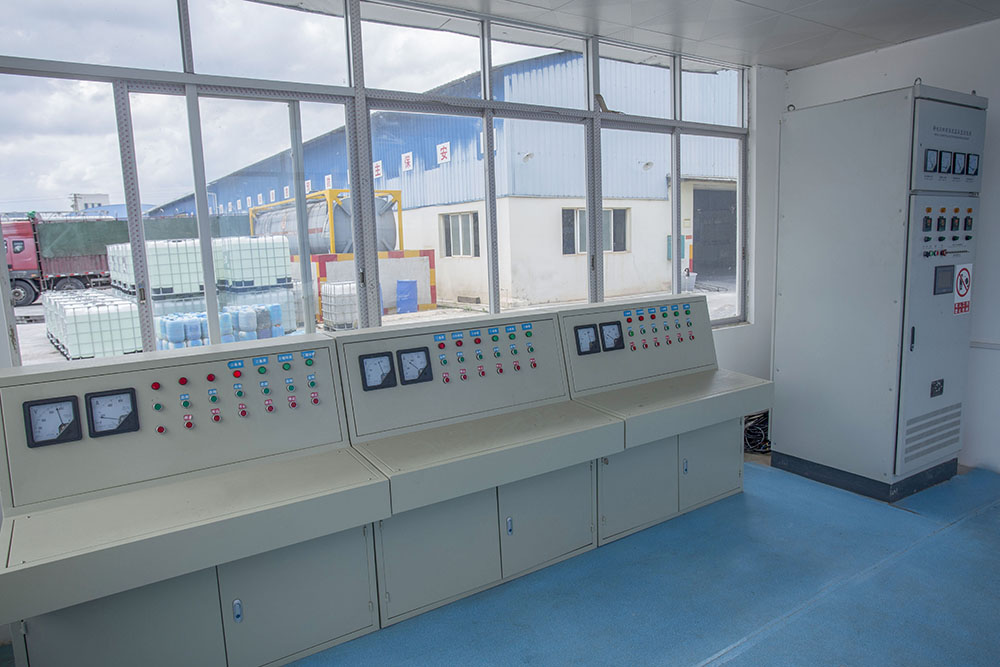
Simple lab tools, such as a hydrometer and a thermometer, can screen concentration on arrival.
Want to test our acid before your first bulk order? Message our team on WhatsApp to request a free sample.
WhatsApp Us for Free a Consultation
Check 5: Measure Concentration with Specific Gravity
Concentration is the number buyers worry about most. Under-strength acid is hard to spot by eye, because diluted acid still looks clear. Our list of warning signs of diluted or low-purity phosphoric acid covers other clues to watch for. Specific gravity gives you a fast screening test. It compares the acid’s density with water, and it tracks strength closely.
You need three items: a hydrometer (a floating glass instrument that reads density), a thermometer, and a tall glass cylinder. Here are the standard reference values at 25 °C:
| Acid strength | Specific gravity | Freezing point | Viscosity at 25 °C |
|---|---|---|---|
| 75% | 1.574 | about -17.5 °C | 21.5 cP |
| 80% | 1.629 | about 4.6 °C | 29.0 cP |
| 85% | 1.686 | about 21.1 °C | 43.5 cP |
Each 1% drop in strength lowers the reading by about 0.011. That gap is large enough to see with a good hydrometer.
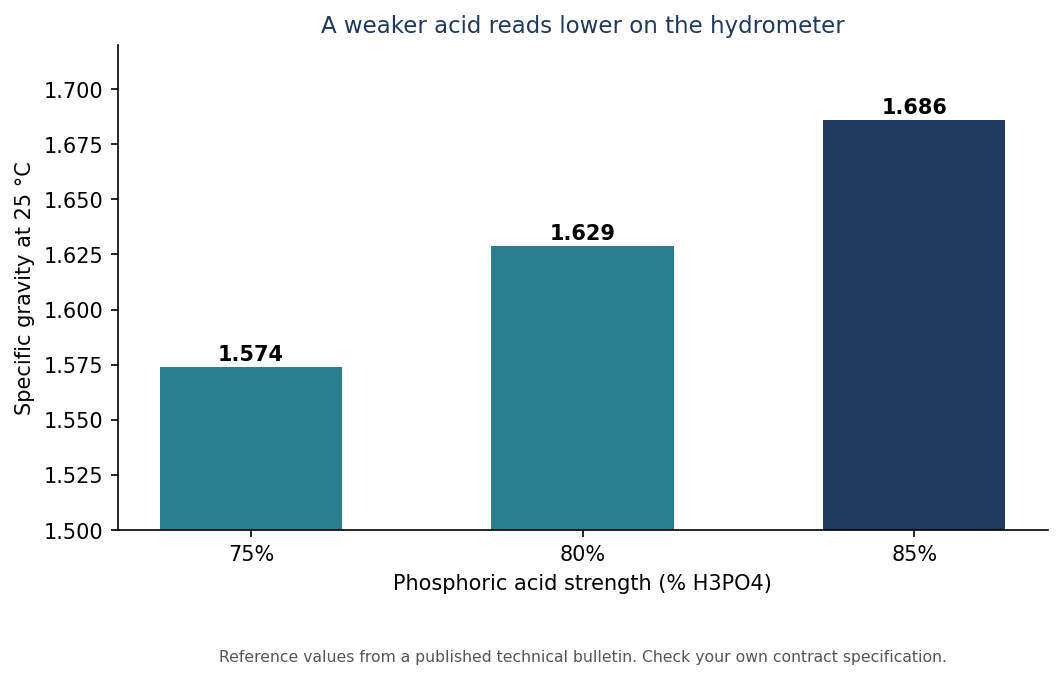
A weaker acid reads lower, so a low hydrometer reading is an early warning of dilution.
Follow these steps:
- Bring the sample close to 25 °C and mix it well.
- Fill the cylinder and keep it upright, away from drafts.
- Lower the hydrometer slowly so it does not touch the sides.
- Wait until air bubbles clear. Thick acid holds bubbles, and they skew the reading.
- Read at eye level, then record the reading and the temperature.
How to Correct for Temperature
Warm acid is less dense, so the reading must be corrected. For 85% acid, add about 0.0008 for each degree Celsius above 25 °C. Subtract the same amount for each degree below. For example, a reading of 1.680 at 35 °C becomes 1.680 plus 10 times 0.0008, or about 1.688. That is right on target for 85% acid.
Technical Note
Specific gravity is a screening test, not a full analysis. It confirms strength but cannot show heavy metals or other impurities. A lab can confirm concentration by titration, which is a measured reaction with a base. One published technical bulletin lists 85% acid at 85.0 to 85.5% H3PO4 with a specific gravity of 1.686. Always compare your results with the limits in your own purchase contract, especially for food grade (E338) acid.
Check 6: Pull Samples and Send Them to a Lab
The dock tests catch big problems. The lab catches the quiet ones. Take samples from more than one package, chosen at random, so the result speaks for the whole lot. Use clean HDPE bottles, and label each with the batch number, the date, and the package ID.
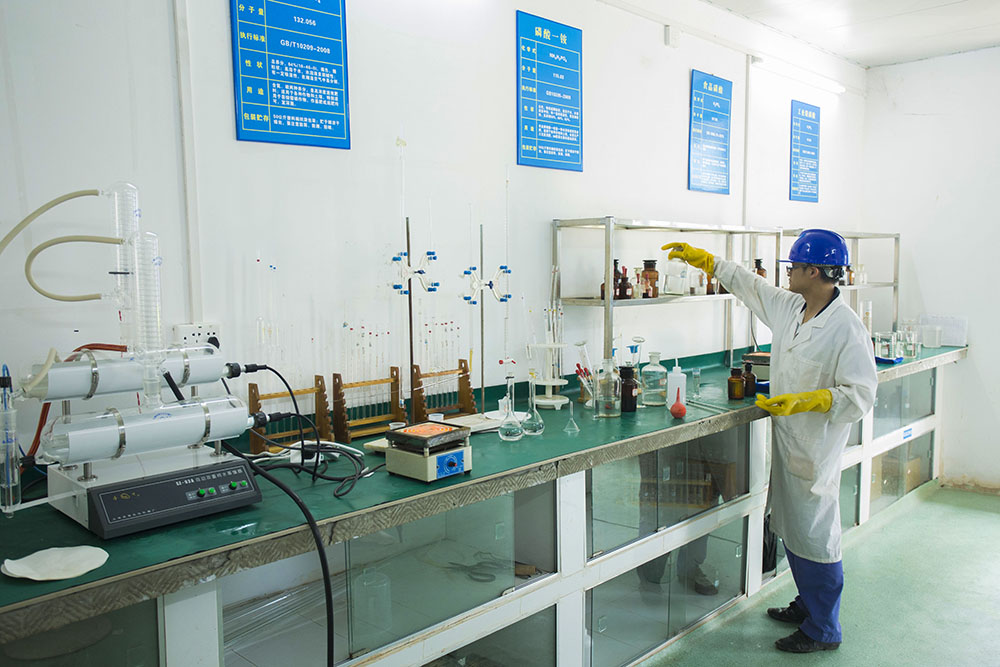
Lab testing confirms impurity levels that no dock check can show.
Good sampling practice includes:
- Take samples from several packages, not just the easiest one.
- Keep one sealed, labeled retained sample for every lot. Our technical guide to phosphoric acid shelf life and storage stability explains how stored acid holds up over time.
- Send a second sample to an independent lab when the order is large or the application is sensitive.
Ask the lab to test the items named in your contract. For industrial acid, that is usually concentration plus a few key impurities. For food grade acid, add arsenic, lead, cadmium, heavy metals, and fluoride. Our guide to ordering food-grade phosphoric acid without compromising safety compliance lists the compliance points to ask about. Then compare the lab report with the supplier’s COA, line by line.
If you are new to a supplier, you can also test before the first bulk order. We offer samples of roughly 500 g to 1 kg, so your team can set its test routine early. You can ask for a sample or a quotation at any time.
Need Help Sourcing Bulk Phosphoric Acid In 2026?
Contact our team today for a quotation, free sample, and phosphoric acid specification guide.
WhatsApp Us for Free a Consultation
Part 3: Unload Safely, Record, and Decide
The last check turns your findings into action. It covers the unloading gear, the safety setup, and the final accept, hold, or reject call.
Check 7: Unload into the Right Equipment, Log the Lot, and Decide
Wrong tanks, shared hoses, and mixed lots can spoil a perfect delivery. Confirm the receiving setup before the first valve opens.
Confirm the Receiving Equipment
- Use tanks, pumps, and lines made of materials that suit the acid, such as 316L stainless steel, fiberglass reinforced plastic (FRP), rubber-lined steel, or HDPE. For process-specific use cases, review our phosphoric acid applications.
- Never use carbon steel anywhere in transfer or storage, because it corrodes quickly.
- Keep the acid away from aluminum and zinc. Contact can release hydrogen, which is flammable.
- Use dedicated, labeled lines for food grade acid so lots never cross.
- Place storage tanks inside a diked area that can hold the full volume.
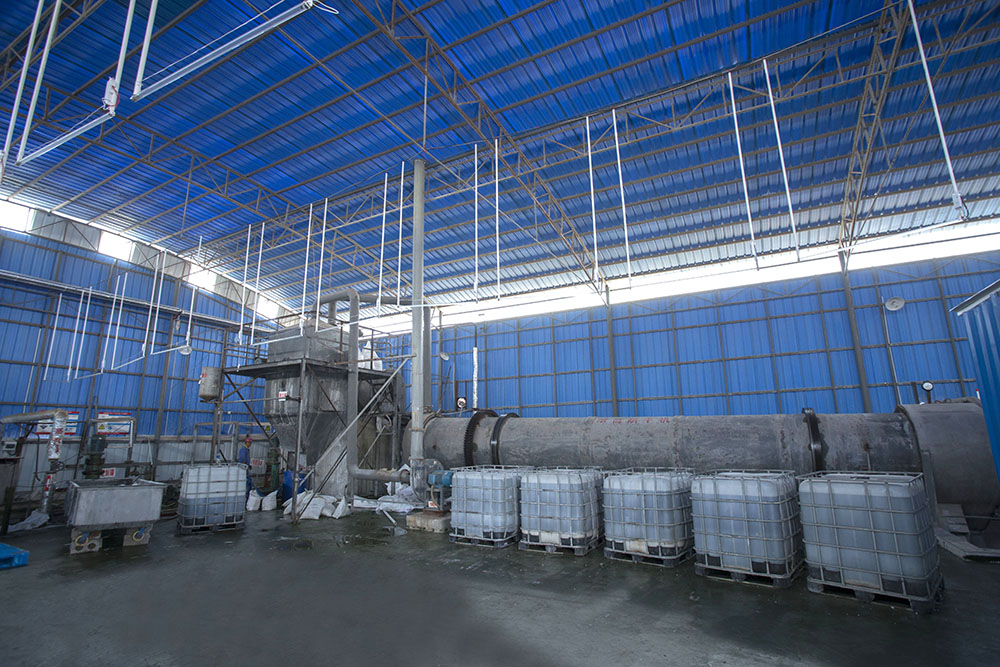
Knowing how a batch was made and tested at the plant helps you read its COA with confidence.
Be Ready for a Spill or Splash
For a fuller checklist, see our phosphoric acid safety and handling guide. Keep an eyewash within reach. If acid reaches the eyes, flush with water for 15 minutes and get medical help right away. For a spill, contain it with dry sand, then neutralize with hydrated lime or soda ash. Keep the acid out of drains and waterways.
Log the Lot and Make the Call
Write down the lot number, arrival time, seal numbers, sample temperature, hydrometer reading, and photo references. Then sort every finding into one of three outcomes: accept, hold, or reject. This table shows common findings and the right response.
| What you find | What it may mean | What to do |
|---|---|---|
| Batch number on the COA does not match the packages | Paperwork error or mixed lots | Hold the lot and call the supplier the same day. |
| Broken seal or leaking package | Handling damage or tampering | Photograph it, note it on the receipt, and quarantine the package. |
| Crystals in the package | Cold exposure | Warm, mix, then retest. This is not a defect on its own. |
| Cloudy, tinted, or full of particles | Contamination or metal pickup | Hold the lot, sample it, and send it to a lab. |
| Corrected reading well below 1.686 for 85% acid | Diluted or under-strength acid | Retest, confirm by titration, and notify the supplier. |
| Lab impurity above the contract limit | Off-specification product | Reject the lot or file a claim under the contract. |
Want to see how a bulk load is prepared before it reaches your dock? Watch this short video of phosphoric acid 85% being loaded into containers in China.
Buyers who inspect every lot the same way also build smoother repeat orders, as our customer success stories show. You can also arrange a factory visit to see our quality checks at the source.
Frequently Asked Questions
How long should a receiving inspection take?
The paperwork, packaging, and visual checks are quick. The specific gravity test takes longer because the sample must settle at a steady temperature. Lab tests take longer still, so for large or sensitive lots, plan to hold the acid until results come back.
Can I rely on the COA alone?
No. A COA records what the supplier tested on one batch. It does not check what arrived at your dock. Match it to the batch number on the packages, then confirm key points yourself.
What specific gravity should 85% phosphoric acid show?
At the 25 °C reference temperature, 85% acid reads about 1.686. Correct any reading taken at another temperature first. A corrected reading that is clearly lower suggests dilution, so retest and confirm by titration.
What should I do if the acid has crystallized in transit?
Not on that basis alone. Crystals show the acid got cold, because 85% acid freezes at about 21 °C. Warm it, let it melt fully, mix well, and then run your normal checks.
Is a green or yellow tint a reason to reject the lot?
It is a reason to hold the lot and test it. Pure acid is water-white. A tint can point to metal pickup or another contaminant, so send a sample to a lab and let the results decide.
Do I still need a lab if I have a hydrometer?
Yes. A hydrometer screens concentration only. It cannot show arsenic, lead, cadmium, or fluoride, which matter most for food grade (E338) acid.
How long should I keep a retained sample?
Follow your own quality system. A practical rule is to keep the sealed sample until the lot is fully used and your contract’s claim window has passed.
Conclusion: Inspect Every Shipment the Same Way
A repeatable routine turns receiving into a real quality gate. Seven short checks show what arrived, who is responsible, and what to do next. You do not need a large lab to start. You need a checklist, a few basic tools, and the habit of using them on every load.
Here is the routine in one list:
- Check 1: Match the paperwork to the shipment.
- Check 2: Inspect packaging, labels, and seals.
- Check 3: Look for leaks, damage, and cold-weather crystals.
- Check 4: Look at the acid for color, clarity, and solids.
- Check 5: Measure concentration with specific gravity.
- Check 6: Pull samples and send them to a lab.
- Check 7: Unload into the right equipment, log the lot, and decide.
To see which grade fits your process, review our food-grade phosphoric acid and industrial-grade phosphoric acid pages, or explore the applications phosphoric acid supports. You can also learn more about our company and quality team or visit the Camachem phosphoric acid homepage.
Need a batch-specific COA or a specification sheet to build your own receiving checklist? Message us on WhatsApp and we will send both.
WhatsApp Us for Free a Consultation
Industrial Buyers: Next Steps for Sourcing Bulk Phosphoric Acid
What makes our Phosphoric Acid Better:
✅ Compliant with EU, UN, ISO Standards – No Legal Headaches
✅ Guaranteed 85% Purity – Stability for your Processing Plant
✅ Extremely Low Impurities – Low Heavy Metals
✅ Batch-Specific COA Provided – Full Transparency per Shipment.
Download Our EU-approved Specifications.[ Food Grade or Industrial Grade]